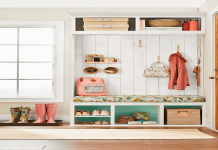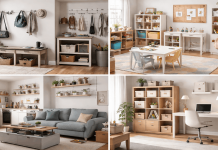
Home organization without perfectionism means you build systems you can actually repeat on busy or low-energy days.
You focus on good-enough routines, clear zones, and easy returns rather than on perfect-looking rooms.
Start with one small area today, keep it simple, and let consistency do the work.
Set a “Good-Enough” Standard That You Can Repeat
You don’t need a perfect home to feel organized. You need a repeatable baseline that fits your time, energy, and household.
- Define “good enough” for each space using function first, not looks.
- Pick one clear outcome per room, like a usable table or a clear floor path.
- Set a daily baseline you can maintain in 5–10 minutes, not a full reset.
- Use non-negotiables (2–3 per space) to keep decisions simple.
- Track progress by consistency, not by how spotless the room looks.
Build Systems That Work When You’re Tired
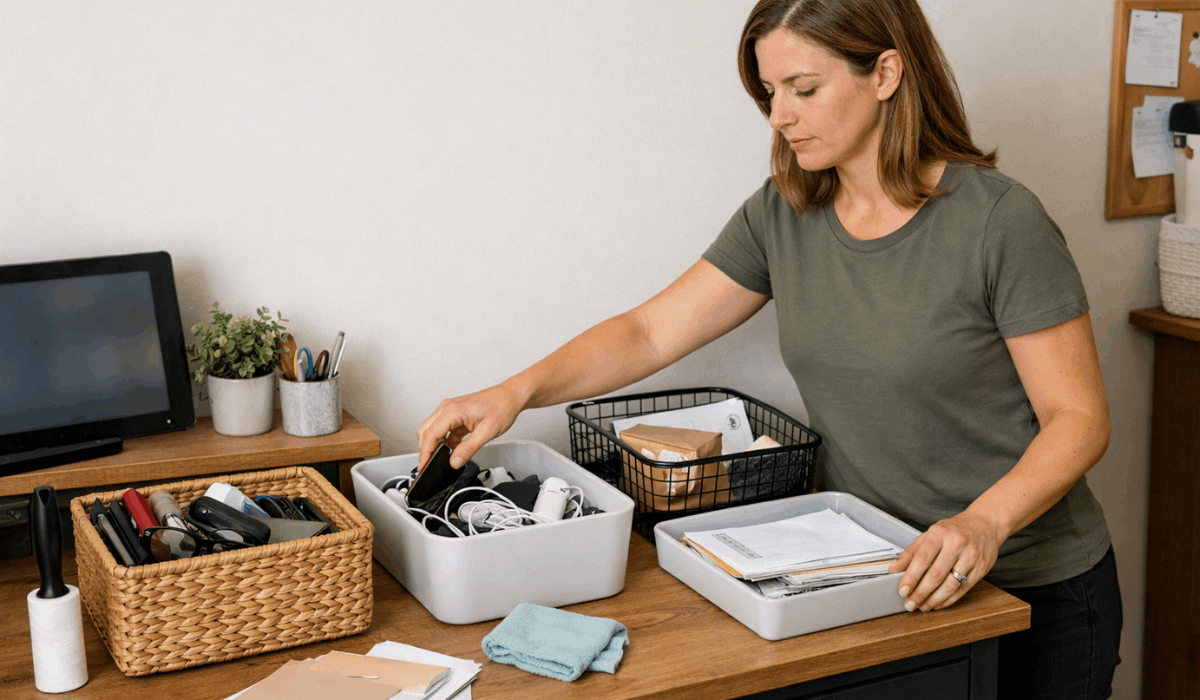
Your system should still work when you have low energy and no patience for extra steps. If it’s easy to reset, you’ll keep it going without forcing motivation.
- Put your most-used items in easy-reach spots so you don’t have to put them back.
- Use open bins and trays for daily essentials to reduce lid and drawer friction.
- Keep fewer categories so you don’t spend time deciding where something belongs.
- Place “return later” items in one temporary basket instead of leaving them on surfaces.
- Set a 2-minute reset rule for high-traffic areas to prevent small messes from growing.
Make Clutter Visible, Contained, and Temporary
Clutter gets stressful when it spreads across surfaces and has no clear next step.
You keep control by making it easy to see, contain, and clear on schedule.
- Use one clear container per problem area to prevent loose items from scattering.
- Keep “needs action” items in a temporary basket so they don’t mix with storage.
- Set a hard limit for each container so overflow becomes an immediate signal.
- Choose open storage for fast-drop items so you don’t have to put them away.
- Empty the temporary container on a simple rhythm, like daily for 5 minutes or twice weekly.
Organize by Use, Not by Category Labels
Categories sound helpful, but they often ignore how you actually move through your day.
When you organize by use, you cut steps, reduce mess, and make it easier to put things back.
- Store items where you use them most, even if it breaks traditional “category” rules.
- Group things by task, like “morning routine,” “school drop-off,” or “quick dinner,” to speed decisions.
- Keep daily items in prime spots and move occasional items to higher or deeper storage.
- Create small “kits” for repeat tasks, like cleaning wipes + cloth, or charging cables + adapter.
- Test your setup for a week, then adjust based on what you reach for and what you ignore.
Keep Items in Good Shape With Simple Care Routines
When you take care of items in small, regular ways, your home stays easier to manage.
Simple care routines reduce damage, duplicates, and random clutter from “fix it later” piles.
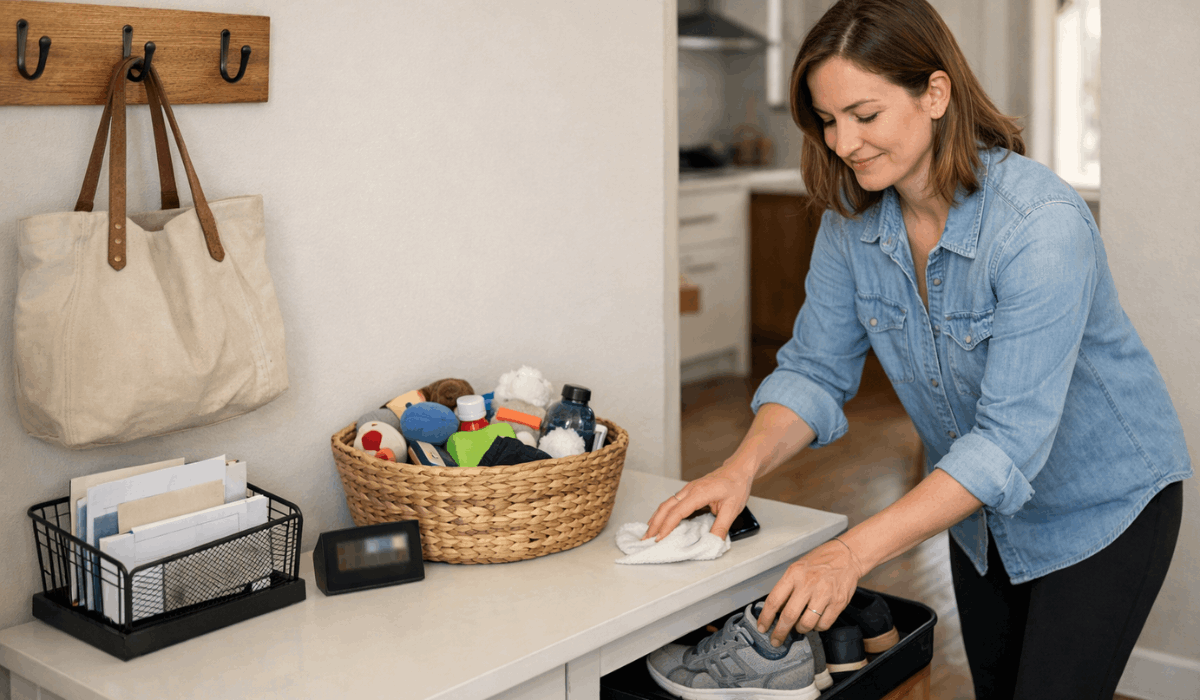
- Create a small care station where problems usually start, like shoes by the door or stains in the laundry area.
- Keep basic supplies visible and ready, like a lint roller, microfiber cloth, or stain spray, so you actually use them.
- Use a quick “after-use” habit, like wipe, rinse, rehang, or refill, to stop mess from building.
- Set one weekly check for wear-and-tear items, like towels, chargers, or cleaning tools, to prevent clutter from breaking down.
- Store fragile or speciality items in a protected spot with a clear return place so they don’t get tossed anywhere.
Make Shared Spaces Work Without Micromanaging
Shared spaces fail when the system depends on you correcting everyone’s choices. You fix that by using simple rules, clear limits, and easy-to-follow zones.
- Set one clear rule per zone, like “bags go on hooks” or “mail goes in the tray.”
- Give shared items a single home, so no one has to guess where things belong.
- Use open bins with labels (no tiny categories) so putting items back takes seconds.
- Add container caps so overflow shows up fast and triggers a quick reset.
- Assign a short shared routine, like a 5-minute nightly reset, with one small task per person.
Solve the Top 6 “Perfectionism Traps”
Perfectionism traps keep you stuck because they make organization feel like a big project.
You avoid that by making simple decisions, setting small limits, and taking repeatable actions.
- Trap 1: Over-sorting → Fix: Use 3–5 broad categories max so you can reset fast.
- Trap 2: Buying containers first → Fix: Organize with what you have, then upgrade only after the system works.
- Trap 3: All-or-nothing cleaning → Fix: Pick one baseline task and stop when it’s done, even if the room isn’t perfect.
- Trap 4: Keeping “someday” items → Fix: Give them one small box and a date to review, or let them go.
- Trap 5: Organizing for guests → Fix: Set up for your daily routine, not for a photo or a visit.
- Trap 6: Unrealistic rules → Fix: Make the rule so easy you can follow it on a bad day.
Create a Weekly Maintenance Plan That’s Hard to Fail
A weekly plan works only if it feels light and realistic. You build it around short time blocks, high-traffic areas, and simple default steps.
- Pick one anchor day for a 15–20 minute reset so it becomes automatic.
- Focus on surfaces and floors first, as they shape how the whole home feels.
- Use the same sequence every time: collect, sort, return, wipe, reset zones.
- Add one “support task” per week, like laundry catch-up, trash/recycling, or fridge check.
- Keep a 10-minute overflow check for the spots that re-clutter fastest, then stop.
Plan for Life Changes So Your System Doesn’t Break
Your routine will change, and your organization has to change with it. If you plan for adjustments, you won’t feel like you need to restart from zero.
- Do a quick “life check” when your schedule shifts, like when school changes, new work hours start, or you move.
- Reset your daily loops by moving essentials closer to where you now use them most.
- Use seasonal swaps for shoes, outerwear, bags, and bedding to reduce overcrowding.
- Keep one flexible “buffer zone” for temporary items so transitions don’t create new piles.
- Review your container limits every month and resize categories that no longer fit your life.
Final Section: Keep It Livable, Not Perfect
Home organization without perfectionism works when you keep your systems simple, repeatable, and built for real energy levels.
You stay consistent by using good-enough standards, clear zones, and short resets that prevent clutter from becoming a project.
Start with one small area today and set up a system you can repeat this week.