The reason organized spaces last about three weeks before reverting to chaos has almost nothing to do with discipline. The system was built for a household whose daily life looks nothing like yours.
Most people are not disorganized. They are using frameworks built for a different household size, a different work schedule, and a different set of daily priorities. That mismatch creates friction where a working system should be.
This guide is for the person who has tried the labeled bins, the capsule wardrobe method, the "one in, one out" rule, and still cannot keep a single surface clear by Thursday.
The system you need for home organization that fits your lifestyle is already outlined by how your actual day runs. The task is reading it correctly.
Why Generic Organization Advice Creates Specific Chaos
Organization advice is written for a hypothetical household. One with a predictable schedule, a single dominant user, and a daily routine that stays consistent week to week.
Most households are nothing like that, and the gap between that assumption and your real life is where every failed system lives.
The Lifestyle Mismatch Problem Nobody Names
A minimalist system applied to a family home does not just underperform. It creates active resistance from the other people living in the space who were never consulted during the planning session.
A detailed categorization system built for a focused remote worker becomes a liability in a household where three children need to retrieve their own items independently and quickly.
This is lifestyle mismatch friction. It is responsible for more abandoned organization systems than any lack of effort or motivation. And it almost never gets named in the articles explaining why your organization keeps collapsing.
Daily Routines Are the Real Blueprint
The most practical principle in lifestyle-based organization: homes should be built around what happens every day, not occasional activities or an idealized version of how the space could function.
That means the first design question is not "where should this go?" It is "What does my actual Tuesday look like?" A household running school pickups, client calls, and shared meal prep in overlapping spaces needs zones built for that overlap.
A single-occupant apartment with a fixed remote schedule can run a simpler, centralized system because the only user already understands the logic without any instruction.
What Each Lifestyle Actually Needs
Busy Professionals: Speed Over Perfection
The priority for a busy professional's home is reduced decision-making at the start and end of each day, not an aesthetically complete layout.
Clutter in a professional home is almost always the result of too many micro-decisions required to put things away correctly. The fix is eliminating those decisions at the point of return.
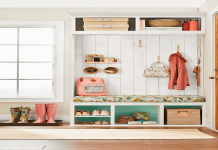
A drop zone at the entryway is the single highest-impact change for this lifestyle. It works when it includes:
- Hooks for bags, coats, and reusable items with a predictable daily rhythm
- A tray or small basket dedicated to keys, wallet, and phone
- A designated spot for work items that leave and return on the same cycle
Closets organized by outfit category rather than item type speed up morning decisions. Kitchen zones for breakfast items, packed lunches, and grab-and-go snacks remove the "what am I eating" question from an already compressed morning.
Research on decision fatigue is clear that home environments either reduce or amplify how much cognitive load the day starts with, and that load accumulates.
Also read: Why Shared Living Spaces Stay Messy (And the Setup That Stops the Same Arguments)
Families with Children: Systems That Everyone Can Actually Use
Honestly? I think adult organization systems applied to family homes are one of the most common sources of persistent household clutter. The raw content on this is explicit: families need shared zones, clear boundaries, and storage that supports multiple users simultaneously.
Labeled bins with lids, precise sorting categories, and carefully maintained item groupings work when one organized adult is the sole user. They collapse when a six-year-old is expected to sustain them independently after school.
Family home organization needs a different set of defaults:
- Open bins without lids for zones where children are expected to clean up independently
- Picture labels for pre-readers that make return placement obvious without adult help
- School items are stored near the exit for smooth morning departures without searching
- Rotating toy access rather than all toys available at once to keep play areas manageable
The principle holds across every household size: the less thinking required to put something away, the more consistently it gets put away, regardless of the age of the person doing it.
Small Apartments: Intentional Over Abundant
Small spaces require a strict answer to one question: does this item earn its place through regular use? Multi-function furniture removes the need for additional storage units.
Vertical space replaces floor space. Clear containers in kitchen and pantry areas maximize visibility without requiring more shelf depth than the space provides.
The discipline small apartment organization requires is not aggressive decluttering. It is resisting the impulse to stock up. Overstocking in a small kitchen does not just fill the shelves. It makes frequently used items harder to access than if the same shelf held half the volume.
Remote Workers: The Boundary Problem Is Physical
Work-from-home setups require hard physical separation between work zones and living areas. Without it, work spreads into the living room, the kitchen counter, and eventually the bedroom.
Once that spread happens, the boundary between productive hours and personal time dissolves alongside it.
A defined workspace, even in a studio apartment, changes how the brain processes the surrounding space. Only work-related items belong on the work desk.
An end-of-day reset that physically moves work items away from the living area signals the brain that the workday ended. Five minutes of that reset prevents the slow creep that turns a living space into a permanent extension of an office.
Minimalists: Limits Are the System
Minimalist organization is the lifestyle type where the container is the rule, not the container's contents. When a designated space is full, something leaves. That single rule eliminates the gradual accumulation that forces every other lifestyle into periodic purges.
Decluttering works best here in small, frequent sessions rather than one annual overhaul.
Items serve a clear purpose or they do not stay. And because the system is built on strict quantity limits rather than elaborate categorization, maintenance stays fast. Fewer items require less management. That efficiency is the point.
The Contrarian Case Against Decluttering First
Unpopular opinion, maybe, but the universal advice to declutter before organizing is only correct for one lifestyle type out of the five covered here: minimalists.
For busy professionals, families, small apartment dwellers, and remote workers, decluttering first creates a specific problem — it forces decisions before usage patterns are visible.
My take, backed by what the raw source makes explicit: organizing should follow daily routines, not precede them. Homes need to be organized around what actually happens every day, not occasional activities or what seems logical before the space has been observed.
Decluttering before tracking how the space gets used turns a precise task into guesswork. The result is donating items that later need to be replaced and keeping items that have no real role in the actual daily pattern.
The smarter sequence for non-minimalist households: organize loosely first, run that arrangement for two to three weeks, observe where things naturally land, and then declutter based on what that period reveals. The declutter becomes targeted rather than approximate.
A Quick Comparison by Lifestyle Type
| Lifestyle | Storage Priority | Core Principle | Biggest Trap |
|---|---|---|---|
| Busy professional | Fast access, low decisions | Speed over perfection | Overfilled mornings with no buffer |
| Family with children | Open, multi-user zones | Simplicity for all ages | Adult-only systems in shared spaces |
| Small apartment | Vertical, multi-function | Every item earns its place | Overstocking limited shelves |
| Remote worker | Work-life physical separation | Hard boundaries, not mental ones | Work spreading into living areas |
| Minimalist | Firm quantity limits | Containers define capacity | Gradual accumulation over time |
Most households combine two or more of these types, and the organization should reflect that combination rather than committing rigidly to one column.
Adjusting When Life Changes
What Worked Last Year May Not Work This Year
A remote work setup that ran smoothly before a second person moved in needs redesigning. A family system built for a toddler will not suit the same child at nine.
Treating these natural transitions as personal failures leads to unnecessary full overhauls when small, targeted adjustments would restore function without disrupting what already works.
The practical move: a short review once per season. Not a full reorganization. A check-in on where friction has appeared since the last pass and one targeted fix to address the specific cause.
Friction Is the Signal, Not the Person
Research on habit formation and behavioral consistency shows that the more steps required to complete a routine, the lower the follow-through rate over time. Organization maintenance is a habit.
Every unnecessary step in returning an item to its place reduces the probability that the habit holds under normal daily pressure.
When a specific area keeps drifting toward clutter despite genuine effort, the system places too many steps between the person and the return. Fix the placement or the category logic first.
Applying more effort to a system with structural friction does not solve the friction. It just exhausts the person maintaining it.
Questions People Ask About Lifestyle-Based Home Organization
Q: How do I know which lifestyle type applies to my home? Start with who uses the space and how often multiple people need to access the same zones simultaneously. A single remote worker and a family of four with active children have fundamentally different organization needs even in identical square footage.
Q: Can a minimalist approach work in a family home? The core principle of defined limits and intentional item selection transfers across all lifestyles. The strict quantity rules and detailed sorting systems that work for a single adult tend to generate friction in multi-user family spaces. Adopt the underlying principle and adapt the specific rules to fit.
Q: My partner and I have completely different organization styles. What do we do with shared spaces? Assign each person full responsibility for their own zones first. Shared spaces need rules simple enough that neither person has to negotiate or think hard about following them. The simpler the shared system, the more consistently both people maintain it without prompting.
Q: How often should I review and update my organization system? A short seasonal review catches friction before it compounds into a full reset. Removing one specific friction point per review builds toward a system that improves incrementally rather than one that periodically requires a complete rebuild.
Q: Does more storage space solve organization problems? Not on its own. Additional storage without clear organization logic tends to become overflow space, which delays the clutter problem without addressing it. Storage should support fewer, better-placed items rather than accommodate more of them.
Conclusion
The right home organization system is not the most elaborate one or the one with the most matching containers.
It is the one built around the specific people using the space, the routines they actually run, and the lifestyle type that honestly describes how the home gets used from Monday through Sunday.
Start by identifying that lifestyle type, build the simplest version of a system that serves it, and let the daily evidence reveal what needs adjusting from there. The system that holds is the one designed for the life you have, not a cleaner version of it that only exists in a planning session.