There is a specific kind of frustration that hits around week three: every drawer organized, every bin labeled, and somehow it looks worse than before you started.
Most home organization advice treats the problem like a one-time event. Declutter on a Saturday, buy the baskets, and post the before-and-after. Nobody explains what happens on Tuesday when the counter is already buried again.
Clutter returns when systems are built for ideal habits instead of real ones. The weekly reset is a more useful success metric than a perfectly staged room.
So this guide skips the one-weekend overhaul. Small habits, real rooms, and routines that repeat without needing a surge of motivation to begin.
The Weekly Reset Worth Putting on Your Calendar
One Day, One Window, No Motivation Required
Pick one day and one time window and treat it like a calendar block, not a chore you tackle when the mood strikes.
Keep it short. If the reset takes longer than feels easy, the system needs simplification, not more willpower.
The mechanics: grab one basket per room to collect items that drifted, return them to their homes, then clear one visible surface. That last step is underrated. A single cleared surface makes the whole house feel calmer, even when the rest is still in progress.
The Three-Pile Sort That Works Before You Second-Guess Yourself
Touch each item once. Keep, move, or let go. That is the whole sort.
Limit "move" items to what you can carry in two trips. More than two trips, and the decision-making stalls completely.
Put "let go" items straight into a bag the moment you decide. Then set one rule: full bags leave within seven days. If a bag sits for three weeks, you will start picking things back out of it. Seven days keep the decision final.
Place a donation and discard station near your entry or laundry area. Keep a small trash liner nearby so broken or expired items do not quietly re-enter circulation.
Give Your Daily Items a Real Home
Clutter returns when daily items do not have a stable landing spot. Most people blame themselves after a relapse, but the system is usually what failed.
Store the most-used items between shoulder and knee height. That single ergonomic rule reduces friction more than almost any container purchase.
Why "Perfect Placement" Derails Most Organization Attempts
Most people pick homes for their items based on what looks organized in a photo. The system that lasts is built around real movement patterns, not ideal ones.
Use open storage for everyday items and closed storage for backup or seasonal gear. The divide is simple: touch it daily, keep it visible. Touch it monthly, let it live behind a door.
The Drop Zone and Counter Rules That Prevent Pile-Ups
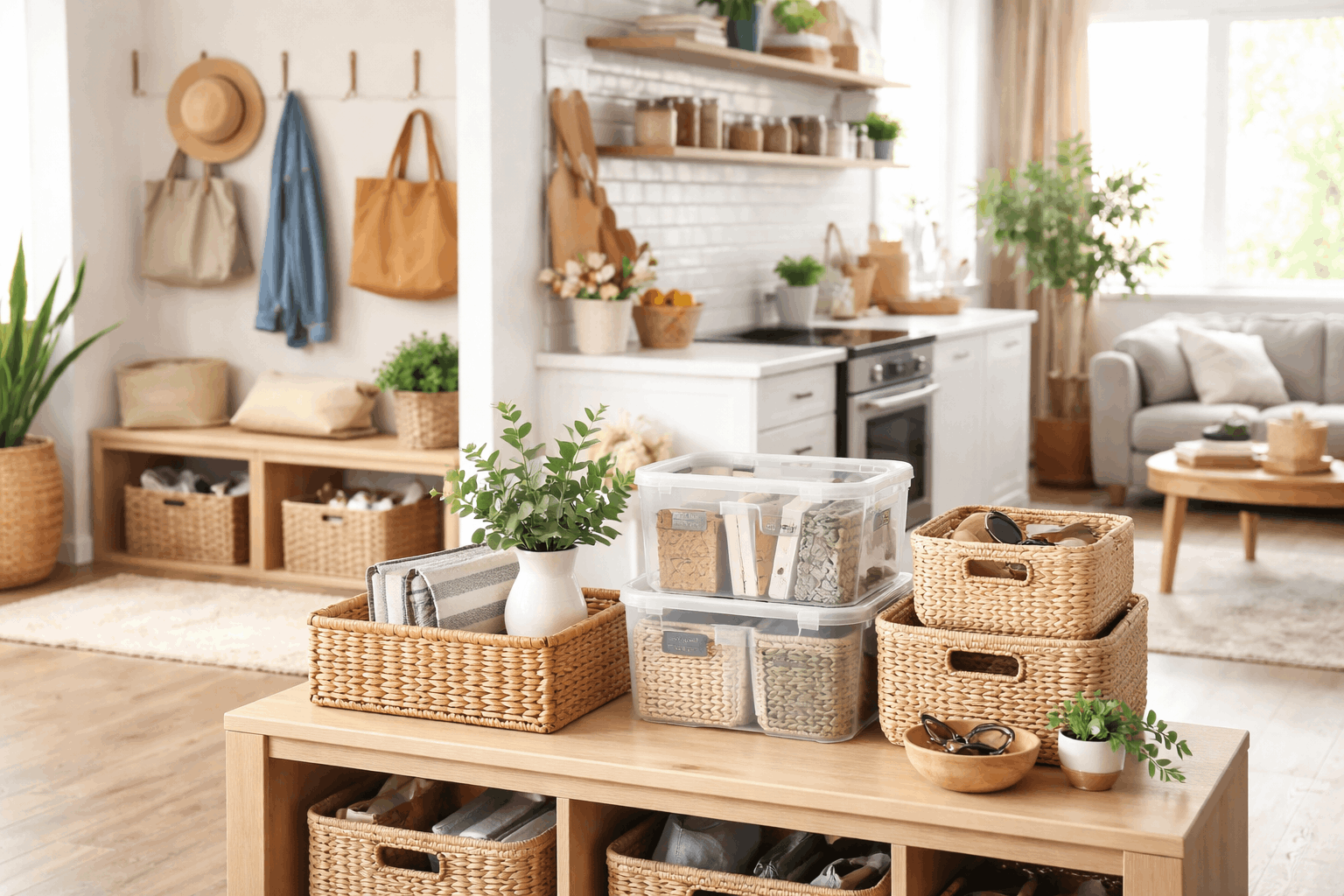
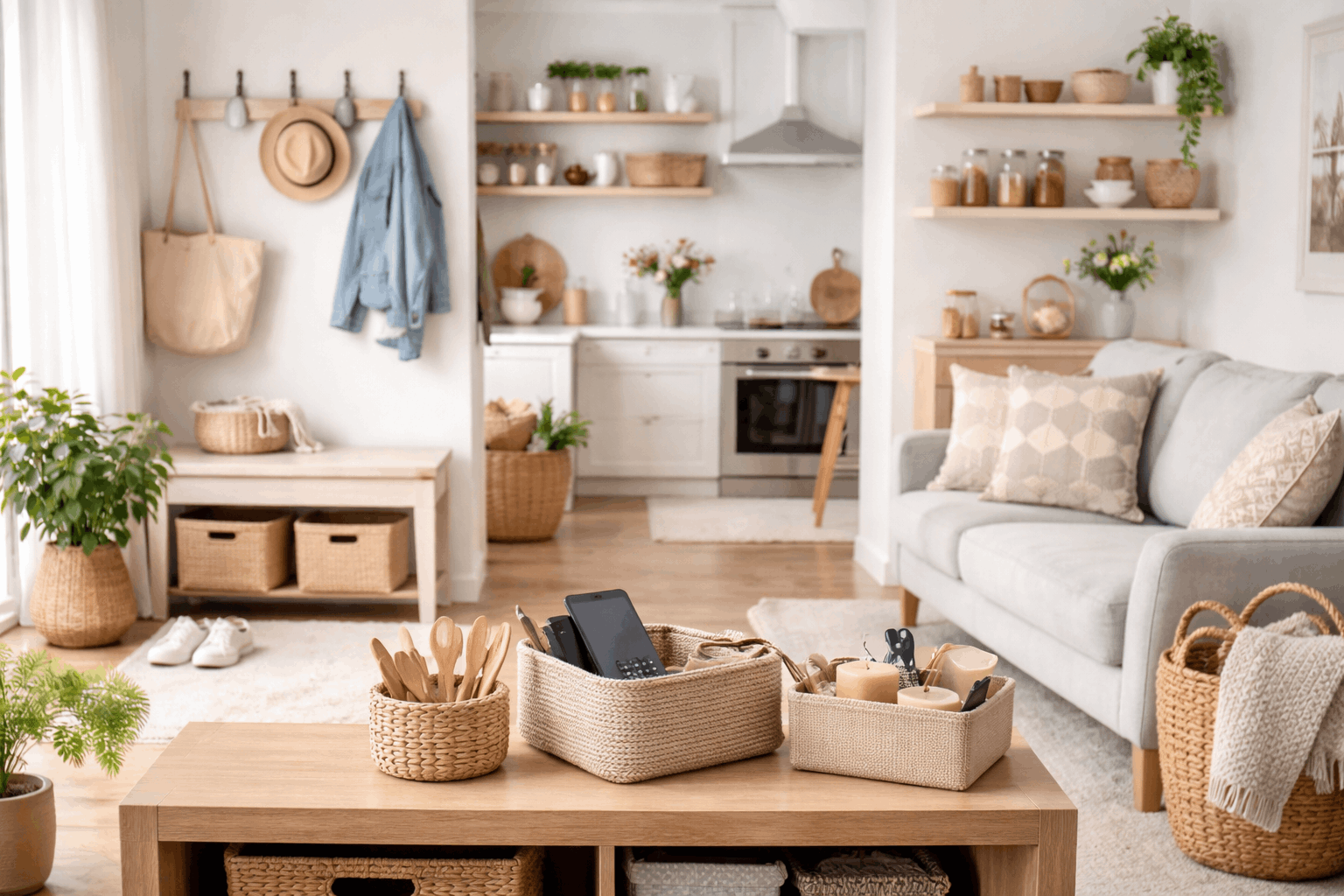
For the entryway, keep three things in place:
- One tray or bowl for keys and small daily essentials you need tomorrow
- Hooks for bags and jackets at a naturally reachable height, without stretching
- A small basket for shoes so the floor stays clear, even on the chaotic days
For the kitchen, pick one counter corner for daily appliances, mail, and quick notes. Make everything else counter-free. Wiping down becomes fast and satisfying when there is nothing to move first.
Store duplicates and rarely used tools away from the main cooking path. Backstock belongs in a cabinet, not on the counter taking up active space.
Also read: How to Keep Your Home Tidy Daily Without Blocking Time for It
Tiny Routines That Stop Clutter Before It Builds
Maintenance works when routines take minutes, not hours. The goal is habits so small they run without requiring a new decision each time.
Attach New Habits to Things You Already Do
Habit stacking links a new behavior to an existing daily routine. Clear the counter while coffee brews. Reset the living room after dinner. Return bathroom products to their spot while brushing teeth.
Keep supplies where the task happens. If the cleaning spray lives in another room, you will not use it. Proximity removes the excuse before it forms.
The Two-Minute Evening Reset
Set a timer. Put away only what is visible and in your main path. Return items to their homes, even if "home" is a simple bin.
Stop when the timer ends. That is the rule. The habit stays lightweight only if the ending is enforced.
I think the weekly reset frequency is a better success metric than a perfectly staged room. Every other home organization guide grades the result. This one grades the repetition, and that shift changes how sustainable the system feels over months.
Paper, laundry, and cables all work the same way: give them a landing spot with one clear rule, then attach the clearing to a routine you already keep. For paper, use three slots: act, file, and recycle.
Schedule one weekly moment to clear the "act" folder. For laundry, place one hamper where clothes naturally come off, fold one small batch at a time, and keep everyday basics in easy-access drawers so putting away stays quick.
Storage That Cuts Decisions, Not Multiplies Them
Storage should remove friction, not add a new organizational layer to maintain.
Pick containers that fit your actual shelves and drawers. Wasted space is usually a sign of the wrong container, not the wrong habit.
The Organizer Mistake Worth Skipping First
Unpopular opinion, maybe, but the best move is to complete at least one weekly reset before buying a single bin. After one reset, you will know which spots cause friction and what sizes genuinely fit your real shelves.
Avoid overbuying containers until you understand your storage habits and reach patterns.
A few repeatable container types keep the look and system consistent far better than a full cart of mismatched bins. This is the advice most organization articles skip entirely because it means telling you to buy less.
Three Storage Moves Worth Doing
These three approaches work across almost every room:
- Go vertical: Wall hooks, over-door racks, and stackable shelves free up floor and counter space when square footage is tight. Store lighter items higher and heavier items lower for safety and ease.
- Divide drawers: Simple trays for tools, cables, or toiletries give each category a boundary. Leave some empty space so the drawer stays usable rather than just reorganized.
- Use clear bins: Store backstock, seasonal gear, and spare parts in clear containers. Face them outward and add a short label only if the contents look similar from the outside.
The principle across all three: reduce the number of decisions needed at the moment of putting something away.
Room-by-Room Habits That Fit Real Spaces
Different rooms need different rules because behavior changes by space. The core system stays the same. The container size and access level adjust.
Start with the room that causes the most stress. Results show up fastest there, and early wins carry momentum into the rest of the house.
Bedroom and Bathroom: the Rooms That Drift the Fastest
Limit the nightstand to items used every night and every morning. One small basket handles chargers and accessories so they do not scatter across the surface.
Reset clothing before sleep: hang it, fold it, or put it back. That single habit keeps bedroom surfaces clear without any extra effort.
For the bathroom, keep daily products in one tray so wiping the counter is easy. Store backups under the sink or in a cabinet. Discard expired products during your weekly reset to clear the hidden clutter that builds behind items you use daily.
A quick comparison before buying new bathroom storage:
| Storage Type | Best Use | Trade-Off |
|---|---|---|
| Counter tray | Daily-use products | Takes up counter space |
| Under-sink bins | Backstock and refills | Requires bending to access |
| Over-door rack | Small accessories, tools | Limited weight capacity |
Match storage type to your access frequency, not the aesthetic you want from the outside.
Home Office: Cables, Paper, and the Sprawl That Creeps Back
Use one container for active projects and close it when the work day ends. That boundary is organizational and psychological.
Route cables into a simple clip or management system so the desk stays clear. Empty downloads, screenshots, and desktop files weekly. Digital clutter accumulates at the same speed as physical clutter, and carries the same mental weight.
Questions People Ask About Keeping a Home Organized
Q: How do I start when the whole house feels overwhelming? Start with one surface in the room that causes the most stress. A cleared nightstand or kitchen counter gives you a visible win fast, and visible wins create momentum for everything else. Resist the urge to tackle every room before the first one holds.
Q: How often does a home need a reset? One weekly reset plus a two-minute evening scan covers most households. The weekly reset handles drift that builds over days; the evening scan stops tomorrow's piles from forming tonight. More frequently than that, and the system starts to feel like a second job.
Q: Do I need labels and matching containers to stay organized? Labels help in shared zones like pantry shelves and toy bins where multiple people need to follow the system at a glance. Skip them for private or flexible spaces where your habits shift often. Matching containers is a preference, not a system requirement.
Q: What do I do when I fall behind, and the clutter comes back? Restart with one surface and one routine, not a full reorganization. The pressure to redo everything at once is often what caused the collapse in the first place. One successful reset builds back far faster than a full weekend project.
Q: Should I buy organizers before or after setting up the system? Set up the habits first, then buy for the specific gaps you notice after a reset or two. After living with the system for a week, you will know exactly which spaces cause friction and what sizes fit your real shelves. Buying first almost always means buying twice.
Conclusion
Choose three daily actions, three weekly actions, and one monthly action to maintain momentum without requiring a full restart. Fall behind, and come back to one surface and one routine, not the whole house at once.
The system only has to be good enough to repeat consistently, not polished enough to photograph. Keep adjusting until the routine fits real life, because a sustainable organization is built through repetition, not a single inspired effort.