The one-minute rule solves a problem most daily tidying advice completely misses: you do not have a daily 10-minute block that magically stays open.
Most home tidying guides tell you to schedule a reset. Pick a time, set a timer, do the routine. But life does not work in neat 10-minute windows, and the moment you skip one day because of a late meeting or sick kid, the whole system collapses.
Clutter builds when you treat tidying as a separate task instead of a behavior embedded into how you already move through your home. The system that lasts is built around actions you are already doing, not new blocks you have to protect on your calendar.
This guide focuses on the one-minute rule, high-traffic area control, and habits attached to routines you cannot skip. No scheduled reset blocks required.
The Problem with Scheduled Daily Tidying
Most daily tidying advice centers on a single ritual: the 10-minute reset. Pick a time, clear surfaces, return items to their homes, and stop when the timer ends.
The logic is solid. The execution fails for one simple reason: scheduled blocks are fragile. Miss one day, and the clutter carries over. Miss two days, and the reset takes 25 minutes instead of 10, so you skip it again.
Why the 10-Minute Reset Backfires for Most People
Call me biased, but I think the 10-minute reset model only works for people whose schedules stay predictable. If your evenings shift based on work calls, kids' activities, or energy crashes, a fixed tidying window becomes one more thing to manage instead of one less.
The block also creates a false binary: either you do the full reset, or you do nothing. That mindset is what turns a missed Monday into a messy Thursday.
A more flexible approach treats tidying as dozens of micro-actions scattered across the day, not one concentrated effort you have to protect from interruptions. The one-minute rule is that approach, and it removes the need for a calendar block entirely.
The One-Minute Rule Works Better Than a Reset Block
The one-minute rule is simple: if a task takes 60 seconds or less, handle it the moment you notice it instead of adding it to a mental list for later.
Most clutter is not the result of big messes. Most clutter is small items left out because putting them away felt like a task you would handle during the reset.
What Counts as a One-Minute Task
These tasks take less than a minute and prevent the most visible clutter:
- Return a mug to the kitchen after finishing coffee
- Hang up a jacket instead of draping it on a chair
- Put mail directly into a sorting tray instead of setting it on the counter
- Wipe a bathroom counter after brushing teeth
- Return the remote to its spot after turning off the TV
- Toss junk mail into recycling on arrival
Each action is small enough to feel effortless in the moment. Together, they eliminate the clutter that would otherwise build into a 10-minute reset task.
The psychological shift matters more than the time saved. Handling something immediately removes it from your mental load entirely. Postponing it adds a small weight that accumulates across every item left out.
High-Traffic Areas That Benefit Most
Focus the one-minute rule on the spaces where clutter forms fastest. These areas get messier because you pass through them constantly:
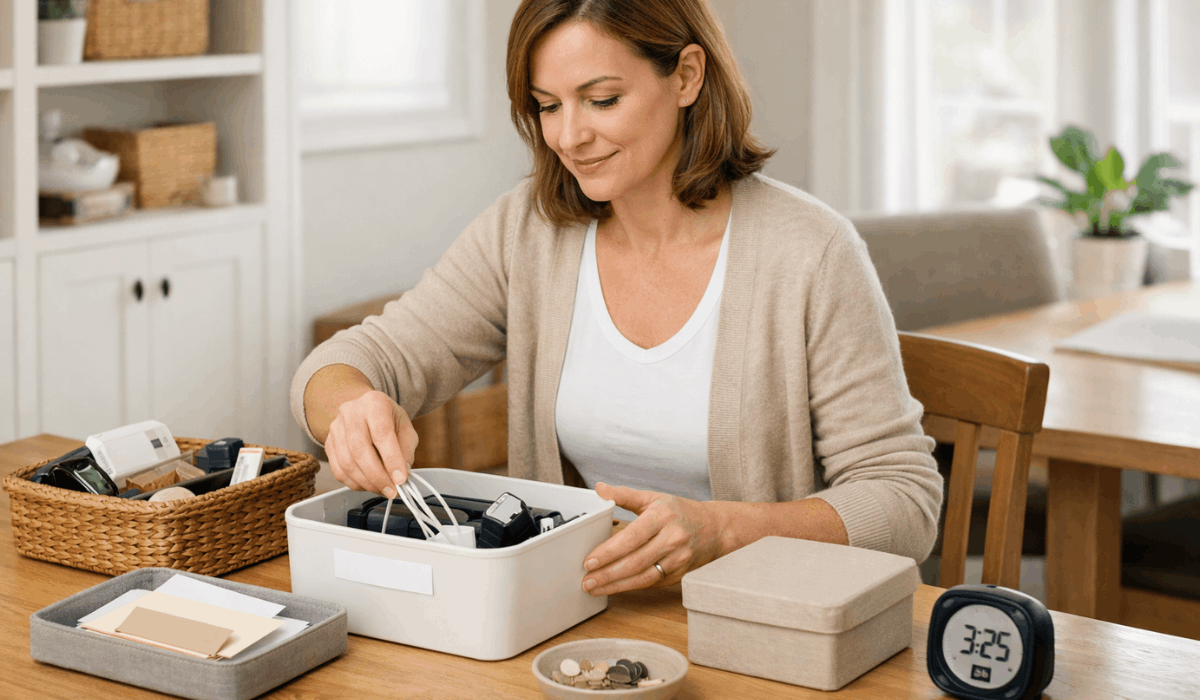
- Kitchen and dining surfaces: Clear plates, wipe crumbs, and return items to cabinets right after use
- Living room seating areas: Reset cushions and blankets after sitting, return remotes and chargers to their spots
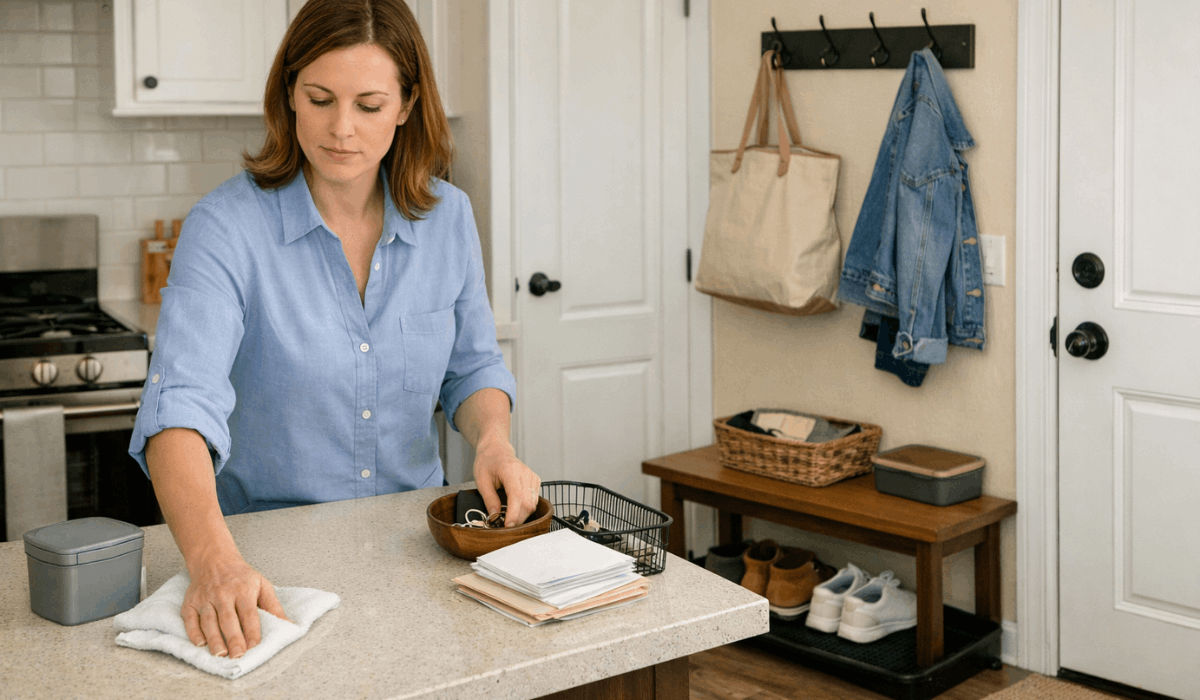
- Entryway and door zones: Hang bags and jackets on arrival, place shoes in a basket instead of scattering them
- Bathroom sink areas: Return products to drawers or caddies after use, wipe surfaces while the water is still running
The principle stays consistent across rooms: handle the item when you are already standing there, not during a separate tidying session later.
Also read: Home Organization for People Who Think It Has to Look Perfect
Build Tidying into Movement You Already Do
Daily tidying sticks when it attaches to routines you cannot skip. Standalone tasks require discipline. Attached tasks happen automatically because the trigger is already part of your day.
Attach Tidying to Existing Routines
Habit stacking links a new behavior to an action you already do consistently. The existing habit becomes the cue for the new one.
Clear the kitchen counter while the coffee brews. Wipe the bathroom sink while brushing your teeth. Return living room items to their spots after turning off the TV for the night. Hang up clothes before getting into bed.
The mechanics are identical to the one-minute rule, but the trigger is a routine instead of noticing clutter. This pairing makes the action predictable rather than reactive.
Keep supplies where the task happens. If the cleaning spray lives under a different sink, you will skip the wipe-down. Proximity removes the friction before it forms.
Simple Storage That Supports Real Habits
Storage only works when it matches how you move. Complicated systems create new decisions at the exact moment you want to avoid thinking.
A comparison of storage approaches for daily tidying:
| Storage Type | Best For | Why It Works |
|---|---|---|
| Open bins near entry | Shoes, bags, keys | Visible and reachable without bending or opening doors |
| Counter trays | Daily-use items | Keeps items contained but accessible |
| Drawer dividers | Cables, tools, toiletries | Creates boundaries so overflow is noticeable early |
| Wall hooks | Jackets, towels, bags | Uses vertical space and requires one motion to hang |
The goal is to make putting something away easier than leaving it out. If storage requires opening a drawer, moving other items, and adjusting the placement, the item stays on the counter.
Limit container size to signal when a category is full. A full bin means it is time to remove excess items, not buy a bigger bin.
The End-of-Day Check vs the Reset Block
I will be honest: I was skeptical about end-of-day resets until I tested a version that took under two minutes instead of the standard 10. The shorter version worked because it removed the pressure to handle everything.
The two-minute check is not a full reset. The two-minute check scans visible surfaces in high-traffic areas and handles only what is immediately in your path.
Walk through the kitchen, living room, and entryway. Return visible items to their homes or drop them in a basket for sorting later. Wipe one counter if it looks messy. Stop when the two minutes end, even if items remain.
The habit stays lightweight because the ending is enforced. A 10-minute reset that stretches to 15 or 20 minutes starts to feel like a chore. A two-minute check that ends at two minutes feels like maintenance.
How to Set Clutter Limits That Stop Overflow
Clutter limits create boundaries that make daily decisions faster. Clear rules remove the need to evaluate every item individually.
Keep these limits visible and simple:
- Surface limits: Kitchen and dining tables stay mostly clear at all times
- One-in, one-out rule: Bring in a new item, remove an old one from the same category
- No temporary piles: Items left out "just for now" usually stay longer than planned
- Overflow action rule: When a space fills up, remove items immediately instead of expanding storage
The limits work because they shift the decision from "Should I tidy this?" to "This space is full, so something has to leave." The second question is faster and less draining.
Daily Tidying vs Weekly Cleaning
Daily tidying and weekly cleaning serve different purposes. Using both keeps a home manageable without burnout or constant effort.
Daily tidying focuses on putting items back and controlling clutter. Weekly cleaning handles deeper tasks like scrubbing surfaces, vacuuming floors, and dusting shelves.
The time difference is significant. Daily tidying takes 5 to 10 minutes per session, often split into two short moments. Weekly cleaning takes longer because it covers tasks that do not need daily attention.
Daily tidying makes weekly cleaning faster. Clear surfaces are easier to wipe down. Organized spaces are easier to vacuum. The two routines support each other instead of competing for time.
My take on this is simple: most people skip daily tidying because they think it replaces weekly cleaning. Daily tidying maintains order. Weekly cleaning restores cleanliness. Both are necessary, and neither fully substitutes for the other.
Questions People Ask About Keeping a Home Tidy Daily
Q: How long should daily tidying take? Daily tidying should fit into 5 to 10 minutes per session, usually split into a quick morning scan and a short evening check. Stop when the time ends to keep the habit sustainable, even if some items remain. The goal is consistency, not perfection.
Q: What if I miss a day of tidying? Restart with a quick scan of high-traffic areas instead of trying to reset the entire house. Handle visible clutter first, then return to your normal routine the next day. Missed days do not require a full makeup session.
Q: Should I involve other people in the household? Shared tidying works best when each person has clear, simple daily tasks matched to their ability. Set consistent expectations about what tidy means in each space, and use shared reset times a few minutes long to move faster together.
Q: Does the one-minute rule work for people with ADHD or executive function challenges? The one-minute rule often works better for people with executive function challenges because it removes the planning step. Handle it now or leave it removes the need to prioritize or schedule. Attach tidying to routines you already keep to reduce the mental load further.
Q: What is the difference between tidying and cleaning? Tidying puts items back where they belong and controls clutter. Cleaning removes dirt, dust, and grime. Tidying takes minutes and happens daily. Cleaning takes longer and happens weekly or less frequently, depending on the task.
Conclusion
Daily tidying sticks when it attaches to routines you already keep, instead of requiring new calendar blocks you have to protect. The one-minute rule handles most clutter before it builds, and high-traffic areas stay calm with minimal effort throughout the day.
Use a short end-of-day check to catch visible items instead of scheduling a full reset that collapses the first time life gets busy.
Keep the system simple enough to repeat without needing motivation, because sustainable tidying is built through dozens of small actions, not one perfect routine.