The two-minute reset solves a problem most organization guides completely ignore: perfect systems only work when you have perfect energy.
Most home organization advice builds systems that require full room resets to feel "done." The space is either flawless or it feels like a failure, so you avoid starting until you have time for a complete overhaul.
Perfectionism kills more organization systems than clutter does. Systems built around aesthetic standards collapse the moment you hit a busy week, low energy, or any disruption to your ideal schedule.
This guide focuses on good-enough baselines that function on exhausted days, simple zones that work without looking magazine-ready, and returns so easy you can do them when you are half-asleep.
Most organizational advice assumes your baseline is "beautifully organized." The real baseline needs to be "functional enough to use tomorrow without a full reset."
Define good enough for each space using function first, looks never. A usable dining table matters more than a styled one. A clear floor path beats a color-coordinated closet.
Why Function Beats Aesthetics in Real Homes
Pick one clear outcome per room and make that the only non-negotiable. Kitchen counter clear enough to prep dinner. The living room floor is clear enough to walk without stepping over items. Entryway functional enough to grab keys and leave.
That single outcome becomes your success metric. Everything else is optional.
I'll be real with you: tracking progress by consistency instead of visual perfection changed how sustainable my systems became. A room that hits "good enough" six days out of seven beats a perfect room that collapses after three days and stays messy for two weeks.
Set a daily baseline you can maintain in 5 to 10 minutes maximum. If the reset takes longer, the system needs simplification, not more willpower. Use two to three non-negotiables per space to keep decisions fast.
More rules than that and the decision-making drains energy before the tidying even begins.
The Two-Minute Reset vs The Full Room Overhaul
Most perfectionism-driven systems fail because they require a full reset to feel "done." The room is either perfect or it feels like a failure, so you avoid starting until you have time for the full overhaul.
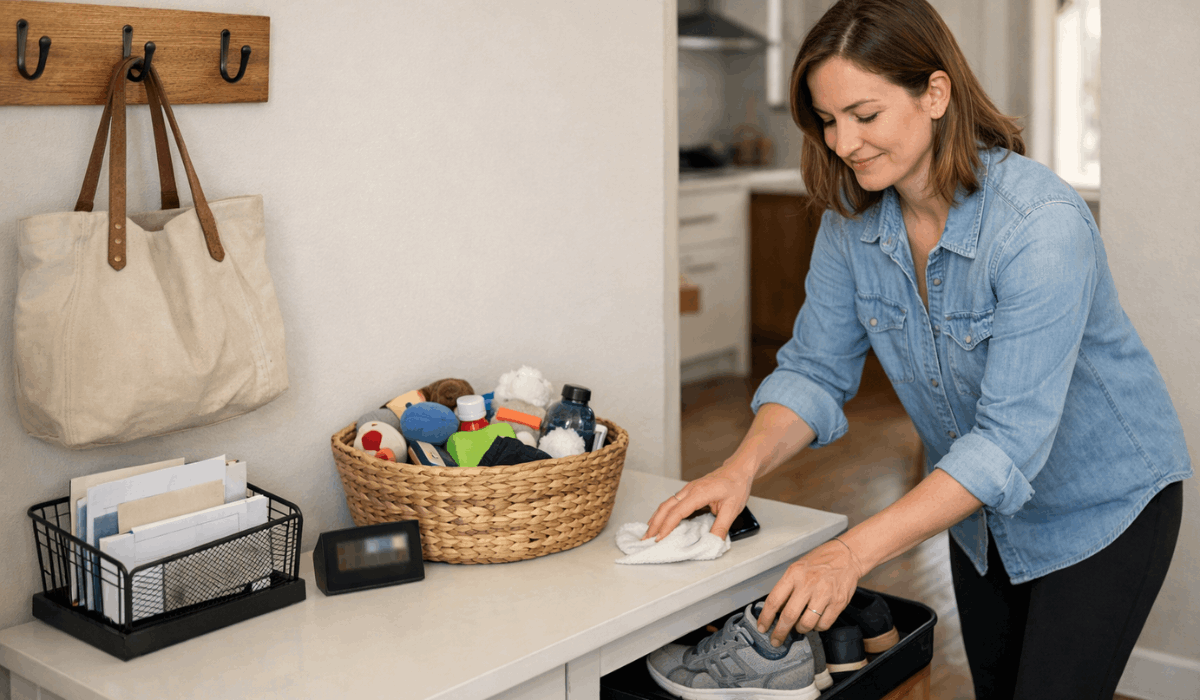
A two-minute reset targets high-traffic areas only. Clear the visible surfaces, return items in your immediate path, stop when two minutes end. The room stays functional without requiring a complete transformation.
The mechanics are simple:
- Scan one high-traffic zone like the kitchen counter or entryway
- Return visible items to their homes or drop them in a temporary basket
- Wipe one surface if it looks messy
- Stop at two minutes even if other areas remain untouched
The habit sticks because the ending is enforced. A perfectionist reset stretches until the room looks flawless, which means it rarely happens at all.
Also read: Home Organization Practices for People Who Keep Re-Organizing the Same Spaces
Build Systems That Work When You're Exhausted
A system only works if it functions on low-energy days. If the organization requires motivation, full attention, or extra steps when you are tired, the system will collapse the moment life gets busy.
Open Storage Reduces Friction on Low-Energy Days
Put the most-used items in easy-reach spots between shoulder and knee height. Store them in open bins or trays instead of behind cabinet doors or lids.
The reason is simple: lids and drawers add friction. When you are tired, that extra step is enough to leave the item on the counter instead of putting it away.
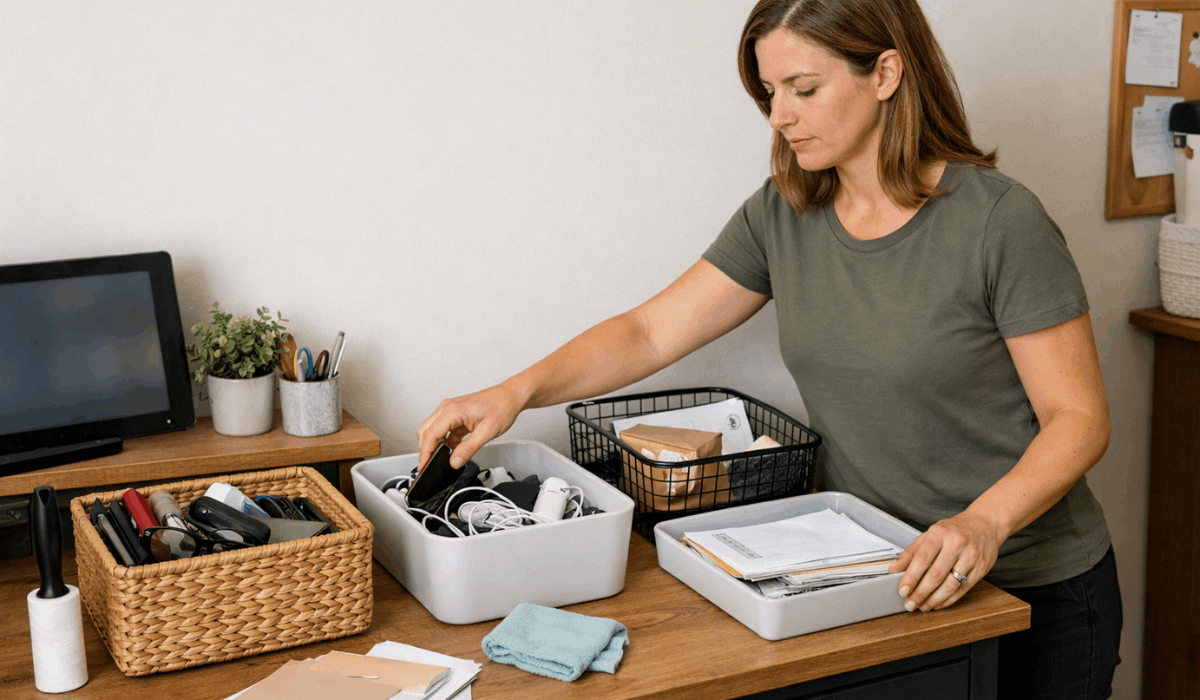
Use open bins for daily essentials like phone chargers, keys, and frequently worn shoes. Save closed storage for backstock, seasonal items, or things used less than once per week.
A quick comparison of storage friction levels:
| Storage Type | Friction Level | Best For |
|---|---|---|
| Open tray or bin | Lowest | Daily-use items you grab multiple times |
| Drawer with dividers | Medium | Items used several times per week |
| Cabinet behind door | Higher | Backstock or items used monthly |
| Labeled bin with lid | Highest | Seasonal or rarely accessed items |
Match storage friction to usage frequency. The more often you touch something, the fewer barriers should exist between you and putting it away.
Organize by Use, Not Category Labels
Unpopular opinion, maybe, but I think category-based organization is one of the biggest reasons systems fail for people with unpredictable schedules or variable energy.
Traditional organizing says group all office supplies together, all cleaning products together, all toiletries together. That logic works if you are setting up a store. It breaks down fast when you are trying to grab what you need and leave.
Organize by use instead. Store items where you actually use them most, even if it breaks traditional category rules.
Keep a small cleaning kit under the kitchen sink and another in the bathroom instead of centralizing all cleaning supplies in one closet. Store phone chargers near the couch, bed, and desk instead of keeping them in one "electronics" drawer.
Group things by task to speed decisions. Create small kits for repeat tasks:
- Morning routine kit: toothbrush, face wash, hair product, deodorant in one caddy
- School drop-off kit: masks, hand sanitizer, snacks, and a water bottle near the door
- Quick dinner kit: most-used spices, oils, and utensils in one reachable zone
Functional grouping reduces the number of decisions and trips needed to complete a task. Category grouping looks organized but adds steps every time you need something.
Test the setup for one week, then adjust based on what you reach for and what you ignore. If you keep walking to a different room for an item, move the item closer to where you use it.
Make Clutter Containable Instead of Invisible
Clutter gets stressful when it spreads across surfaces with no clear boundary and no plan for what happens next.
The goal is not to eliminate clutter entirely. The goal is to make clutter visible, contained, and temporary so it does not take over the room or your mental space.
The Temporary Container That Prevents Surface Sprawl
Place one clear container per problem area to catch items that need action but do not have a permanent home yet. Keep a temporary basket for items that need to be returned to other rooms, sorted, or decided on later.
The container makes clutter visible without letting it scatter. A single contained pile is easier to process than 12 items spread across three surfaces.
Set a hard limit for each container. When the container fills up, overflow becomes an immediate signal that it is time to clear it. Empty the temporary container on a simple rhythm: daily for five minutes or twice weekly if the volume stays low.
Keep "needs action" items separate from storage. A basket for items waiting to be filed, donated, or returned is not the same as a drawer for items that live there permanently. Mixing the two categories turns temporary clutter into long-term storage.
Container Limits Signal Overflow Early
I was skeptical about container size limits until I watched my "junk drawer" expand from one drawer to three in under six months. The lack of a boundary meant there was always room for one more random item, which turned into dozens.
Container caps create a forcing function. When a bin is full, something has to leave before something new can enter. That rule removes the gradual creep that turns organized spaces into cluttered ones.
Choose container sizes that match realistic usage, not aspirational minimalism. A family of four needs a bigger entryway basket than a single person does. A household that gets daily mail needs more paper sorting capacity than one that receives mail twice per week.
Use open storage for fast-drop items so you can see when the container is full without opening lids or digging through piles. Clear bins work well for categories you forget about, like backstock toiletries or seasonal accessories.
Common Perfectionism Traps and Simple Fixes
Perfectionism traps make the organization feel like a big project that requires ideal conditions to start. Simple fixes turn those traps into small, repeatable actions.
The Container-First Mistake
Most people buy matching bins, labels, and drawer organizers before setting up the actual system. Then the containers sit unused because they do not fit the real items or the real space.
My take on this is simple: organize with what you have first, then upgrade only after the system works for at least two weeks. After living with the setup, you will know exactly which spots cause friction, what sizes fit your shelves, and whether you need containers at all.
Buying containers first is expensive and creates pressure to use them even when they do not match your habits. Using a shoebox, basket, or repurposed tray removes that pressure and lets you test the system without financial commitment.
If you do buy organizers later, pick a few repeatable types so the look stays consistent across rooms. Three types of containers across the whole house create more visual calm than 15 mismatched bins.
Weekly Maintenance That Feels Light
A weekly maintenance plan works only if it feels light and realistic. Build it around short time blocks, high-traffic areas, and simple default steps.
Pick one anchor day for a 15 to 20-minute reset and keep the sequence identical every week:
- Collect items that drifted from their homes
- Sort them into keep, move, or let go piles
- Return keep items to their spots
- Wipe high-traffic surfaces
- Reset visible zones like counters and entryways
Add one support task per week, like laundry catch-up, trash and recycling, or a quick fridge check. Keep a 10-minute overflow check for the spots that re-clutter fastest, then stop even if other areas remain untouched.
The plan stays sustainable because the time limits are enforced. A 20-minute reset that stretches to 45 minutes becomes a chore you avoid. A 20-minute reset that ends at 20 minutes becomes a habit you keep.
Other perfectionism traps and their fixes:
- Over-sorting: Use three to five broad categories maximum so resets stay fast, not 15 micro-categories that slow every decision
- All-or-nothing cleaning: Pick one baseline task like clearing the counter and stop when it is done, even if the room is not perfect
- Keeping "someday" items: Give them one small box with a review date written on top, or let them go now
- Organizing for guests: Set up for your daily routine, not for a photo or a visit that may never happen
Make Shared Spaces Work Without Micromanaging
Shared spaces fail when the system depends on you correcting everyone else's choices. Simple rules, clear limits, and easy-to-follow zones remove the need for constant oversight.
Set one clear rule per zone. Bags go on hooks. Mail goes in the tray. Shoes go in the basket. One rule is easier to follow and enforce than a complex multi-step process.
Give shared items a single home so no one has to guess where things belong. The remote lives in the basket near the couch, not sometimes on the table and sometimes on the shelf. Clear placement removes the decision entirely.
Use open bins with labels for shared categories, but avoid tiny subcategories. One bin for "school items" works better than separate bins for lunch boxes, folders, and permission slips. Fewer categories mean fewer wrong choices.
Assign a short shared routine like a five-minute nightly reset with one small task per person. One person clears the table, another resets the living room, and a third handles the entryway. Shared effort keeps the load realistic and prevents resentment.
Add container caps so overflow shows up fast and triggers a quick reset before clutter takes over the space. A full bin is a signal to clear it, not expand it.
Questions People Ask About Home Organization Without Perfectionism
Q: How do I know if my standard is "good enough" or just messy? Good enough means the space functions for its purpose without requiring a full reset before each use. A kitchen counter with one small appliance visible is functional. A counter buried under mail and dishes is not. Function is the test, not appearance.
Q: What if other people in my home expect perfection? Set clear expectations about what organized means in each space using the non-negotiable outcomes. A clear dining table and a walkable floor path are reasonable. Magazine-ready styling is not. Talk through the baseline together so everyone agrees on the functional standard.
Q: How often should I review and adjust my organization's systems? Do a quick life check when your schedule shifts, like when school starts, work hours change, or you move. Reset your daily loops by moving essentials closer to where you now use them most. Review container limits monthly and resize categories that no longer fit your life.
Q: Is it okay to have visible clutter as long as it's contained? Contained clutter in a temporary basket or designated zone is fine as long as you clear it on a rhythm like daily or twice weekly. Clutter becomes a problem when it spreads across surfaces, has no boundary, and sits indefinitely without a clearing plan.
Q: What is the biggest mistake people make when trying to organize without perfectionism? Buying containers and supplies before testing the system. Organize with what you have first, live with it for at least two weeks, then upgrade only the parts that cause friction. Starting with purchases creates pressure to use items that may not fit your habits or space.
Conclusion
Home organization without perfectionism works when systems are simple enough to repeat on exhausted days, not just motivated ones.
Good-enough standards keep baselines realistic, and organizing by use instead of category cuts unnecessary steps and decisions every single day.
Set short time limits for resets and maintenance so the habit stays light, and use container caps to signal overflow before clutter spreads.
Start with one small zone today and build a system you can actually sustain this week, because consistent function beats occasional perfection every time.