The kitchen drawer looks perfect for about three days. Then the junk creeps back in, the utensils mix with the batteries, and you're digging through chaos again, wondering why this keeps happening.
Most organizational advice treats your home like a museum project. One big transformation, perfectly labeled bins, everything color-coded and camera-ready.
But real homes need systems that survive Tuesdays at 7 PM when you're exhausted and just need to find the scissors. The ones that work are built for repetition, not perfection.
Why Most Organization Systems Collapse (and What Sticks Instead)
An organization fails when it requires more energy than you reliably have. The system looks beautiful on Saturday morning when you're motivated and caffeinated. By Wednesday evening, when you're tired and rushing, it falls apart.
Look, I get it. I've bought the matching baskets. I've made the detailed labels. I've separated my cables by device type like some kind of tech librarian.
None of it lasted because I built systems for my best self instead of my average Tuesday.
The Real Problem Is Decision Fatigue, Not Laziness
Every time you hesitate about where something belongs, you add friction. And friction creates piles.
If putting something away requires you to open a lid, move other items, or choose between three similar categories, that item is staying on the counter. This isn't laziness. This is your brain protecting its decision-making energy for things that matter more than which bin holds the phone chargers.
The solution is brutal simplicity. One location per item type. Visible storage. Zero lids when possible.
My take on this is simple: if you have to think for more than two seconds about where something goes, your system is too complicated.
I reorganized my "tech stuff" drawer into three broad zones last year: charging cables, batteries and adapters, and random small electronics.
Everything finds a home in under five seconds now.
Good Systems Work When You're Tired
Test your organization's setup at your lowest energy point. Can you put things away at 9 PM after a long day? Can someone else in your home use the system without asking you questions?
If the answer is no, the system serves Instagram, not your life.
Practical organization protects your future tired self by making the right choice the easiest choice. Keys go in the bowl by the door because the bowl is right there, it's obvious, and it takes zero brain power to drop them in.
Build Zones Around Your Actual Habits
Stop trying to change your behavior to fit some idealized organization system. Build zones where your habits already happen.
I tried keeping my sunglasses in my bedroom for months because that's where organization blogs said "accessories" should live. They kept ending up on the kitchen counter anyway because that's where I set them down when I walk in from the car.
So I moved the zone. One small tray on the kitchen counter now holds sunglasses, keys, and my wallet. Problem solved in 30 seconds.
Drop Zones Save You From the Daily Scramble
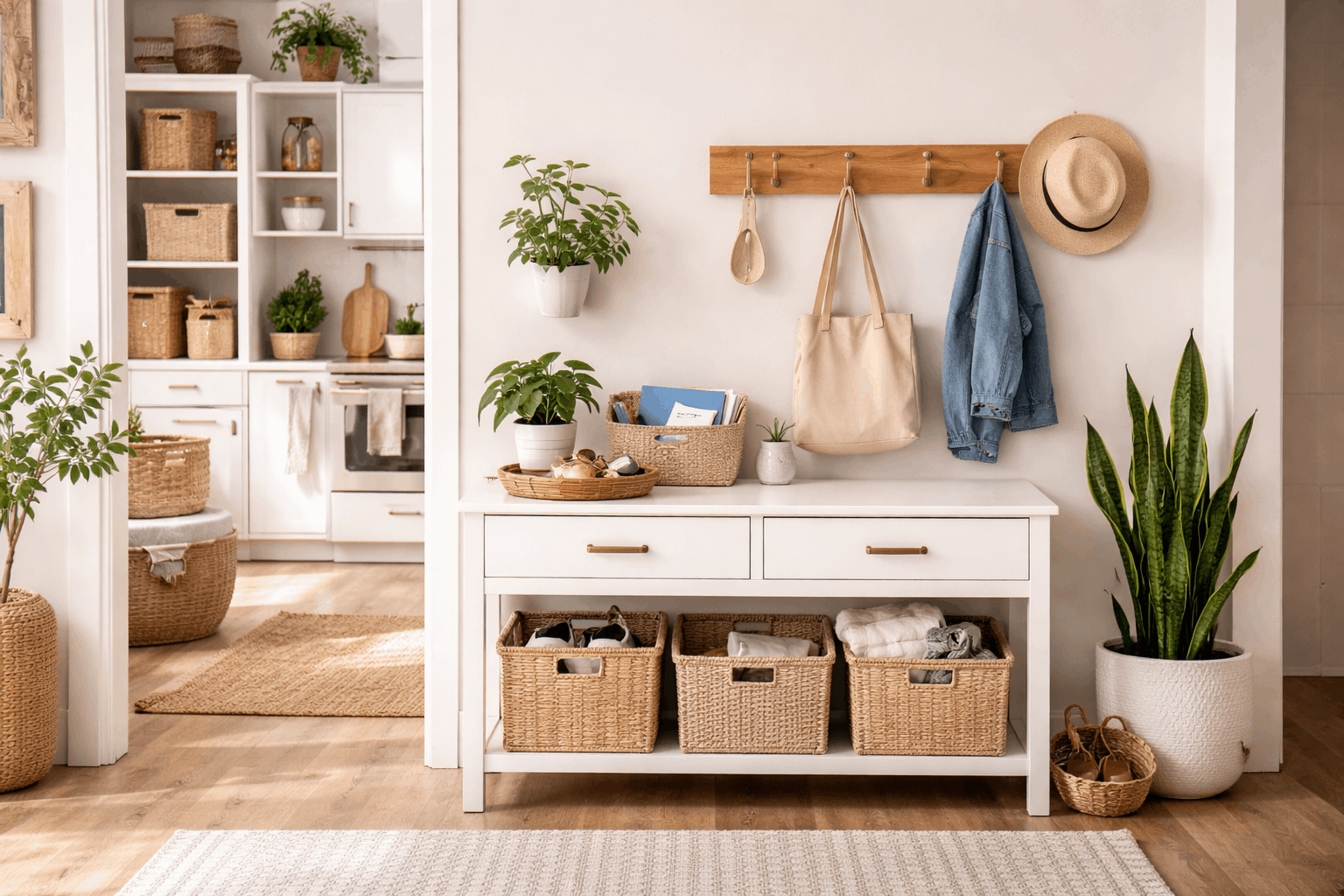
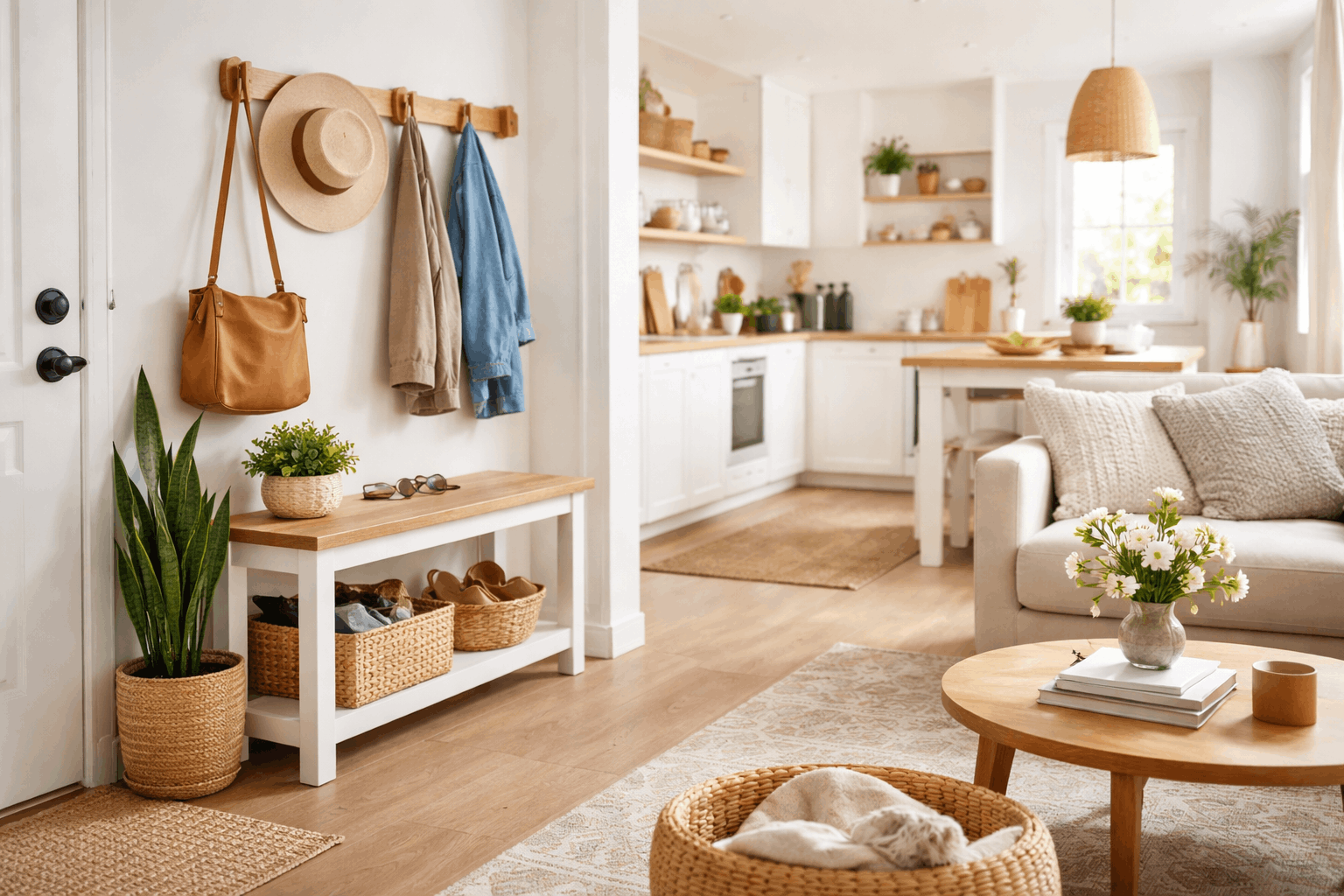
Create one spot for everything you carry daily. Not five spots. Not "wherever makes sense." One spot that you can reach in a single step from your main entrance.
The setup should include:
- One tray for wallet and sunglasses
- One hook for keys
- One small bowl for headphones and small items
If items repeatedly land outside this zone, the zone is in the wrong location. Move the zone closer to where the habit happens instead of trying to retrain the habit. This saved me probably 15 minutes a week of searching for my keys alone.
Also read: Household Item Care for People Who Keep Replacing the Same Things
Use Zones to Cut Down the Steps
Place supplies exactly where you use them. Cleaning wipes near the bathroom mirror. Scissors near the spot where you open packages. Laundry basket where you undress.
When the tool lives next to the task, you'll do the task more often. This is how an organization becomes supportive instead of nagging.
I keep a small bin of cleaning supplies under every sink now instead of one central cleaning closet. Wiping down the bathroom counter takes 20 seconds when the wipes are already there.
It took four minutes when I had to walk to the hall closet first. Guess which version I skip?
Storage Should Shrink Decisions, Not Add Them
Complicated storage kills momentum. Lids slow you down. Stacking forces you to move three things to reach one. Tiny categories make you hesitate.
The best storage makes items visible enough to remember but contained enough to prevent spread. Open bins beat closed containers. Shallow drawers beat deep ones.
Fewer Categories Beat Perfect Categories
Combine similar items into broader groups. "Charging" beats separating phone cables from tablet cables from laptop cables. "Bath backups" beat dividing shampoo, conditioner, soap, and lotion into individual spots.
When categories are too specific, you hesitate. And hesitation creates piles that never get sorted.
Call me biased, but I think most organizing advice over-categorizes everything. I combined 12 small bathroom categories into four broad ones: daily use, backups, medicine, and tools. Putting things away became automatic because every item has an obvious home now.
Label for Speed, Not Instagram
Labels exist to help anyone in your home put something away without needing to ask you questions. They should use plain language that matches how people talk.
Good labels:
- Batteries
- Cords
- Winter hats
- Mail to review
Skip the cute phrases. Skip the fancy fonts. Just write the word that comes to mind when someone needs that item.
Short, clear labels reduce household conflict because everyone knows where things belong. They also protect your system from drifting back into chaos when life gets busy.
Reset Routines Beat Deep Cleaning Marathons
An organization lasts when you catch clutter before it becomes a weekend project. Small resets work better than waiting for motivation to strike.
A reset means returning items to their homes and clearing surfaces. Not deep cleaning. Not reorganizing. Just putting things back.
This approach protects your motivation because you finish quickly and see immediate progress. Ten-minute resets beat three-hour organizing sessions because you'll do them.
The Weekly Maintenance Lap That Changed Everything
Pick one day each week to refill supplies, return loose items, and reset zones that drifted. Saturday morning works for some people. Sunday evening works for others.
The schedule matters less than the consistency. When the lap happens at the same time every week, it becomes automatic instead of optional.
I do mine every Sunday at 7 PM, and it takes about 20 minutes. I walk through the main living spaces, return items to their zones, refill bathroom supplies, and reset the kitchen counter.
The house stays functional all week because nothing piles up long enough to become overwhelming.
Paper Management in Minutes, Not Weekends
Set one inbox for incoming mail and papers. Process items quickly into three outcomes: act on it, file it, or recycle it.
Keep a small kit nearby with a pen, scissors, and a recycling bag so you can handle paper the moment it arrives. This removes the friction that turns paper into permanent counter clutter.
I keep a vertical file holder on my kitchen counter with these sections:
- To handle this week
- To file (receipts, important docs)
- To recycle or shred
Mail gets sorted the same day it arrives. No more piles. No more "I'll deal with this later." The system takes 90 seconds per day and prevents the paper avalanche that used to take over my dining table.
Keep Your System Flexible or Watch It Die
Your home changes. Your routines shift. Your household needs evolve. A rigid system breaks when life doesn't match the original plan.
The most effective organization adapts without requiring you to start over. Small adjustments beat complete overhauls.
Seasonal Mini-Audits Keep Things Current
Pick one category per season and reset it quickly. Winter coats in spring. School supplies in summer. Holiday items in January. Pantry snacks whenever they start to overflow.
This approach keeps your system current without turning the organization into a constant project. Twenty minutes four times a year beats letting categories decay until they need a full rebuild.
I review my coat closet every April and my kitchen pantry every October. I remove items we stopped using, redefine the container limits, and refresh any labels that faded. The whole process takes less time than one episode of TV and prevents major clutter buildups.
Share the System, or It Won't Survive
Explain your zones in simple terms. Keep rules short enough that anyone can follow them without special training.
Make it easier to do the right thing by using open storage, keeping items visible, and placing zones near where items get used. The system lasts when everyone can maintain it without needing to ask you how.
According to research from the National Association of Productivity and Organizing Professionals, shared household systems work best when they require minimal instruction and can be understood at a glance.
If your organization's system only works when you're home to manage it, it's not a system. It's a part-time job.
Questions People Ask About Home Organization Practices
Q: How often should I completely reorganize a space?
Honestly? Almost never if your system is working. Do seasonal mini-audits on specific categories instead of full overhauls. Reset zones when they drift, but avoid the temptation to redo everything from scratch every few months.
Q: What if my household members won't follow the organization system?
The system is probably too complicated or the zones are in the wrong spots. Watch where items naturally land and move your zones to match those habits. Make storage so simple that following the system requires less effort than ignoring it.
Q: How do I maintain organization when I don't have time for weekly resets?
Start with one 10-minute reset per week instead of trying to maintain everything perfectly. Focus on high-traffic zones like the kitchen counter and entryway. A partial system you can maintain beats a perfect system you abandon.
Q: Should I buy new storage containers before organizing?
No. Organize with what you have first, then identify specific storage gaps. Most people already own enough containers but they're holding items that should leave the house. Empty the excess, then see what storage needs remain.
Q: What's the biggest mistake people make with home organization?
Building systems for their most motivated self instead of their average tired Tuesday. An organization has to work when you're exhausted and distracted, not just when you're fresh and focused. Test every system at your lowest energy point.
Conclusion
Lasting organization comes from tiny choices you can repeat every single day, not dramatic overhauls you do once a year. Small zones, simple categories, and quick resets create stability that survives real life with all its mess and chaos.
Pick one high-traffic area today, set one clear boundary for what stays there, and test a 10-minute reset this weekend. The system that works is the one you'll maintain when motivation disappears and Tuesday evening arrives again.