Most people who struggle with clutter have already tried to organize. They bought the bins, labeled the shelves, and spent a full Saturday sorting. Three weeks later, the pile was back.
Sound familiar? The problem is almost never willpower.
Most home systems are designed to look organized, not to survive a Tuesday when you're exhausted and walking through the door with both hands full. That's the real test.
This is for the person who has already tried and wants a home system that lasts.
Start With a Map, Not a Shopping Cart
The most common first mistake is buying containers before knowing what needs organizing. Storage looks like the solution, so the instinct is to go get it.
Skip the store. Walk through your home first.
Go room by room and write down what each space is supposed to help you do every day. Not what it currently looks like. What it's for. Then circle the two or three items causing most of the mess or wasted time. That short list is your real starting point.
Pick One Pilot Zone and Win There First
My take: trying to reorganize the whole house at once is how most people burn out before the weekend ends. Pick one small pilot zone, get it working for two solid weeks, and let that early win carry momentum forward.
The pilot zone can be a kitchen counter, a junk drawer, or the spot near the door where everything lands. It doesn't need to be impressive. It needs to work reliably and be easy to repeat.
Early wins matter because they change how you feel about the entire process. One functioning zone beats five half-finished rooms with good-looking bins and no system behind them.
Define Zones by What You Do, Not by Room Names
Stop organizing by room name. Start organizing by action.
"Drop keys." "Pack lunch." "Charge devices." "Do laundry." Zones built around your real routine work. Zones built around what a room is traditionally called often don't.
If the phone charger always ends up in the wrong room, the system is wrong. Move the charger. Keep each zone limited to items you use regularly, and move rarely-touched things to a separate storage spot. Mixing them into active zones is how zones quietly fall apart.
Build Entry Systems That Stop the Daily Pile-Up
Most clutter grows in transition zones: the spot near the door, the kitchen counter, the chair nobody actually sits in. These are places where items land without a plan and stay without one.
The fix is two simple systems near your exit: a drop zone and a launch zone. Together, they handle the start and end of every day.
The Drop Zone That Works in 10 Seconds
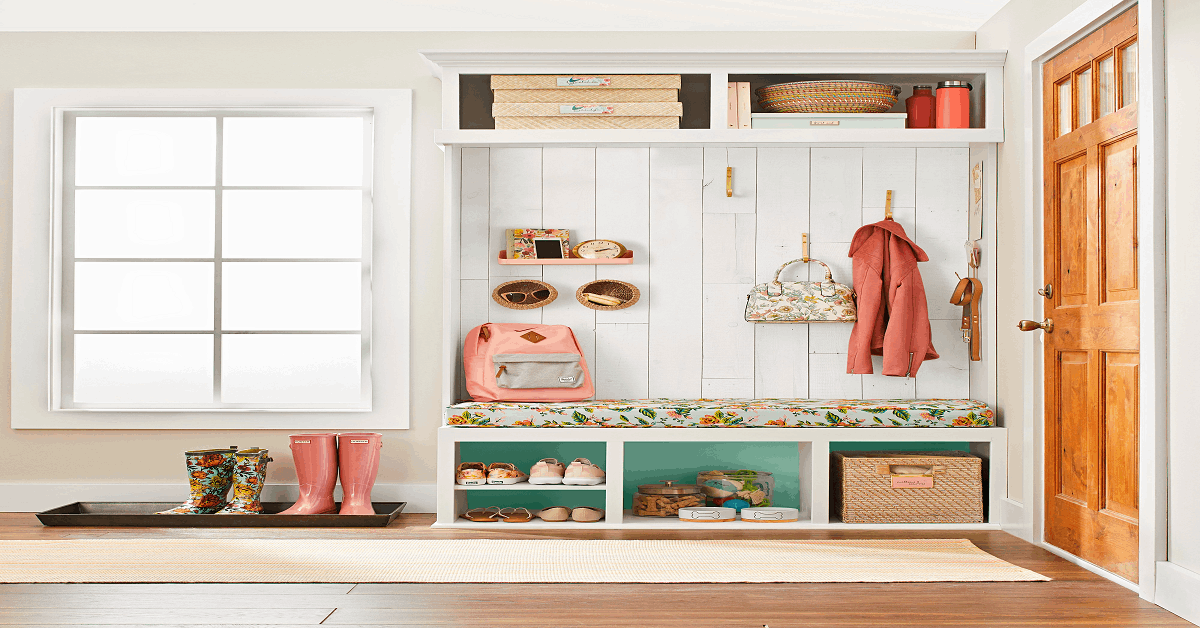
One tray or bowl for keys and wallet. One hook for bags. One small bin for mail. That's the whole system.
The rule: everything that enters the house lands in its spot within 10 seconds. If the spot is inconvenient or too small, fix the spot. The habit cannot compensate for a broken layout.
A few things that make a drop zone functional in practice:
- A shoe spot sized to your household's actual number of daily pairs
- A mail bin that gets cleared once a week on a set day, not "whenever."
- Hooks positioned at the right height for everyone who uses them
Keep the drop zone minimal. Too many containers start to look organized, but function like a junk pile with better aesthetics.
Also read: How to Keep Your Home Organized When You’re Tired, Busy, and Over It
The Launch Zone That Saves Your Mornings
If you ask me, the launch zone matters more than the drop zone for people who struggle with rushed mornings. The two-minute night-before reset is the piece most people skip, and it's the piece that prevents morning chaos.
Store everything you need to leave the house in one basket or shelf near the exit. Work supplies, gym gear, school materials. The night before, spend two minutes loading it up.
Add a whiteboard or sticky note for "must not forget" items. Visual prompts cut the mental effort of remembering when your brain is already overloaded at 7 a.m.
I tried this myself and found that the two-minute night reset made busy mornings noticeably smoother. Not because I became a different person. Because I removed the decisions from the hardest part of the day.
Containers Are Boundaries, Not Just Boxes
A detail most organizing content misses: containers are not about storage. They are about limits.
When a bin is full, you cannot add more without removing something first. That's the point. A container tells you when a category has grown too large. A shelf or drawer can never do that.
Start with broad categories: "batteries," "cables," "first aid," "backstock pantry." Refine only when the broad grouping becomes genuinely hard to use.
Match the Container to How Often You Use the Thing
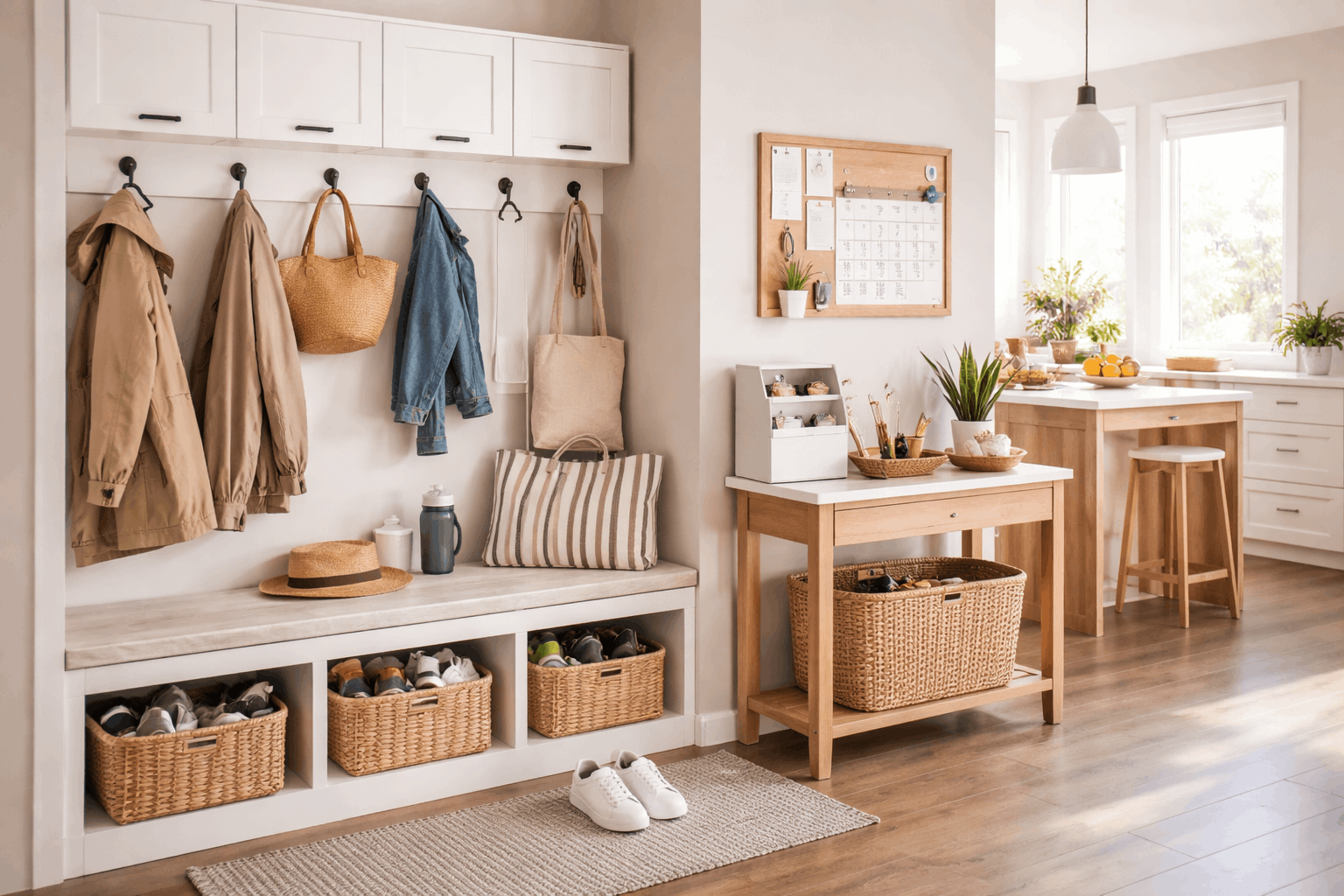
Daily-use items belong in shallow bins, open trays, or front-facing baskets. Grab-and-return speed matters for things you touch every day.
Occasional items work in lidded containers on mid-shelves. Rarely-used items go higher or further back, but keep them grouped. Mystery storage, where you're not sure what's in a bin without opening it, is where systems go to quietly die.
| Use Frequency | Container Type | Ideal Placement |
|---|---|---|
| Daily | Open tray, shallow bin | Eye level, easy reach |
| Weekly | Labeled bin with lid | Mid-shelf, front-facing |
| Rarely | Sealed or lidded container | High shelf or back of cabinet |
Container size matters more than most people realize. Extra empty space inside a bin invites random items that don't belong, and that's the beginning of category drift.
Label for Action, Not for Looks
Labels should say "Tools," "Baking," or "Spare Chargers." Simple words that tell you what to do, not what looks best in a pantry photo.
Place labels where you'll see them when reaching for the container: the front edge of shelves, drawer faces, the front of bins. If reading a label requires pulling the container out first, it's not doing its job.
If multiple people share the space, agree on the label language together. Consistent naming across a household is a small detail that prevents a lot of daily quiet friction.
The Organizing Advice I've Always Disagreed With
Every article, every podcast, every reorganization video starts the same way: declutter first, then organize.
I've always believed that advice is backward. Spend a Saturday purging with no system in place, and there's less stuff, but no structure to put it in. Monday arrives, and the piles start forming again immediately.
Organize first. Build the zones, set the containers, define the limits. The decluttering happens naturally when you try to fit your belongings into a zone with a defined capacity. The container makes the decision for you, which removes the emotional weight from the process entirely.
Declutter as a byproduct of building the system. Not as a required first step that most people dread and delay.
Protect What You Own While You Store It
A well-organized home also reduces damage to your belongings. Damaged items create replacement clutter, and that cycle is worth breaking early.
Some simple care rules worth building directly into your storage system:
- Keep papers and photos dry and upright, away from humidity and direct sunlight
- Store electronics away from heat and moisture sources
- Use breathable bins for fabrics and sealed containers for anything that could attract pests, like seasonal clothing or pantry backstock
- Set a "clean before return" rule for sports gear and reusable containers
These aren't complicated. They prevent the slow background damage that leads to "I need to replace that" six months later.
Build Cleaning Into How You Store Things
Keep cleaning wipes or a small duster near zones that collect dust quickly, like entryways and kitchens. Use washable liners in drawers and bins where spills happen.
Clutter and disorganized storage tend to create background stress even when surfaces look relatively tidy. Keeping stored items clean and protected is part of keeping the home functional, not just visually orderly.
Small Upgrades That Make the System Run Itself
Once the basics work, small improvements reduce friction without adding complexity. A shared shopping list app, a two-minute weekly reset reminder, or a simple calendar prompt can keep a system running with minimal ongoing effort.
Use visual cues like clear bins, drawer dividers, and empty space rules. When something doesn't belong in a zone, it should be obvious at a glance. That visibility is what makes a system self-correcting instead of requiring constant active management.
Focus on one upgrade at a time, test it for two weeks, and keep only what genuinely helps your routine. Random gadgets don't fix systems. Targeted solutions do.
One In, One Out for Categories That Keep Growing
Pick one category that grows faster than you can manage: mugs, cables, skincare products, toys. Commit to removing one item whenever a new one enters that category.
Keep a donation bag in a closet so the rule stays effortless to follow. The psychology of habit formation is consistent on this point: small, low-effort rules outlast big periodic decluttering sessions because convenience is what makes behavior stick.
The one-in, one-out rule is boring. That's exactly why it works.
Questions People Ask About Home Organization
Q: How long does it take for a home organization system to feel automatic? Most habits take four to eight weeks of consistent repetition before they feel effortless. Start with one zone and one routine. Once that runs without thought, build from there.
Q: What happens when my family won't follow the system? The system is probably asking too much of them. Reduce the steps required and make the right action the easier one. A drop zone that requires three steps to use needs to be simplified to one. Systems that rely on willpower from multiple people rarely survive real life.
Q: Does the one-in, one-out rule work for every category? Consumables like food, cleaning supplies, and toiletries are poor fits because they're meant to be used up. Focus this rule on durable categories that grow without a natural endpoint: mugs, cables, bags, extra linens, and workout gear.
Q: Should I reorganize every room with zones or only problem areas? Use zones where you have recurring daily friction. Rooms that already work don't need rebuilding. The zone approach is a tool for trouble spots, not a requirement to redesign your entire home from scratch.
Q: What if I set up a zone and stop using it the way I planned? Change the zone. If an item keeps drifting to a different spot, that's the system telling you the design doesn't match how you actually move. Shift the location, resize the container, or redefine what belongs there. A good system adapts to you. If you're fighting it, adjust the design, not your habits.
Conclusion
A strong home organization system does not need to be perfect on day one. Start with one zone, one drop system, and one two-minute routine, and build from there.
The system that survives a tired Wednesday is worth more than the one that only worked on a calm Sunday. Give it two weeks, adjust what doesn't fit, and let the early wins carry the rest.