Family organization works best when it supports real life instead of fighting it.
Simple systems help everyone find what they need, put things back fast, and reset the house without stress.
You can start with one area today and expand once it feels easy.
Start With Family Zones and Clear “Homes”
A family-friendly system starts when every high-traffic item has one clear place to live.
Zones reduce daily searching because you store things where you actually use them.
Pick a few zones that match your routine, then keep the setup simple enough for kids to follow.
When a zone gets messy, you reset it instead of reorganizing the whole house.
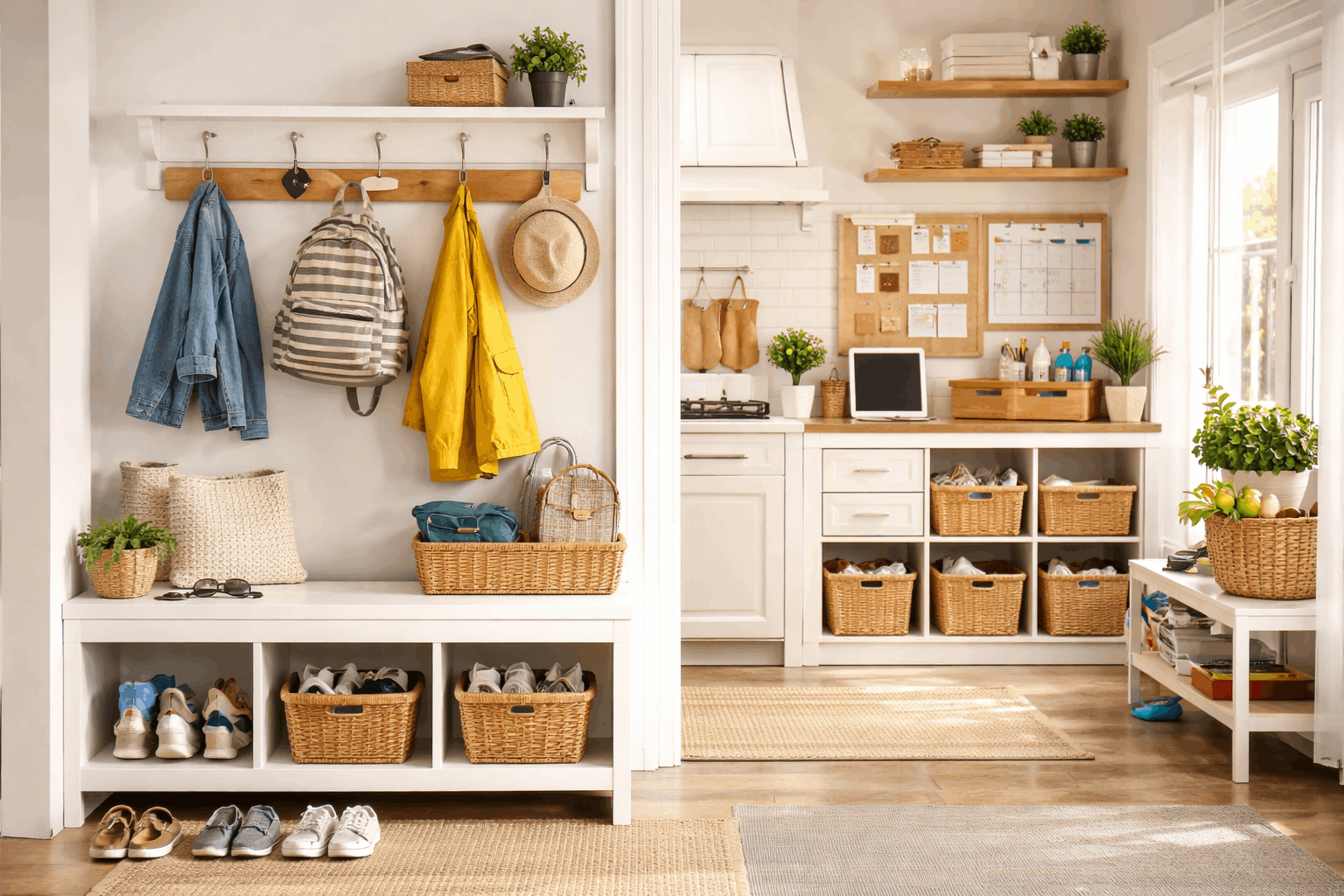
Entryway Drop Zone
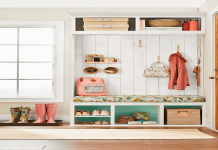
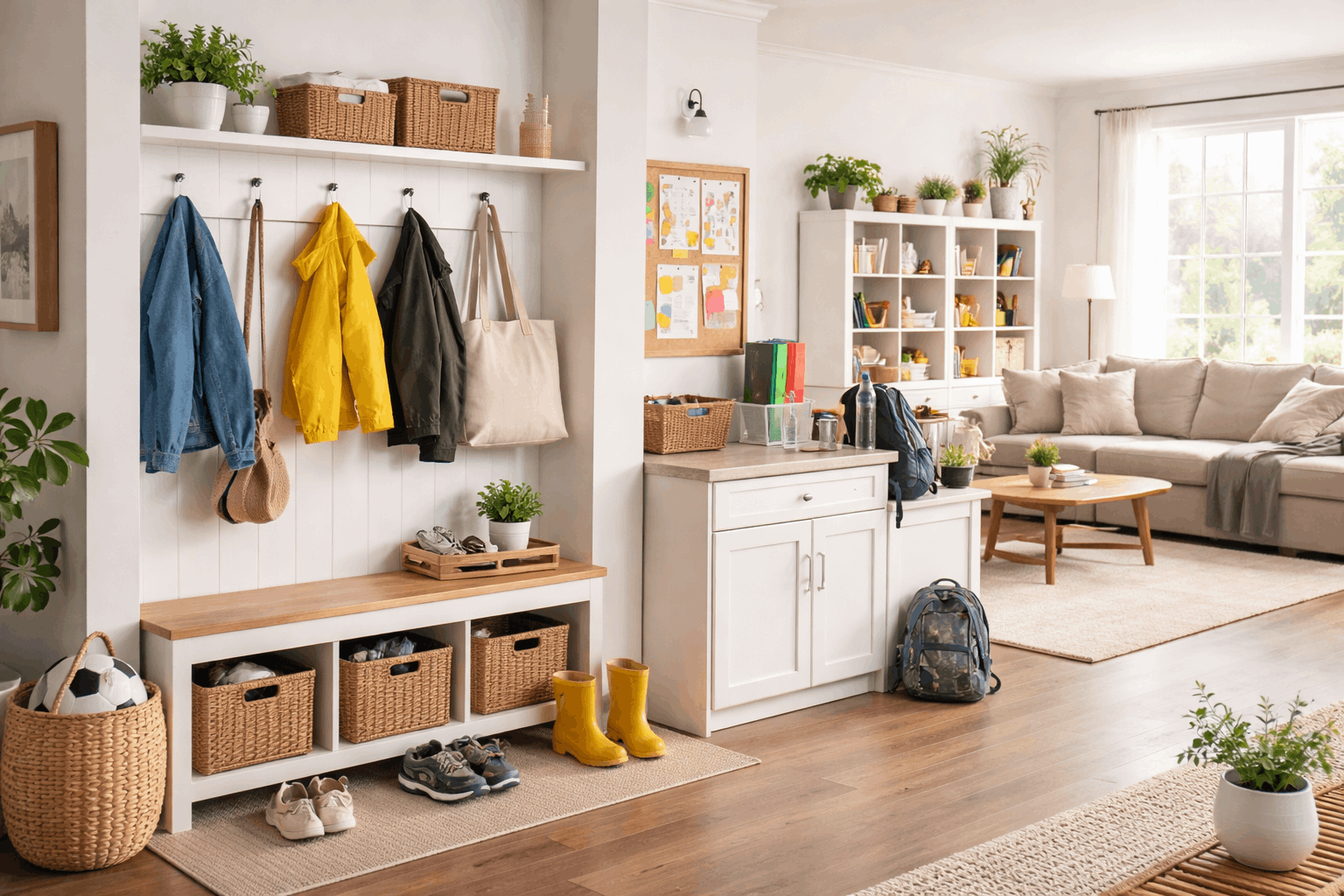
Create one landing spot where shoes, bags, coats, and keys go every time you walk in.
Use a shoe tray, a few hooks, and one small basket for items that belong elsewhere.
Keep the area easy to wipe down so dirt stays contained and the space stays usable.
Kitchen Command Corner
Choose one small counter section or shelf for the family calendar, chargers, and daily notes.
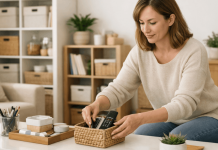
Use a tray for mail and one container for school essentials like lunch bags and water bottles.
Wipe the surface daily so the zone stays clear and you do not lose important papers.
Use Simple Containers and Labels Kids Can Follow
Containers work when they make cleanup faster, not when they look perfect.
Open storage reduces steps because kids can drop items in without opening lids.
Simple labels prevent arguments because the system tells everyone what goes where.
If a bin overflows often, shrink what you keep or add one more container in the same zone.
Open Bins for Daily Items
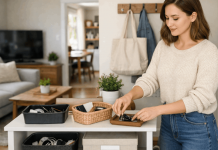
Use open bins for shoes, sports gear, craft supplies, and quick-grab items like hats and gloves.
Choose containers that are light enough for kids to move and wide enough for easy tossing.
Keep only the current season in the main bins so the system stays realistic.
Visual Labels and Color Cues
Use pictures for younger kids and short words for older kids so labels stay clear.
Assign one color per child for folders, hooks, or drawers to reduce mix-ups and morning stress.
Replace worn labels quickly so the system stays easy and does not turn into guesswork.
Build a Daily Reset That Fits School Nights
Daily resets work when they are short, predictable, and tied to moments you already have.
A ten-minute routine prevents clutter from becoming a weekend project.
Focus on surfaces, floors, and the few zones that affect the whole family.
End the reset with tomorrow’s essentials placed where they will be used first.
10-Minute Evening Sweep
Set a timer and do one fast loop to return items to the entryway, kitchen, and living room zones.
Use one basket to collect strays, then put them away or park them in a single return spot.
Finish by clearing one main surface so the next morning starts calmer.
Morning Launch Routine
Pack bags and lunches in the same order every day so mornings need fewer decisions.
Store backpacks, shoes, and outerwear together so kids can dress and leave without backtracking.
Do a quick check for water bottles and homework so you avoid last-minute delays.
Manage Paper, Permission Slips, and School Stuff
Paper is hardest when it has no landing place and keeps spreading across the house.
A simple paper flow helps you act fast, file what matters, and recycle the rest.
Keep the system small, so you will use it even during busy weeks.
Protect important documents in one safe spot so you do not scramble during appointments.
One Inbox and One Action Tray
Create one inbox for all incoming paper so nothing lands on random surfaces.
Use one action tray for items that need signatures, payments, or quick responses.
Clear the tray at the same time each day so deadlines stop surprising you.
Weekly Paper Purge
Pick one day each week to empty backpacks, recycle flyers, and file what you must keep.
Use a small folder per child for school records so papers do not pile up in loose stacks.
Scan or photograph key documents if that helps you reduce physical storage.
Keep Clothes, Toys, and Gear Under Control
Clothes and toys stay manageable when you set limits that match your storage space.
Use the container as the boundary, then stop adding when it is full.
Keep care routines simple so items last longer and replacements happen less often.
Teach kids one clear “done” step, like closing the drawer or returning toys to one bin.
Laundry Flow Without Piles
Create one hamper per main area and do not allow clothes to build up on floors or chairs.
Fold or sort right after drying so clean laundry does not become a second clutter problem.
Treat stains quickly and air out damp items so clothes last longer and the smell stays under control.
Toy Rotation and Limits
Store most toys out of sight and keep only a small selection available each week.
Use one bin per type of play, like building, pretend, or art, so cleanup stays fast.
Donate or pass on toys that never get used, so space supports the toys kids actually enjoy.
Make Systems Stick With Weekly Maintenance
Weekly maintenance keeps small messes from becoming overwhelming and discouraging.
Choose one short reset that touches the zones that drift during the week.
Fix the system when it fails instead of blaming the family for not following it.
When routines feel heavy, reduce steps and remove extra categories until it feels easy again.
20-Minute Weekend Reset
Pick one weekend day for a quick sweep of the entryway, kitchen, bathroom, and living room.
Refill basics like soap, wipes, and laundry supplies so the week starts without mini emergencies.
Do a fast floor check for stray items and return them to their zones in one pass.
Seasonal Review and Donate
At each season change, remove outgrown clothes, broken items, and unused gear from active storage.
Clean and store seasonal items so they stay in good condition and are ready next time.
Keep a donation bag in a closet so decisions happen gradually rather than all at once.
Conclusion
Simple home organization for families works best when you build systems that match your actual days.
Start with one zone, one container limit, and one short reset routine that you can repeat.
When something fails, adjust the system instead of starting over from scratch.