The junk drawer gets reorganized every three months. You buy new bins, create detailed categories, label everything perfectly. Two weeks later, it's chaos again.
Most organizational advice assumes you'll maintain the same energy level you had when you set up the system. Clean slate Saturday becomes overwhelmed Tuesday, and suddenly those 12 subcategories for office supplies feel ridiculous.
Real life needs systems that survive your worst days, not just your best ones. Simple organization works when you're tired, rushed, and just need to find the scissors without excavating three drawers.
Why Complicated Systems Collapse After the First Busy Week
Organizational systems fail because they require decisions your exhausted brain refuses to make. The setup looks perfect when you're motivated and caffeinated on a Saturday morning.
But Wednesday at 8 PM, when you just want to put something away and collapse on the couch, a system requiring you to choose between "office supplies," "desk accessories," and "writing implements" becomes an obstacle you walk around instead of through.
The Real Problem Is Decision Fatigue, Not Lack of Discipline
Every time you hesitate about where something belongs, you add friction. That hesitation creates piles because your brain is protecting its decision-making energy for things that matter more than which drawer holds the tape.
Complicated categories multiply decisions. Simple categories eliminate them.
I'll be real with you: I spent two years maintaining a "perfectly organized" kitchen with separate containers for baking supplies, breakfast items, snack foods, and pantry staples.
Every time I put groceries away, I had to decide which category each item belonged to. Crackers could be snacks or pantry staples. Oats could be for breakfast or baking.
The system collapsed constantly because it required too much thinking. When I combined everything into "dry goods" and "cans," putting groceries away became automatic.

Simple Means It Works When You're Exhausted
Test your organization's setup at your lowest energy point. Can you use the system at 9 PM after a terrible day? Can someone else in your household put things away without asking you questions?
If the answer is no, your system is too complex. It serves an idealized version of yourself that doesn't exist most days.
Simple organization protects your future tired self by making the right choice the obvious choice. One bin for batteries. One drawer for kitchen tools. One basket for mail. Zero thinking required.
Start by Limiting What You Keep, Not Buying More Storage
Most organization advice tells you to buy containers to fit your stuff. This is backward.
Your space has a capacity. That capacity is your limit, not a challenge to overcome with clever storage solutions.
Your Space Defines How Much You Can Keep
The shelf, drawer, or closet is the boundary. When it's full, items need to leave before new ones come in. This single rule prevents the overflow that breaks every organizational system.
Call me biased, but I think the storage industry has convinced people that space problems are solved by buying more containers. They're not. Space problems are solved by owning less stuff.
The container rule changed everything for me. My mug cabinet holds eight mugs. When I get a new one, an old one leaves. The cabinet never overflows, and I never spend time reorganizing mugs because the system self-regulates.
Fewer Items Make Every System Work Better
Organization becomes easier when you keep only what your space and routine can actually support. Too many items make essentials harder to find and harder to put away.
Clutter hides what you use daily. A drawer with 30 items takes longer to search than a drawer with 10 items, even if both are "organized." Less volume means faster access and faster cleanup.
Unused items add maintenance work because they take up space and attention. Every item you keep is something you have to organize, clean around, and manage. Removing excess lowers the effort required to keep your space functional.
According to research from the National Association of Productivity and Organizing Professionals, reducing item volume by 30 to 40 percent makes organizational systems significantly easier to maintain without requiring additional storage purchases.
Build Zones That Match Your Real Movements
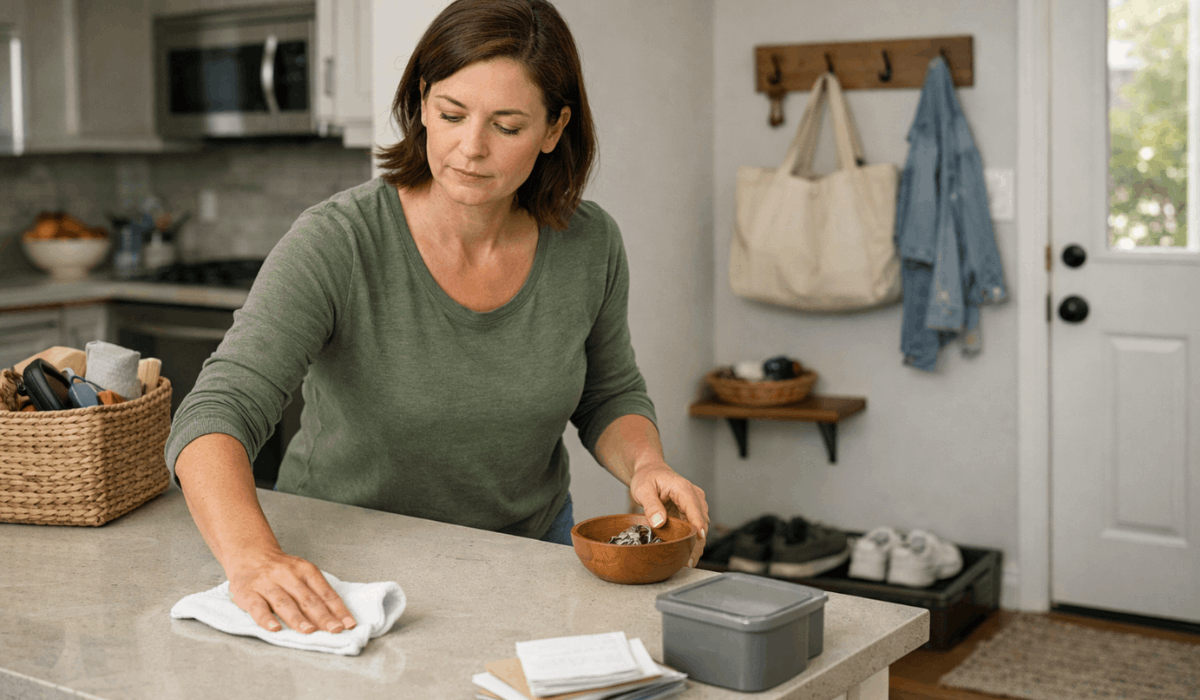
Stop designing zones based on where you think items should go. Build zones where items actually land.
If keys always end up on the kitchen counter, that's where the key zone lives. Fighting your natural habits wastes energy you could spend on things that matter.
Zones Should Follow Habits, Not Fight Them
Organization works when zones reflect how you actually move through your day. Watch where items naturally accumulate for one week. Those spots are telling you where zones should exist.
Create landing spots for daily items where you already drop them:
- Keys and sunglasses near the door you use most
- Cleaning supplies near the surfaces you clean most often
- Scissors and tape where you open packages
- Phone chargers where you sit most frequently
When zones match real behavior, putting things away takes seconds instead of minutes. You're not fighting your habits. You're supporting them with simple infrastructure.
Also read: Household Item Maintenance for People Who Keep Replacing the Same Things
Clear Purpose Beats Perfect Categories
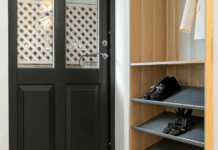
Every zone should support one main task or function. Kitchen counter zone handles mail and keys. The entryway zone handles shoes and coats. The bathroom zone handles daily toiletries.
Clear zones speed up cleanup because you know exactly where items belong without thinking. When zones have obvious purposes, everyone in a shared space can follow the system without needing detailed instructions.
Keep items contained within their zones so clutter doesn't spread across multiple areas. This makes resets faster because you're just returning strays to their designated spots instead of reorganizing entire rooms.
Choose Storage That Reduces Friction, Not Instagram Appeal
Storage should make actions simpler, not add steps that slow you down. The best storage choices keep items visible enough to remember and contained enough to prevent spread.
Lids add friction. Stacking adds friction. Tiny categories add friction. Every bit of friction increases the chance that items stay on surfaces instead of going into storage.
Open Storage Wins for Daily Items
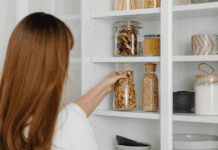
Open bins, trays, and shelves work better than closed containers for anything you use frequently. Visibility makes it easier to grab what you need and easier to return it when you're done.
Closed storage helps control visual clutter for items you use infrequently. Holiday decorations, off-season clothes, and backup supplies can live in lidded bins because you're not accessing them daily.
The access test is simple: if you use something multiple times per week, it should live in open storage. If you use it monthly or less, closed storage works fine.
Measure Your Space Before Buying Anything
Storage should fit the space you have, not force awkward configurations. Measure shelves, drawers, and closets before shopping for containers.
Buying storage first leads to wasted money and containers that don't fit properly. Containers that are too tall block shelf access. Containers that are too wide waste corner space. Containers that are too deep hide items in the back.
Buy storage after you know exactly what dimensions work in your specific space. This prevents the "I have 12 bins that don't fit anywhere" problem that creates more clutter instead of solving it.
Simple Daily Habits Prevent Weekend Disasters
An organization lasts when daily actions support it. Small habits keep clutter from building without requiring much time or motivation.
Short resets stop clutter before it spreads. Quick end-of-day checks keep order intact. And consistency matters more than effort because habits work when motivation disappears.
Short Resets Prevent Big Messes
A five-minute daily reset beats a three-hour weekend organizing session because you'll actually do the five-minute version. Focus on returning items to zones and clearing one or two high-impact surfaces.
Daily reset targets:
- Kitchen counter cleared of random items
- Entryway shoes returned to the tray
- Living room surfaces cleared for tomorrow
- Mail sorted into action pile or recycling
Keep resets brief so they feel manageable even on exhausted evenings. The goal is maintenance, not deep cleaning or reorganizing.
High-Traffic Areas Need Daily Attention
Kitchens and entryways benefit most from daily habits because they accumulate clutter fastest. These areas affect how your whole home feels, so keeping them functional has an outsized impact.
A quick morning check plus a quick evening check keep these zones from becoming overwhelming. Ten total minutes of daily attention prevents hours of weekend cleanup.
I do a two-minute kitchen reset every night after dinner and a two-minute entryway reset every morning. These tiny habits keep both spaces usable all week instead of degrading into chaos by Thursday.
Make Systems Everyone Can Follow Without Instructions
Shared spaces fail when systems are unclear or require special knowledge. Simple, accessible rules keep everyone aligned without creating household conflict.
The test for shared-space organization is this: can a visitor put something away without asking you where it goes? If not, your system needs clarification.
Obvious Beats Clever Every Time
Use storage that people understand instantly. A tray labeled "Keys" beats an elaborate key rack with individual hooks. A bin labeled "Batteries" beats separating by battery type.
Avoid over-detailed rules because simple instructions are easier to remember and easier to follow. When you have to explain the system, you've already lost.
Prioritize reach and visibility so that the correct action requires less effort than the incorrect action. If putting something in the right spot is easier than leaving it on the counter, people will use the system.
According to guidance from the Good Housekeeping Institute, household organization systems succeed when they can be understood and followed in under 10 seconds without verbal instruction.
Keep shared zones flexible enough to handle different use patterns. Rigid systems create friction between users. Flexible systems accommodate everyone without requiring perfect compliance.
Questions People Ask About Simplifying Home Organization
Q: How do I know if my organization's system is too complicated?
If you find yourself explaining the system to others frequently or if items regularly end up in wrong spots, the system is too complex. Simplify by combining categories and reducing decision points until putting things away becomes automatic.
Q: Should I organize everything at once or start with one area?
Start with one high-traffic zone that causes daily stress. Master that system until it feels effortless, then expand. Organizing everything at once usually leads to burnout and abandoned systems within weeks.
Q: What if I have too much stuff for my space but can't get rid of anything?
Your space has a capacity, whether you acknowledge it or not. Overfilled systems constantly break and require endless maintenance. Either reduce volume to match your space or accept that organization will remain a constant struggle.
Q: How often should I reorganize spaces that keep getting messy?
Spaces that get messy repeatedly don't need reorganization. They need simpler systems. Reset the zone by returning items to homes, then examine why items aren't staying put. Usually, the storage is too complicated or in the wrong location.
Q: What's the biggest mistake people make when simplifying an organization?
Thinking simply means minimalist. Simple means easy to use and easy to maintain. You can own plenty of items and still have a simple system if every item has one obvious home that requires zero decisions to access or return.
Build Systems That Survive Your Worst Days
Simplifying home organization means designing for your real life instead of an idealized version that doesn't exist most days of the week.
Reduce item volume to match your actual space, create zones where habits already happen, and choose storage that removes friction instead of adding steps.
Pick one cluttered zone today, apply the container rule to limit what stays, and test your new setup on a tired evening to prove it works when motivation disappears.