The nonstick pan coating peels after six months. The charging cable frays near the connector again. The bath mat smells musty no matter how many times you wash it.
Most maintenance advice assumes you have time for product-specific care schedules and detailed cleaning routines. Reality moves faster.
Things last when you protect them with small daily habits, not when you schedule quarterly deep-clean marathons that never actually happen because life gets busy.
Why Your Stuff Breaks Down at the Same Predictable Points
Most items fail at hinges, corners, handles, seals, and anywhere moisture can hide. These are the high-wear areas that face repeated stress, friction, heat, or dampness.
The damage starts small and grows quietly. A loose screw causes wobble. Wobble creates stress cracks. Cracks turn into full breaks that require replacement.
Catching problems when they're still small takes minutes. Waiting until something breaks completely costs hours and money.
The Real Problem Is Trapped Moisture, Not Visible Dirt
Moisture causes more damage than the dirt you can see. It creates rust on tools, warped cutting boards, mildew on bath mats, and that permanent musty smell in plastic containers.
The solution is obsessive drying. Air-dry items completely before storing them. Leave container lids off overnight. Hang towels instead of bunching them on a hook. Let shoes air out before shoving them in a closet.
My take on this is simple: drying matters more than deep cleaning. I stopped stacking my cutting boards while they were still damp from washing, and the warping problem that made me replace boards every year just stopped. Same boards have been flat and usable for over two years now.
Items Break Where You Touch Them Most
High-touch areas like handles, switches, phone screens, and drawer pulls wear out first because they face constant friction and oil transfer from your hands.
A quick wipe of these spots daily prevents the buildup that creates sticky residue, worn finishes, and eventual failure. Takes about 30 seconds total.
Honestly? I think most people ignore handles and switches until they look gross or stop working. I started wiping cabinet handles and light switches during my evening kitchen reset, and they stay clean instead of developing that gummy buildup that used to require scrubbing.
Clean Smart With the Two-Minute Rule
Cleaning is maintenance because dirt and moisture cause slow damage over time. Two minutes daily beats one exhausting deep clean that you keep postponing.
Focus on the parts that touch hands, food, sweat, or floors most often. Always finish by drying completely because trapped moisture ruins more than dirt does.
Dust First or You're Just Spreading Grit Around
Dry dusting removes particles before they act like sandpaper on your surfaces. Use a microfiber cloth to actually lift dust instead of pushing it from one spot to another.
Once the grit is gone, a gentle wipe with a barely damp cloth removes oils without scratching. This order matters because wiping first grinds particles into the surface.
I made this mistake for years with my wood coffee table, always wiping it with a damp cloth first. The finish started looking hazy and scratched. Switched to dusting first with a dry cloth, then wiping. The table looks better now than it did after all those years of "proper" cleaning.
Match Your Tool to the Material or Risk Damage
The wrong cleaning tool damages faster than skipping cleaning altogether. Soft microfiber cloths work for screens, wood, and glossy finishes without leaving streaks or scratches.
Stiff brushes are best for grout, shoe treads, and textured plastic where you need scrubbing power. Using a stiff brush on a phone screen destroys it. Using a soft cloth on shoe treads accomplishes nothing.
Keep both types on hand so you're not forcing the wrong tool to do a job that it will mess up.
Store Items the Way They Want to Be Stored
Storage controls heat, pressure, moisture, and dust exposure. Store by shape and material so items don't bend, warp, or snag on each other.
Use clear, breathable storage when possible and avoid overstuffed piles. Aim for "easy in, easy out" because squeezing items into tight spaces causes damage every time you access them.
Clothing and Linens Need Air, Not Compression
Hang what wrinkles easily, like dress shirts and pants. Fold what stretches under its own weight like sweaters and knits.
Use breathable bins for seasonal fabrics to prevent musty smells and mildew. Sealed plastic bins trap moisture that creates odors and degrades fabric over time.
Keep moth protection simple by storing clean, dry items in sealed containers. Moths are attracted to food residue and body oils, not clean fabric.
Kitchen Tools Last When Stored With Protection
Store blades covered because loose blades dull quickly when they bang against other items. A simple blade guard or designated knife block prevents chips and maintains the edge.
Keep appliances away from steam and splatter to protect seals, buttons, and electronic components. That coffee maker next to the stove is getting damaged by heat and moisture exposure every time you cook.
Coil cords loosely because tight bends break wires and crack insulation. According to guidance from Consumer Reports, cable damage from improper storage is among the top three reasons small appliances fail prematurely.
Paper and Photos Degrade From Environmental Exposure
Keep paper away from sunlight, humidity, and heat sources like vents. Direct sun fades ink and yellows paper faster than most people realize.
Store books upright with support because leaning bends spines over time. Use bookends or fill shelves completely so books don't slant.
Use acid-free sleeves for photos when possible and avoid sticky albums that degrade photos by trapping chemicals against the surface.
Protect High-Wear Areas Before They Fail
Most items break at predictable points. Protecting those areas early costs little and prevents expensive replacements later.
Think in layers like covers, pads, and guards that absorb the abuse before it reaches the actual item. Your goal is reducing friction, impact, and exposure to heat and water.
Shoes and Bags Break Down From Daily Wear and Moisture
Rotate shoes to let them dry between wears because daily use traps moisture inside that breaks down materials and creates odors. Give each pair at least 24 hours to air out.
Use a small brush to remove dirt and grit before it hardens because grit breaks stitching and wears through fabric and leather edges.
Condition leather lightly and store bags stuffed with paper or bubble wrap so they keep their shape. Collapsed bags develop permanent creases that weaken the material.
Electronics and Chargers Fail From Physical Stress
Keep chargers off the floor because pulling and stepping on them ruins connectors. Use cable clips or a small tray so cords don't kink, twist, or get yanked repeatedly.
Wipe screens gently with a microfiber cloth and keep liquids far away. Seepage into ports and seams causes sudden failures that look mysterious but are actually preventable.
I started using a charging station on my kitchen counter last year instead of letting cables dangle to the floor. The cables that used to fray near the connectors every six months have lasted over a year with no visible wear.
Furniture and Floors Wear From Friction You Don't See
Add felt pads under furniture legs to prevent sliding that grinds finishes away with every small movement. This is especially important on hardwood and tile.
Use coasters and mats because water rings and heat marks are nearly impossible to reverse once they set. Prevention takes one second. Repair attempts take hours and rarely work perfectly.
Vacuum often because tiny particles scratch the floors with every step. The damage is gradual but cumulative, and years of walking on gritty floors destroy finishes.
Repair Early Before Small Problems Become Full Replacements
Most "broken" items start with a tiny problem that grows quietly. Fixing early takes minutes, while waiting turns it into a complete replacement situation.
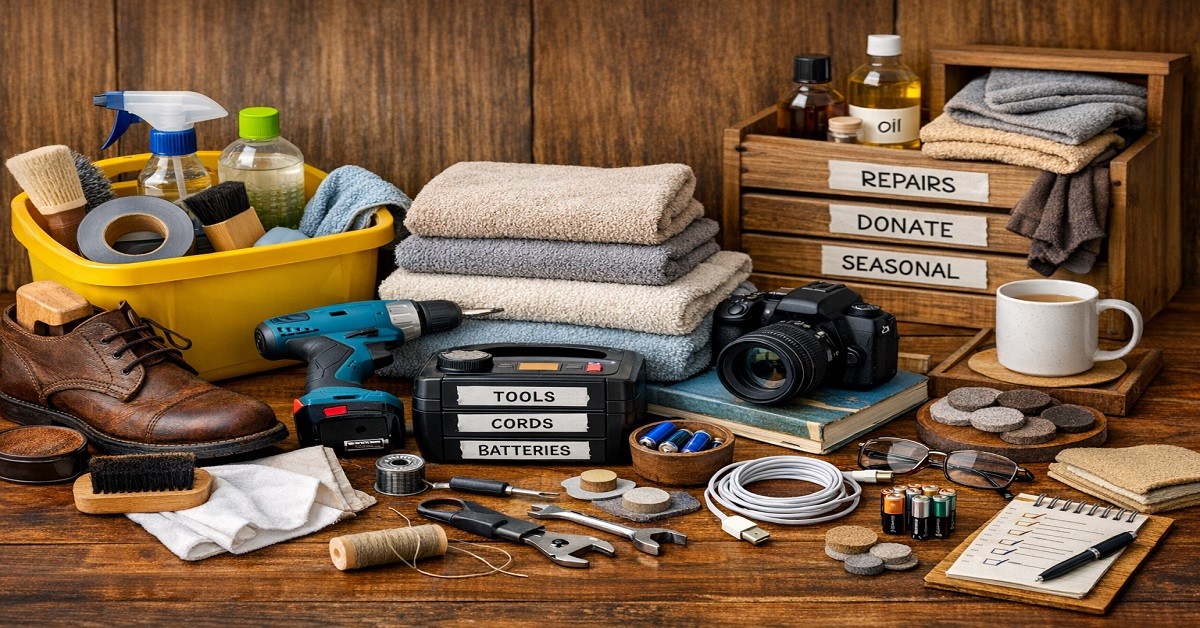
Keep basic supplies ready so you can act while the problem is still small. Treat repairs as part of the organization because broken items create clutter piles that spread through your home.
Also read: Home Maintenance for Busy People Who Skip the Deep Cleaning
Tighten, Oil, and Adjust Before Things Break
Loose screws cause wobble, and wobble causes cracks and stripped screw holes. Tighten fasteners monthly on chairs, drawer pulls, and frequently used tools.
Oil squeaky hinges lightly because friction wears metal and misaligns doors over time. A tiny drop of oil prevents the damage that eventually requires replacing the entire hinge.
Check door and drawer alignment quarterly. A drawer that sticks is telling you something is loose or bent. Fix it now or buy a new drawer later.
Patch, Mend, and Re-Glue While Damage Is Small
Small tears spread when you pull and wash items, so mend them quickly. Use fabric tape or simple stitches for seams before they become full rips that require professional repair.
Re-glue the lifting edges early because once dirt gets in, bonding gets worse. Clean surfaces thoroughly before applying new adhesive, or the repair won't hold.
These tiny repairs take five minutes and extend the item's life by years. Skipping them because "it's just a small problem" is how you end up replacing things constantly.
Replace Filters, Pads, and Batteries Before They Cause Damage
Filters protect motors, so clogged filters shorten appliance life significantly. Replace vacuum filters every three to six months, depending on use.
Replace worn pads and heads on cleaning tools because worn parts force you to press harder, which damages both the tool and the surface you're cleaning.
Change batteries before they leak because battery acid permanently destroys compartments. According to research from Good Housekeeping Institute, battery leakage is the leading cause of remote control and small device failures.
Build Weekly and Seasonal Routines That Actually Stick
Long-lasting items come from routines that happen even when life is busy. Pick a schedule you can repeat because consistency is the real secret to making things last.
Keep routines visible, like a small checklist on the fridge or inside a cabinet door. Use short reset sessions so you never face an overwhelming backlog.
Weekly Reset Routine Catches Problems Early
Spend ten minutes returning items to their proper storage spots and clearing high-use surfaces. This prevents damage from items sitting in the wrong locations.
Do a quick wipe of handles, counters, and frequently touched switches. Empty trash and recycling completely because overflow leads to spills and pest problems.
This weekly check catches small issues before they become big failures. A frayed cord spotted during a weekly reset gets replaced. A frayed cord, left unattended for months, causes a short or fire.
Monthly Mini-Check Prevents Surprise Failures
Scan for loose parts, frayed cords, and strange smells that signal trouble brewing. Tighten anything that wobbles. Oil anything that squeaks. Replace anything that smells off.
Check storage areas for moisture, dust buildup, and items packed too tightly. Overstuffed storage causes damage every time you access items.
Restock your care supplies because missing supplies make maintenance stop happening. Can't fix a loose screw if you don't have a screwdriver handy.
Seasonal Deep Care Extends Item Lifespan
Wash or vacuum soft furnishings because trapped grit wears fibers down like sandpaper. This applies to couches, rugs, curtains, and upholstered chairs.
Clean vents, fans, and filters because proper airflow protects electronics and appliances from overheating. Blocked vents cause premature failures.
Rotate seasonal items and inspect them before use so surprises don't ruin plans. Finding your winter coat has a broken zipper in October gives you time to fix it. Finding it in December means wearing a broken coat or emergency shopping.
Questions People Ask About Making Items Last Longer
Q: What's the single most important maintenance habit for making household items last?
Dry everything completely before storing it. This one habit prevents rust, warping, mildew, odors, and material breakdown across almost every category of household item. Takes an extra five minutes and saves months of item lifespan.
Q: How do I know when to repair versus replace an item?
Repair if the item still functions and the fix takes under 15 minutes with basic supplies. Replace if the item requires specialized tools, the damage has spread to multiple points, or safety is compromised like frayed electrical cords.
Q: What basic supplies should I keep for item maintenance?
Screwdriver set, super glue, fabric tape or needle and thread, felt pads, microfiber cloths, small brush, cable clips, and light oil. This kit handles about 80 percent of small repairs and protection needs without requiring trips to the store.
Q: How often should I check items for maintenance needs?
High-use items like shoes and kitchen tools need weekly checks. Medium-use items like furniture and linens need monthly checks. Low-use seasonal items need checks before storage and before use each season.
Q: What's the biggest mistake people make with household item care?
Waiting until something breaks completely instead of fixing small problems immediately. A loose screw takes 30 seconds to tighten. A chair with a loose screw that wobbles for months eventually cracks and needs full replacement or professional repair.
Make Things Last Starting With One Small Habit
Household items last years longer when you dry them completely before storage, protect high-wear points before they fail, and fix small problems the moment you notice them instead of waiting.
Two-minute daily habits prevent hours of replacement shopping and keep your home functional without constant equipment failures. Pick one high-use item category today, like shoes or kitchen tools, and start a protective habit that takes under a minute to build momentum.