In busy households, minutes vanish during daily searches for keys, ingredients, chargers, or matching socks. A practical plan for Home Organization to save time focuses on fewer decisions, faster retrieval, and simple resets after use.
Small structural changes across storage, surfaces, and routines cut friction every day while keeping visual calm. Start light, apply consistent rules, and keep the maintenance workload realistic for your schedule.
Why Home Organization To Save Time Works
Time savings come from two levers: reducing inventory and shortening the path to each item. Decluttering trims decision fatigue and eliminates duplicates that slow sorting.

Location rules and visible storage turn retrieval into muscle memory so tasks start faster. Maintenance takes less effort when everything has a defined home and containers guide the reset.
Setup Systems That Stick
A sustainable setup favors clear homes for common items, stable categories, and containers that fit the space. Plan for the most frequent tasks first, then extend to lower-use areas. Keep labels plain, use one naming style, and select containers that support quick returns without fuss.
Maximize Vertical Space
Floating shelves, wall rails, and tall bookcases unlock height without stealing floor area. Install over-door organizers on pantry or closet doors to hold snacks, wraps, or cleaning tools.
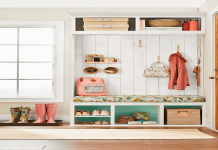
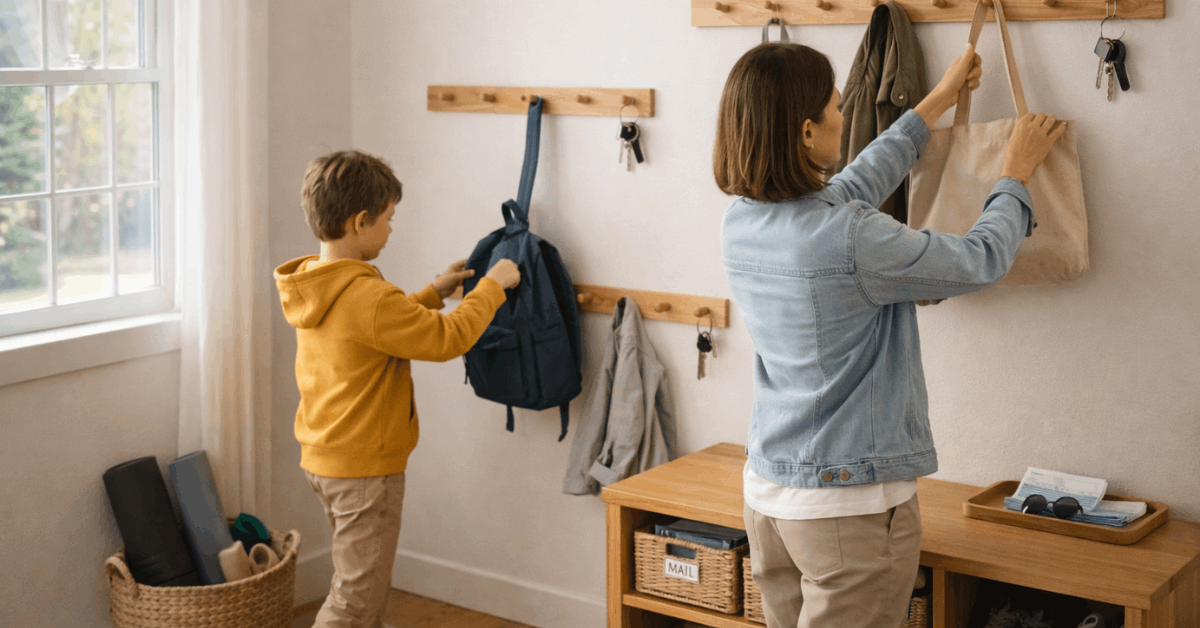
Add hooks at adult and kid heights in entry areas so bags and coats land in predictable spots. These vertical storage ideas keep traffic zones open and speed up departures.
Make Drawer Organization Automatic
Start each drawer with an empty reset, then group by use and size.
A drawer divider system separates batteries, tape, scissors, and small tools in kitchens or offices, while small boxes corral socks and camisoles in bedrooms. Reassess layout quarterly to prevent clutter creep and promote the most-used items to the front.
Use Storage Enhancements Wisely
Transparent bins reveal contents at a glance; opaque baskets hide visual noise in living areas. Label with printed tags, vinyl cutouts, or neat handwriting so anyone can return items quickly.
Stackable bins, turntables, and tiered risers multiply capacity inside cabinets without creating deep, forgotten piles.
Choose Smart Furniture
Pieces that double as storage remove the need for extra units. Consider ottoman beds, lift-top coffee tables, and benches with cubbies for shoes or bags.
Wall desks that fold into frames open a quick workstation in small rooms, then disappear. These small space organization tips keep rooms flexible for changing needs.
Room-By-Room Game Plan
Focus on daily workflows and friction points rather than perfection. Start where time is lost most often, then move clockwise through each room. Favor shallow, visible storage, limit duplicates, and set a weekly micro-reset so order survives busy periods.
Kitchen Cabinet Mastery
Use clear turntables for oils, vinegars, sauces, and spices so labels face forward. Add adjustable dividers for lids, baking sheets, and cutting boards to store vertically. Deep drawers benefit from plate racks and dish and pot dowels, which reduce stacking and breakage.
Cultivate An Organized Closet
Uniform velvet hangers prevent slipping and create a tidy look that discourages crowding. Cascading hangers and clips condense pants and skirts while preserving visibility.
Clear shoe boxes protect pairs from dust and make selection faster; personalize boxes to match the closet style for easy scanning, and a set of closet organization hacks that actually stick.
Streamline The Laundry Room
Mount fold-flat drying racks and keep a surface near the dryer for immediate folding. Use labeled hampers or baskets for each household member to speed distribution. A predictable laundry room workflow prevents mixed loads from lingering and reduces re-washing.
Bathroom Vanity Clarity
Install stackable or sliding shelves under sinks around plumbing. Place drawer organizers for small items, then anchor trays with removable putty to keep compartments aligned. Keep countertops light by storing cotton rounds, swabs, and beauty tools in labeled jars or clear caddies.
Efficient Office Spaces
Pegboards with hooks or baskets hold scissors, chargers, tapes, and rulers within arm’s reach while clearing the desk. A shallow drawer with dividers keeps paper clips, sticky flags, and stamps separated.
Reduce incoming paper by opting out of prescreened credit offers using regulator-recommended tools, then scan or photo-capture coupons to recycle envelopes immediately. A decluttering checklist printable near the inbox can guide quick decisions.
Playroom Perfection
Label bins with pictures, numbers, or colors so kids can match items to homes. Rotate toys by storing overflow in a top shelf bin and bringing sets down weekly. Low shelves and open baskets support independence and faster cleanups after play.
Garage Glory
Audit gear first, then mount slatwall, pegboards, or rail systems for tools and sports equipment. Overhead racks hold seasonal bins and lighter items, freeing floor space for movement. Bike hoists or glides lift cycles safely, keeping pathways clear for strollers or carts.
Living Room Refresh
Limit the coffee table to a tray for remotes and coasters, then store extras in lidded baskets under consoles. Replace flattened pillow inserts and launder throws for immediate comfort gains. Hide game controllers and chargers in a small caddy that returns to a shelf after use.
Dining Room Dynamics
Place a tray at the center to corral salt, pepper, napkins, and candles so the table clears quickly for meals. Inside sideboards, create zones by category, then use helper shelves to stack without crushing fragile pieces. Keep entertaining sets together near the serving area to shorten setup time.
Crafting Corner
Use clear containers for yarn, paints, and paper so colors and quantities remain visible. Label consistently with a simple maker to support quick returns. A rolling utility cart brings supplies to the work surface, then parks in a closet when finished.
Tech Tidiness
Adopt cable management solutions that include a cable box for power strips, adhesive clips for routing, and sleeves for bundling.
Color-coded hook-and-loop wraps identify device families and replacement lengths. Place a charging drawer with an in-drawer outlet near the living zone to remove dangling cords from sight.
Entertaining Essentials
Assign a closet shelf or garage section to party supplies sorted by theme or color in clear, labeled bins.
Store stemware near the prep area and keep bar tools together in a small tray or rack with hidden compartments. Group candles, napkins, and disposables so that last-minute gatherings require fewer decisions.
Seasonal Swap Strategies
Seasonal changes run more smoothly when staging areas and rules are clear. Apply the one-in, one-out rule to clothing and decor so storage never exceeds capacity.
Clean and repair garments before storage, then place them in lidded plastic containers in cool, dark locations. Avoid vacuum sealing natural fibers and puffy coats to protect loft and shape.
Quick Wins: 10-Minute Fixes
Short sprints create visible momentum that motivates larger projects. Pick one or two daily to reinforce tidy habits without burnout.
- Test pens and markers, then discard the dried ones so drawers regain space.
- Photograph coupon codes or sentimental notes, then recycle the paper to thin mail piles.
- Unsubscribe from marketing emails while watching a show to reduce inbox noise.
- Install eye-level hooks near entries and lower ones for kids so bags avoid floors.
- Create a small “Do Later” box for odd screws, buttons, or samples, then process it weekly.
Weekly Maintenance Rituals
A routine protects your investment in order. Schedule a 30-minute home reset using time blocking for chores so clutter never accumulates for long.
Put away outliers first, restock household consumables second, and finish with a quick surface wipe where mess accumulates fastest. Rotate a single focus area each week, such as the freezer, a bathroom drawer, or the car trunk, to keep deep clutter at bay.
Smart Paper and Mail Controls
Paper slows households more than most categories because decisions stack up. Open mail over a recycle bin and separate into three shallow trays:
- Act this week,
- file for records, or
discard. Scan warranty cards and manuals unless a physical copy is legally required.
For catalogs and unsolicited mail, use national opt-out processes recommended by consumer protection agencies to throttle inflow.
Safe Kid and Pet Zones
Entry mats, baskets, and a small towel hook near doors help contain outdoor dirt and pet gear.
Place a storage ottoman for toys that cycles open during play and closes when guests arrive. Label a low bin for school papers that need signatures, then clear it every Sunday night to prevent morning rushes.
Shopping Timing and Containers
Storage purchases work best at the end of a project, not the start. Measure shelves and drawers, confirm categories and volumes, then choose containers that fit both the space and the habit.
Prioritize easy-clean materials in kitchens and baths, breathable fabric bins for linens, and latch-top boxes for garages or attics where dust gathers.
Troubleshooting Common Sticking Points
Projects stall when categories are fuzzy, containers are too deep, or returns are hard. Simplify names on labels, reduce depth, and avoid lids where frequent access is needed.
Sentimental overflow benefits from a single memory bin per person, so decisions remain bounded. Items kept “for someday” can move to a probation box dated for review in thirty days.
When To Call A Professional Organizer
Professional help compresses decision timelines, customizes layouts, and trains household members on new systems. Projects involving whole-home changes, significant paper backlogs, or complex moves benefit from expert setup.
Clear goals, firm budgets, and a short punch list create strong outcomes, especially when follow-up sessions are scheduled to reinforce habits.
Last Thoughts
Progress compounds when clutter drops, categories stabilize, and resets take minutes. Start in the highest-friction room, deploy labels and containers that match the space, and keep a short weekly reset on the calendar.
The combination of targeted systems, predictable routines, and lean inventories turns order into a time-saving habit every member of the household can follow.