Lasting organization comes from routines you can repeat, not projects you finish once and never revisit.
You will build small systems that make the organization of home feel lighter instead of more demanding.
Start With a Simple Home Organization Plan
A lasting system begins with a clear home organization plan that defines what “tidy enough” means for your household.
You get better results when you organize for daily function, not for photos or perfect symmetry.
A good plan protects your time by limiting how many decisions you need to make each day.
Practical home organization works best when every rule is easy to follow while tired, rushed, or distracted.
Define your “must-work” spaces first
Pick two or three areas where clutter causes stress, like the entryway, kitchen counter, or bathroom sink.
Decide what these spaces need to support, such as quick mornings, faster cooking, or simpler cleanup.
Commit to keeping only what belongs to that function within reach, and move everything else to a slower zone.
Set realistic limits for what your home can hold
Your home has a capacity, so your system should include a limit for categories like mugs, towels, toys, and cables.
Choose a “container rule” where the shelf, bin, or drawer is the boundary, and extras must leave the house.
This one decision prevents overflow and keeps the organization of home stable without constant re-sorting.
Create Zones That Match Real Habits
Zones work when they follow your movements through the day instead of forcing new behaviors you won’t maintain.
Think of zones as tiny agreements between you and your space about where things land and where they return.
When zones reflect real habits, you spend less effort putting items away and more time enjoying the room.
Effective home organization is mostly about reducing friction between what you do and where your things live.
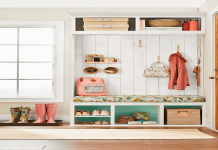
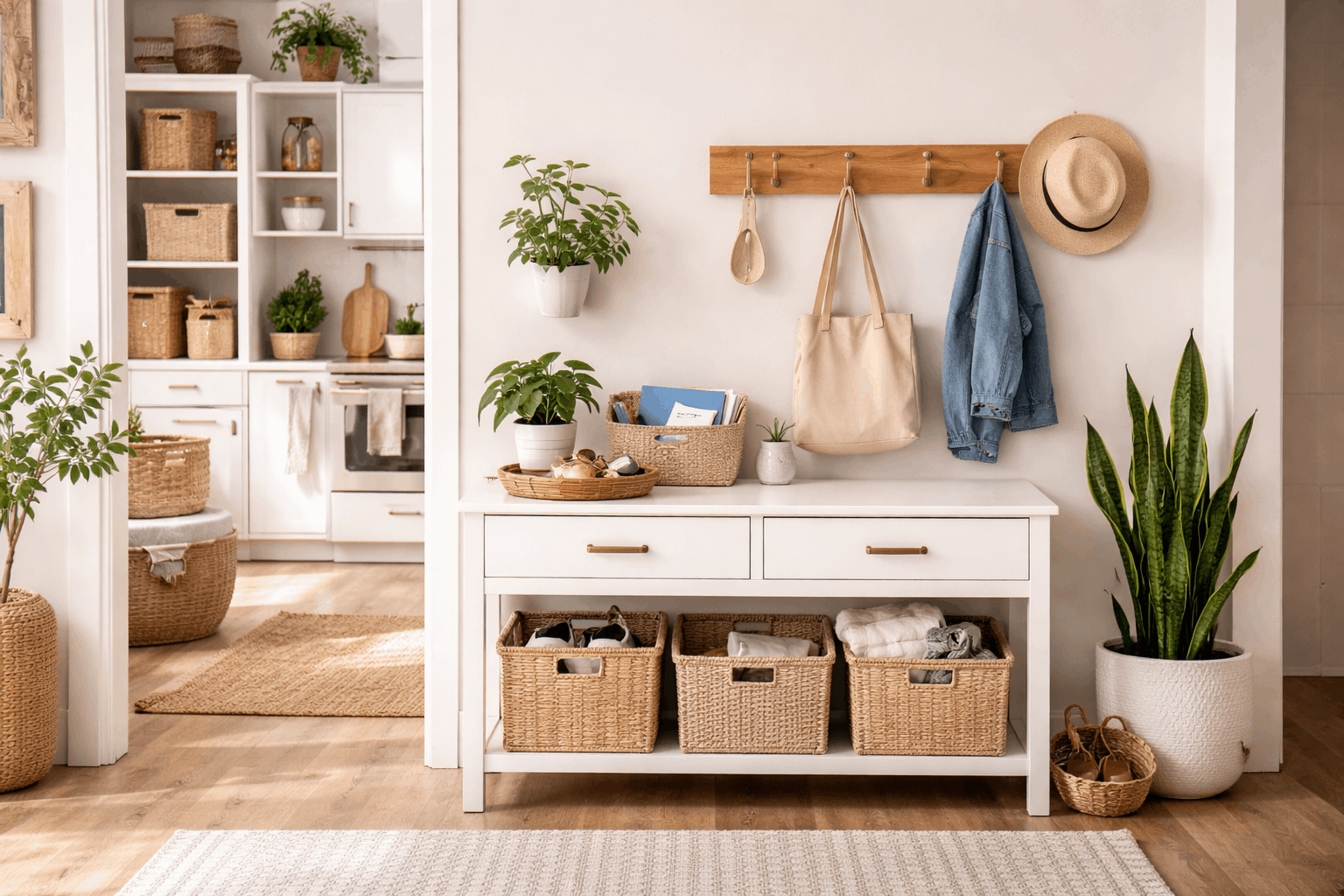
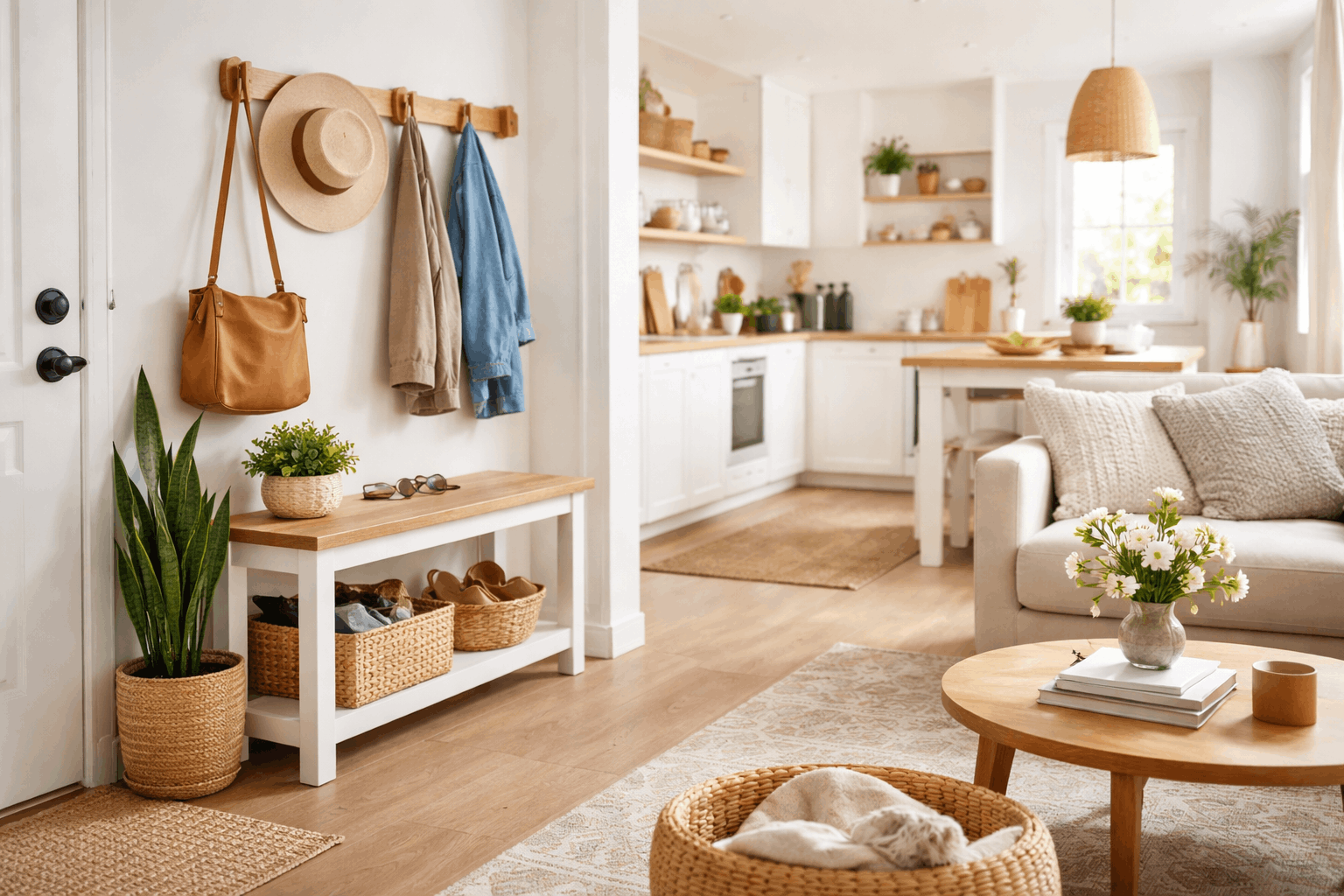
Build “drop zones” for daily carry items
Create a landing spot for keys, wallet, headphones, and sunglasses that is visible and reachable in one step.
Use one tray, one hook, and one small bowl so the zone is obvious and does not expand into a pile.
If something repeatedly lands outside the zone, move the zone closer to where the habit actually happens.
Make “use zones” for tasks you repeat often
Place cleaning wipes where you wipe, laundry baskets where you undress, and scissors where you open packages.
When supplies are located near the task, the task becomes easier to start and easier to finish.
This approach turns practical home organization into a supportive tool rather than a constant reminder to “be better.”
Choose Storage That Reduces Decisions
Storage should make actions simpler, not add steps, lids, or complicated stacking that slows you down.
The best storage choices keep items visible enough to remember and contained enough to prevent spread.
If you have to think too hard about where something goes, that item will end up on a surface.
A reliable home organization plan uses storage to shrink decisions into a fast, repeatable routine.
Use fewer categories with clearer names
Combine similar items into broader groups, like “charging,” “mail,” “bath backups,” and “quick tools.”
When categories are too specific, you hesitate, and hesitation creates piles that never fully get sorted.
Clear categories keep the organization of the home smooth because every item has an obvious destination.
Label for speed, not for perfection
Labels work best when they help anyone in the home put something away without asking questions.
Use short, plain names that match real language, like “batteries,” “medicine,” or “winter hats.”
Effective home organization improves when labels reduce conflict and protect your system from slow drift.
Build Quick Reset Routines
Routines keep your space stable by catching clutter before it becomes a full weekend project.
A reset is not deep cleaning, because it is focused on returning items to homes and restoring usable surfaces.
Small resets also protect motivation because you finish quickly and see progress immediately.
Practical home organization is easier when you rely on short routines instead of waiting for “free time” to appear.
Schedule a weekly “maintenance lap.”
Choose one day to refill supplies, return loose items, and reset storage spots that have become messy.
Keep the lap predictable, like every Saturday morning or every Sunday evening, so it becomes automatic.
A weekly lap reinforces your home organization plan without requiring a full overhaul every month.
Care for Items to Prevent Re-Clutter
An organization lasts longer when your belongings are easy to maintain, easy to find, and easy to put back.
Item care reduces clutter because fewer things become “problem items” that float around waiting for attention.
When you maintain items well, you also buy less, replace less, and store less.
Effective home organization includes basic care habits that prevent damage, duplicates, and storage creep.
Create a simple laundry and linen flow
Store linens near where they are used, and keep backups limited to what fits in one dedicated space.
Use a “wash and return” rule where clean items go straight back to their zone instead of sitting in a basket.
This keeps the organization of home calm because soft goods stop drifting into chairs, beds, and random closets.
Manage paper and small household “misc” fast
Set one inbox for incoming paper and process it quickly into three outcomes: act, file, or recycle.
Keep a small kit nearby with a pen, scissors, and a shredder bag or recycle bin to remove friction.
Practical home organization improves when paper and tiny items are resolved in minutes, not postponed for weeks.
Review and Adapt Without Starting Over
A lasting system changes with your routines, seasons, and household needs, so adjustment is a strength, not a failure.
You do not need a fresh start when life changes, because you can edit a system in small, smart steps.
A quick review helps you notice what is working, what is drifting, and what needs a new zone.
The most effective home organization is flexible enough to survive busy months and still feel usable.
Do a seasonal mini-audit of trouble spots
Pick one category per season, like coats, school items, pantry snacks, or holiday supplies, and reset it quickly.
Remove what you no longer use, redefine the limit, and refresh labels or containers only if needed.
This keeps your home organization plan current without turning your life into a constant organizing project.
Share the system so it survives the whole household
Explain zones in simple terms and keep the rules short enough that anyone can follow them.
Make it easier to do the right thing by keeping storage open, visible, and near where items are used.
The organization of the home lasts longest when everyone can maintain it without special skills or extra effort.
Conclusion
A lasting organization is built from small choices you can repeat, not big changes you can only do once.
When you use practical home organization methods, your space becomes easier to reset, easier to clean, and easier to live in.
Start today by choosing one high-traffic zone, setting one limit, and doing one 10-minute reset to lock in momentum.