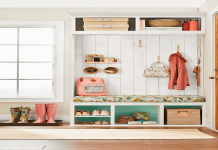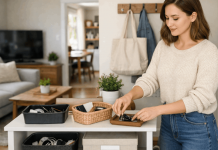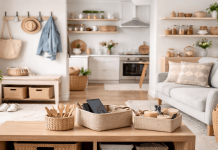
You can get a noticeably calmer home by using what you already own and changing where things live.
Instead of chasing perfect containers, you build habits that keep clutter from rebuilding between cleanups.
Use the steps below to set up a system that stays realistic on busy days.
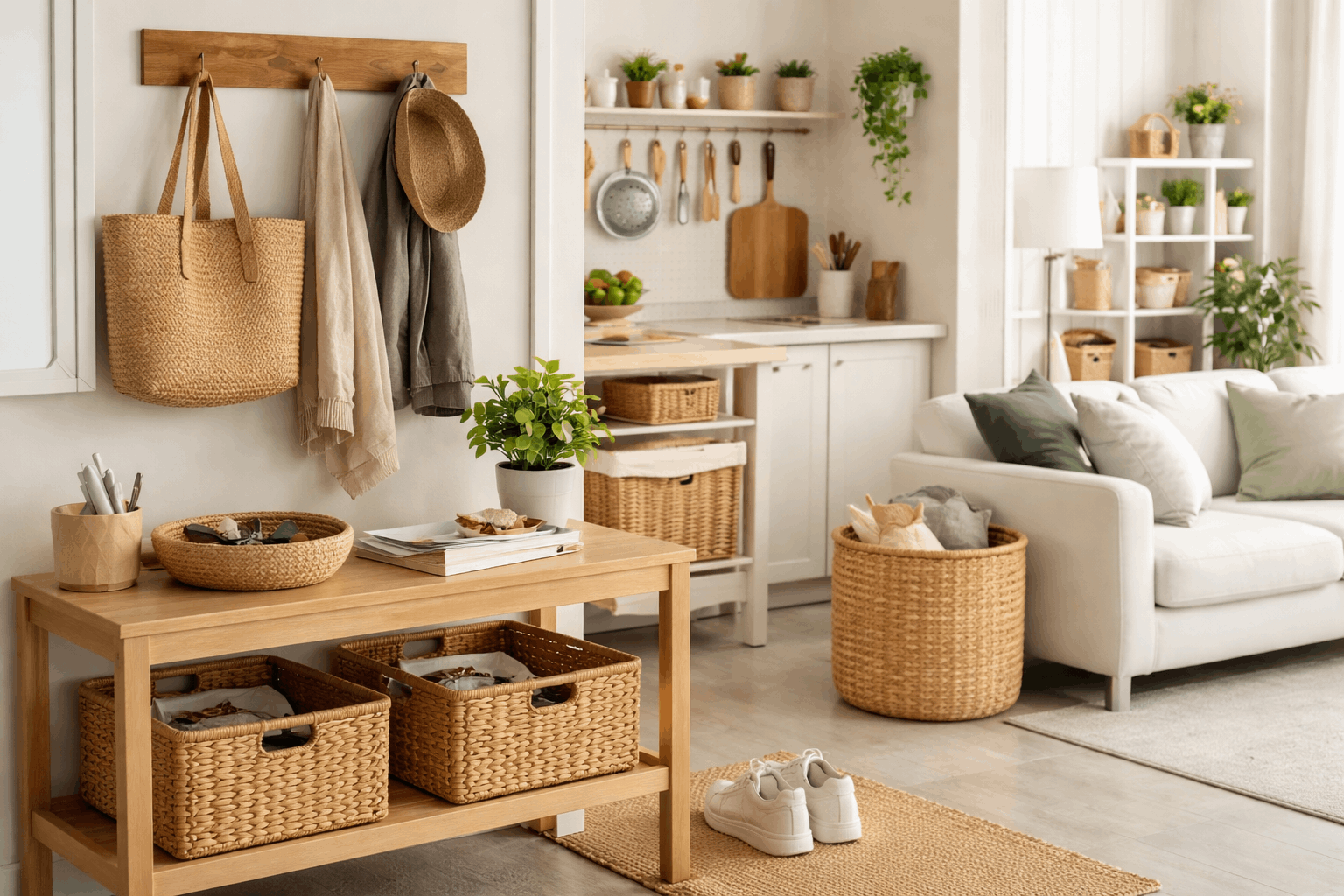
Start With What You Own
Walk through each room and notice what already works before you change anything.
Pick two or three “high-friction” spots where clutter collects and start there instead of organizing everything.
Commit to using existing containers, furniture, and surfaces first, even if the setup looks basic.
Aim for a functional baseline that is easy to repeat, not a picture-perfect result.
Do a fast inventory walk
Carry a laundry basket and collect anything that is clearly out of place as you move room to room.
Stop after 10–15 minutes so you do not turn this into an exhausting project.
Set the basket in one spot and sort it later so you keep momentum without getting stuck.
Choose containers already in your home
Shop your kitchen for bowls, mugs, shoeboxes, baking trays, and small baskets you can repurpose.
Use one container per problem type, like a bowl for keys, a box for cables, or a tray for papers.
Keep the containers open and visible so putting things away feels like a single easy motion.
Declutter Using Simple Rules
Organizing gets cheaper and easier when you own less and keep only what supports your daily life.
Focus on removing duplicates and low-use items before you spend time making new categories.
Use time limits and clear rules so you do not fall into “maybe later” piles that never disappear.
If an area is always messy, treat it as a signal that the system needs fewer steps.
Use the one-touch decision
Pick up each item once and decide whether it stays here, belongs elsewhere, or should leave your home.
When you hesitate, ask whether you would buy it again today with your own money and limited space.
Place “elsewhere” items in a single return basket so you do not create new scattered stacks.
Set a container limit
Let the space you already have decide the limit, like one drawer for gadgets or one shelf for mugs.
If the container is full, remove the least used item before you add anything new to it.
This keeps storage from silently overflowing and prevents “temporary” clutter from becoming permanent.
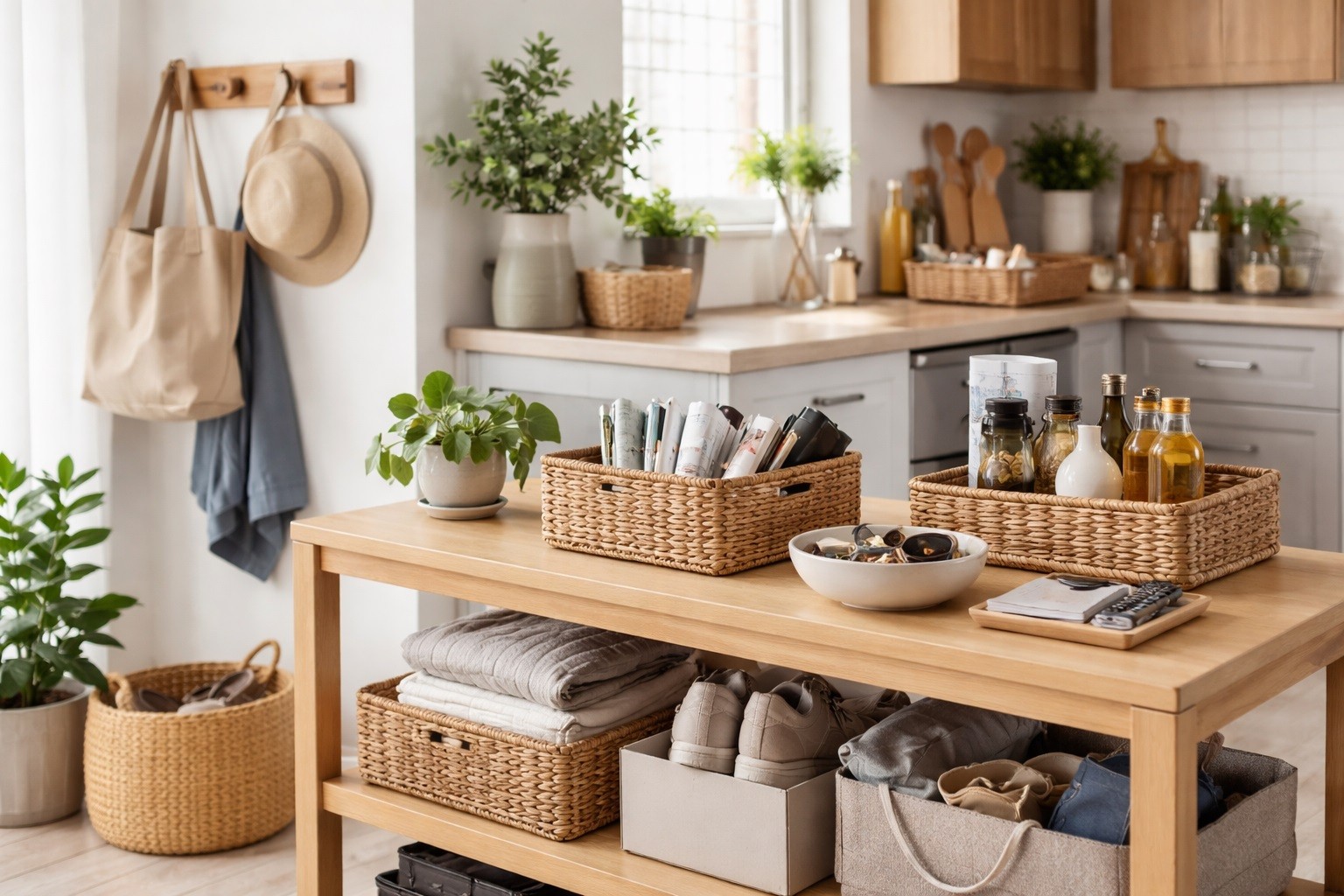
Create Zones, Not Perfect Categories
Zones work better than complicated labels because they match how you move through your home.
Assign locations based on action, like drop, charge, eat, work, clean, or relax, instead of strict item types.
Use the same zone names across rooms so you do not need to remember a different system everywhere.
Keep zones close to where the action happens so you stop abandoning items halfway to their home.
Make inbox and outbox zones
Choose one spot for incoming papers, packages, and random items, like a shoebox or shallow drawer.
Create an outbox using a tote bag or reusable shopping bag for returns, donations, or items leaving the house.
Review both zones on a fixed day so they stay temporary and do not turn into permanent clutter.
Store Smarter With Space You Already Have
Better storage is often about placement and visibility, not new products.
Use the easiest-to-reach spots for daily items and the hardest-to-reach spots for rarely used items.
Store items at the point of use so you do not rely on motivation to carry things across the home.
If you cannot see it, you will forget it, so prioritize simple visibility over hidden “tidy” storage.
Go vertical and visible
Stack items upright like books, pans, and cutting boards so you can grab one without lifting a pile.
Use file-style storage with existing magazine holders, cereal boxes, or sturdy folders for paper and manuals.
Create quick dividers with cardboard so drawers stop becoming mixed-item bins that require rummaging.
Use back-of-door and under-bed spaces
Hang lightweight items on existing hooks, hangers, or over-the-door spots you already own.
Store off-season bedding or rarely used gear in suitcases, duffel bags, or spare pillowcases instead of buying bins.
Keep one “under-bed” category only, like linens or sports gear, so you do not create hidden clutter zones.
Maintain With Micro-Routines
A good system survives because it is maintained in tiny steps instead of rescued in huge cleanups.
Short routines work best when they are tied to daily moments like mornings, after dinner, or before bed.
Pick a repeatable order so you do not waste energy deciding what to do each time.
Stop at a clear endpoint so the routine stays easy enough to do even when you are tired.
Run a weekly quick review
Choose one weekly time and empty the inbox, reset the outbox, and return anything that drifted from its zone.
Do one small maintenance task, like wiping a counter or clearing a sink area, to prevent buildup.
If a zone keeps failing, simplify it by removing a step or moving it closer to where you use the items.
Solve Common Problem Areas
Some spaces stay messy because they attract mixed categories and constant daily traffic.
Fix these areas by reducing what is stored there and giving each surface one clear job.
Use “good enough” boundaries so you can maintain the space without needing perfect alignment.
When you solve one problem area, reuse the same rules elsewhere so your whole home becomes easier.
Tame kitchen counters and pantries
Move rarely used appliances to higher shelves and keep only daily tools on the counter to protect a clear working space.
Group pantry items by meal purpose, like breakfast, snacks, or dinner basics, using any boxes or bowls you have.
Keep a single “use first” spot for open items so food stops spreading across multiple shelves.
Simplify closets and laundry flow
Hang the most-worn outfits at eye level and move occasional items to the ends so choosing clothes stays fast.
Use one hamper and one “rewear” hook or chair so half-clean clothing does not become a growing pile.
Store matching sets together, like socks or workout gear, using folded bundles or shoeboxes so you stop hunting for pieces.
Conclusion
Organizing without buying new items works.
When you store items where you actually use them and keep one easy reset habit, clutter has fewer chances to return.
Keep adjusting the system based on what keeps getting left out, not based on what looks perfect.