Most organization guides assume you have spare closets and weekend afternoons for complex storage projects.
A 2023 survey by the National Association of Productivity and Organizing Professionals found that 82% of people living in apartments under 700 square feet abandon their organization systems within three weeks.
I think the problem is not your motivation. The systems fail because they demand too many steps, too many decisions, and too much stuff.
Small apartments punish complexity. Every extra item needs dusting, sorting, and space you do not have.
This guide focuses on quick care habits that keep your stuff clean, usable, and easy to find without buying more storage that clutters your already-tight space.
Why Instagram-Perfect Organization Fails in Real Small Apartments
Organization content sells matching bins, label makers, and drawer dividers. Those products look great in photos and terrible in practice when you live in 450 square feet.
The real issue: more storage items mean more surfaces to clean, more decisions about what goes where, and more visual clutter in a space where every inch counts.
Organization Is Maintenance, Not a One-Time Project
Small spaces feel messier faster because clutter blocks movement and daily tasks immediately. Extra items create more dusting, more laundry, and more sorting every single week.
A small apartment stays organized when you reset it in minutes, not hours. Daily resets work best when every common item has a home that is easy to reach.
Tie your reset to existing habits like after dinner, after a shower, or before bed. Routines stick when they attach to moments you already repeat.
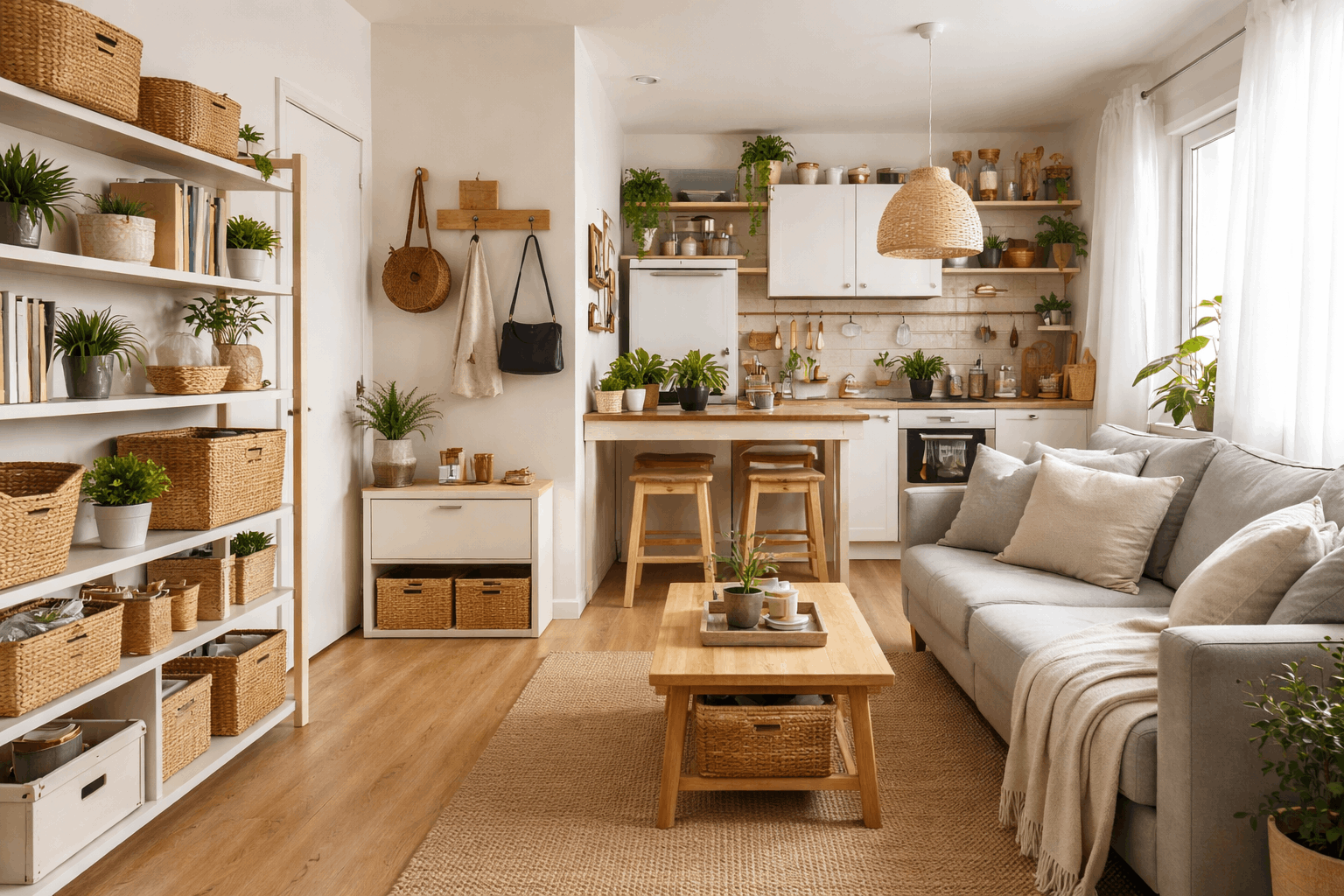
The Two-Step Rule Determines System Success
If an item takes more than two steps to put away, your system will fail on busy days. This is not laziness. This is basic friction math.
Opening a drawer, moving items aside, placing the thing, and closing the drawer again is three steps. You will skip it when tired. The item sits on the counter instead.
My take on this: I would rather have visible hooks and open trays than hidden storage that requires multiple movements, because small apartment organization collapses the moment "putting things away" feels like a chore instead of one motion.
Also read: Stop Buying Organizers: How to Declutter Using Only What You Own
Start With a Space Audit That Finds Your Actual Stress Points
Walk through your apartment and write down the spots where clutter blocks movement or daily tasks. Take photos of each area before you start so you can see what improves.
Pick three stress points to fix first. Common ones include the entry area, the kitchen counter, or the space around your bed.
Aim for an organization that reduces steps and decisions, not a big weekend makeover that exhausts you and creates unrealistic standards.
Measure Before You Move Anything
Measure shelves, drawers, and under-bed space so you stop buying bins that do not fit. This single step prevents the storage graveyard under your bed where purchases go to gather dust.
Assign each surface a job like drop zone, prep zone, or charging zone. Items stop drifting when zones are small and specific, because vague zones turn into random piles fast.
List the items you use daily and keep them within one arm's reach of where you use them. Store rarely used items higher or deeper, but keep them in one clear category so you can find them later.
Declutter With Maintenance as Your Filter
Start by removing anything you cannot clean, repair, or store without stress. This is a different filter from Marie Kondo's "spark joy" test.
Ask: Does this item require special care that I rarely give it? Does it need hand-washing, delicate storage, or frequent dusting I skip? If yes, it takes up space and mental energy.
Keep Only What You Can Actually Maintain
Choose durable items that handle frequent cleaning, like washable fabrics and wipeable surfaces. When you reduce fragile or fussy items, cleaning becomes faster, and your space stays calmer.
Use a simple touch-it-once pass where you decide to keep, donate, recycle, or trash immediately. No "maybe" piles. No "I'll decide later" boxes.
Make your apartment easier to maintain, not just emptier. The goal is practical function.
Create a Donate-and-Replace Rule That Stops Clutter Creep
Set one small donation bag in a closet and add items the moment you think, "I don't use this." Empty it monthly so items leave your apartment instead of migrating between storage spots.
Replace only when the old item is worn out, not when you are bored of it. This single rule prevents the slow accumulation that turns organized spaces back into chaos within months.
According to research from UCLA's Center on Everyday Lives of Families, clutter overload in small spaces directly correlates with elevated cortisol levels and increased stress throughout the day.
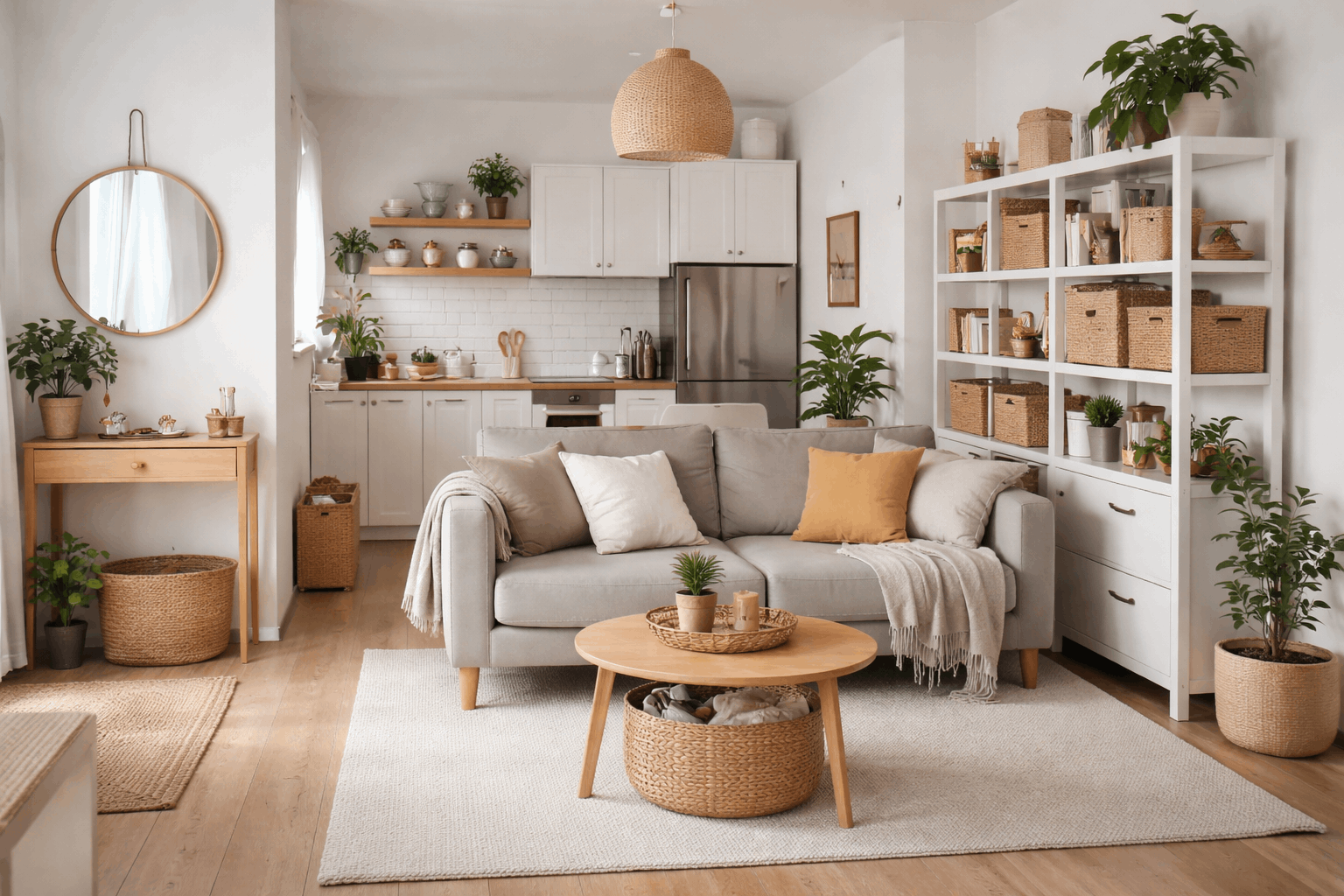
Set Up Daily Resets That Take Minutes, Not Hours
Daily resets work when tied to existing routines and focused on high-impact areas. These are not deep cleaning sessions. These are quick maintenance moves that prevent pileup.
Think of resets as protection for your space, the same way regular cleaning protects your belongings from damage.
One-Minute Returns for Items You Touch Every Day
Return keys, wallet, and headphones to one tray so mornings stay fast and predictable. Searching for these items wastes time and creates stress before you even leave.
Put dirty clothes directly into a hamper, even if it is small. Clothes piles never start when the hamper is visible and accessible.
Do a one-minute sweep of surfaces and return only the daily basics. You are not aiming for perfection. You are preventing tomorrow from starting with yesterday's mess.
Ten-Minute Night Reset That Covers the Whole Apartment
Set a timer and clear the floor first. Open floor space makes cleaning easier tomorrow and prevents the crushing feeling of "everything is everywhere."
Reset the kitchen by wiping the main counter and putting dishes into the sink or dishwasher. A clear counter in the morning changes your entire day.
End by setting out one item you need tomorrow, like your gym bag or work documents. Your space should support your routine, not fight it.
I was skeptical about timed resets until I tried a ten-minute timer for three weeks in my 500-square-foot studio, because short limits remove the perfectionism that sabotages consistency.
Organize Room by Room Using What You Already Own
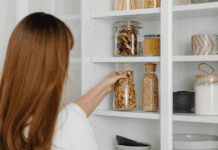
Work one room at a time so you do not create chaos in every corner at once. Use what you already own first, like shoeboxes, jars, and baskets that can be cleaned easily.
Focus on function over aesthetics. The best small apartment organization ideas are the ones you follow during your busiest week, not the ones that photograph well.
Stop when the room feels easy to use, even if it is not perfectly minimal or Instagram-worthy.
Entry and Living Area Setup
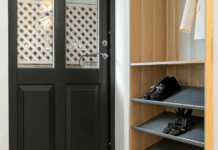
Keep an entry landing zone with a tray, one hook, and one small bin for daily items. This prevents the doorway clutter that spreads into the rest of your home.
Store blankets and extra pillows inside a bench, basket, or under-sofa bin that you can vacuum around. Hidden storage works here because you access these items weekly, not daily.
Limit decor to a few wipeable pieces so dusting stays quick. Every surface you cover with decorative items becomes a surface you avoid cleaning.
Kitchen and Bathroom Zones
Group kitchen tools by task, like coffee setup, cooking tools, or food storage containers. Drawers stay predictable when items live with their related pieces.
Store cleaning supplies together and keep a small daily wipe cloth visible to support quick maintenance. Visibility drives action. Hidden supplies stay unused.
In the bathroom, use one bin per category, like hair care or first aid. Bins let you clean shelves faster because you move one container instead of twelve individual bottles.
Bedroom and Closet Function
Use one section for today's clothes so outfits stop spreading across chairs and the bed. A designated spot for worn-but-not-dirty items prevents the chair pile everyone pretends is normal.
Store off-season clothes in sealed bags or bins to reduce dust and protect fabrics. Seasonal rotation keeps your daily choices accessible without crowding.
Keep a small basket for items needing repair so torn seams and missing buttons do not create closet clutter. Damage happens. A holding spot prevents broken items from mixing with usable ones.
Maintain Your System With Weekly and Monthly Checks
Your system lasts when you review it often enough to catch problems early. Small apartments punish delays with fast pileups because there is no buffer space to absorb temporary mess.
Pick one weekly time that already exists, like laundry day, to do a quick organization scan. Piggyback on existing routines instead of creating new calendar blocks.
Do small fixes immediately. The "I'll do it later" approach kills organization faster than anything else in tight spaces.
Weekly Care Checklist That Prevents Re-Clutter
Here is what a five-minute weekly check covers:
- Sweep your main surfaces and return items to their zones
- Empty one catch-all area like a bowl or basket so it never becomes a permanent junk spot
- Check your trash, recycling, and donation bags so outgoing items leave the apartment instead of migrating to new hiding spots
Treat maintenance as part of care. Organized storage keeps items cleaner and in better shape because items are not buried, crushed, or forgotten.
Seasonal Refresh for Zone Adjustments
Every few months, re-check your zones and adjust them based on what you use most now. Summer routines differ from winter ones. Your storage should reflect current needs, not theoretical perfect organization.
Rotate storage for seasonal items so your daily tools are easiest to reach. Accessibility determines whether systems stick or collapse.
If you feel stuck, repeat the basics by decluttering and simplifying categories again. Organization is a loop, not a finish line.
Questions People Ask About Small Apartment Organization
Q: How do I organize a small apartment without buying more storage?
Use what you already own, like shoeboxes, jars, and baskets, for containment. Assign zones based on function, not aesthetics. Most storage purchases add clutter instead of solving it because they become items that need cleaning and maintaining themselves.
Q: What is the fastest way to reset a small apartment daily?
Set a ten-minute timer and focus on clearing the floor first, then wiping the kitchen counter and returning daily basics to their homes. Timed resets remove perfectionism and build sustainable habits that survive busy weeks.
Q: How often should I declutter a small apartment?
Keep a donation bag accessible and add items the moment you think "I don't use this." Empty it monthly. Decluttering works best as an ongoing process, not a quarterly event, because small spaces show accumulation immediately.
Q: What items should I prioritize keeping accessible in a small space?
Store items you use daily within one arm's reach of where you use them. If an item takes more than two steps to put away, your system will fail on busy days. Accessibility determines whether an organization sticks or collapses under normal life stress.
Q: How do I stop clutter from coming back after organizing?
According to research from Princeton University Neuroscience Institute, physical clutter competes for attention and reduces working memory performance. Daily one-minute resets and a donate-and-replace rule prevent re-accumulation better than periodic deep organization sessions that exhaust you and create unsustainable standards.
Function Beats Perfection in Spaces Under 700 Square Feet
Small apartment organization works when you focus on fewer items, clearer zones, and short daily resets instead of buying matching storage that adds visual clutter to an already-tight space.
Use what you already own, assign each surface a specific job, and keep daily-use items within one arm's reach of where you need them.
Treat organization as ongoing maintenance rather than a one-time project, because systems stick when they take minutes to reset and collapse when they demand weekend-long effort.