Smart, small actions keep a home reliable, safe, and easier to live in. Simple Maintenance for Everyday Needs centers on quick habits and short monthly checks that prevent surprise costs. A clear home maintenance checklist turns scattered chores into a routine that protects comfort and value.
Steady wins here. Short walk-throughs, attention to safety devices, and seasonal tune-ups handle most risks long before they grow expensive.
Plan tasks, log what you finish, and keep lightweight records for warranties and insurance. That rhythm supports busy weeks without demanding specialist skills every time.
Why Simple Maintenance Matters
Preventive work costs less than reactive fixes because issues are smaller when found early. Moisture damage, slow leaks, and clogged drainage create outsized bills when ignored for months.
A repeatable cadence limits surprises, supports healthy indoor air, and preserves finishes that see daily use. Financial planning gets easier when recurring tasks move to a calendar.
A modest sinking fund for repairs, paired with predictable chores, smooths cash flow across the year. Strong documentation also helps during claims or resale, since dated photos and invoices show care.
Monthly Home Safety Checks
Practical safety habits protect people first, then property. A short, predictable routine keeps devices functional and supplies stocked.
- Test smoke and carbon monoxide detectors, then replace any weak batteries or expired units.
- Inspect fire extinguishers, confirm pressure gauge in the green zone, and note expiration dates.
- Trigger a quick self-test on the security system and camera motion zones.
- Review the emergency home toolkit and restock gloves, masks, light sticks, and batteries.
- Confirm dryer lint screen and vent are clear to reduce heat and lint ignition risks.
Kitchen and Appliance Care
Kitchens accumulate moisture, heat, and spills that quietly wear finishes and seals. Wipe cabinet doors and pulls monthly to remove sticky films that degrade coatings. Clear expired pantry items to deter pests, then vacuum refrigerator coils to support efficient cooling.
Dishwashers run cleaner when filters are rinsed and spray arms checked for debris. Replace refrigerator water filters on schedule, then inspect the supply hose for kinks or fraying. Tiny seepage marks near the hose connection signal early failure; replace at the first sign rather than waiting for a puddle.
Damp Areas and Mold Prevention
Bathrooms and laundry zones demand ventilation and routine cleaning to keep surfaces dry. Scrub tile and grout with a suitable cleaner, then rinse thoroughly while fans run to exhaust moisture. Re-caulk around tubs, showers, and sinks where gaps appear, since cracks channel water into walls.
Small plumbing drips in these rooms leave faint discoloration, mineral tracks, or bulging caulk. Track those clues and tighten fittings or schedule a repair before drywall softens. For rooms without windows, extend fan runtime after showers using a timer switch to lower lingering humidity.
HVAC and Seasonal Systems
Climate systems touch comfort, health, and utility spend, so maintenance pays back quickly. Filters trap dust that otherwise coats coils and ducts, reduces airflow, and stresses motors. Seasonal adjustments also prevent freeze damage outdoors and condensation issues indoors.
- Schedule a spring cooling tune-up to verify refrigerant levels and clean outdoor coils.
- Plan a fall heat check to confirm safe ignition, combustion air, and venting.
- Set a recurring reminder for HVAC filter replacement based on usage and MERV rating.
- Close exterior hose bibbs in late autumn and drain lines that could freeze.
- Walk exterior units monthly to clear leaves and keep two feet of open space for airflow.
Plumbing at a Glance
Quick inspections catch early wear on supply lines, traps, and shutoff valves. Scan for oxidation on metal parts, cracking on PEX fittings, and frayed braids on flexible hoses. Tug gently on compression nuts to confirm they remain snug without over-tightening.
Slow drains respond to mechanical cleaning better than harsh chemicals. A simple drain snake or hair catcher resolves most bathroom clogs while protecting pipes. Toilets that refill intermittently usually need a new flapper or adjusted chain; both fixes take minutes and cut water waste.
Gutters and Exterior Drainage
Clean gutters keep water off siding, away from foundations, and out of basements. Look for staining on fascia, tiger-striping beneath the gutter line, or pooling at downspout outlets. Those signs point to clogs or poor grading that deserves attention before the next storm.
Downspout extensions move discharge several feet beyond the foundation to reduce backflow. Where trees shed heavily, plan mid-season checks during fall and again after leaf drop. Consider guards suited to local debris types, then still schedule periodic rinses because fine silt accumulates.
Inventory, Supplies, and Emergency Kit
Prepared homes recover faster from storms, outages, or routine mishaps. Keeping essentials in one labeled bin reduces stress when a task appears unexpectedly.
- Stock an adjustable wrench, screwdrivers, pliers, utility knife, and headlamp.
- Add a plunger, drain snake, Teflon tape, silicone caulk, and wood glue.
- Keep spare batteries, light bulbs, extension cords, and heavy-duty trash bags.
- Store touch-up paint for main rooms and a small roller kit in sealed bags.
- Include masks, nitrile gloves, and disinfecting wipes for safe cleanup.
Property Walkthrough Routine
A monthly loop through seldom-seen spaces reveals issues before they escalate. Peek into the attic after heavy rain to spot darkened sheathing or damp insulation. Check under sinks, behind laundry units, and near water heaters for rust blooms or dried mineral streaks.
Large trees deserve periodic visual checks for deadwood, bark cracks, or fungal growth at the base. Where garage doors feel jerky, test auto-reverse and inspect the photo eyes for alignment and dust. Keep a small notebook or phone log where you record date, observation, and action taken.
Annual and Seasonal Checklist
Seasonal rotations bundle tasks at logical times, making work lighter and more memorable for families.
- Spring: Service air conditioning, clean gutters and downspouts, wash windows, and inspect roof edges and siding.
- Summer: Address exterior paint touch-ups, trim vegetation away from walls, and screen for pests using traps rather than harsh chemicals.
- Fall: Schedule furnace service, add weatherstripping, flush the water heater, and prepare outdoor faucets for freezing temperatures.
- Winter: Watch for ice dams, test smoke and carbon monoxide detectors, reverse ceiling fans, and prioritize indoor organization projects.

Technology and Reminders
Phones make excellent maintenance trackers when photos and notes live in one folder. Capture serial numbers, paint formulas, filter sizes, and warranty dates for quick reordering. Calendar reminders keep seasonal home upkeep on time, while simple task apps handle recurring chores.
Service providers often offer maintenance plans for HVAC or chimneys that include annual reminders. Keep scanned receipts in cloud storage to attach during warranty claims or disclosure packets. That small digital archive proves care and smooths conversations with buyers or insurers.
High-Impact Priorities
Busy weeks benefit from focus on spaces that influence comfort and value the most. Kitchens and bathrooms deserve prompt attention because moisture, heat, and daily use compound wear. Leaks beneath sinks or near dishwashers cause hidden cabinet damage that grows quickly.
Safety devices remain non-negotiable. Smoke detectors, carbon monoxide alarms, and simple security checks belong on monthly routines. HVAC filter replacement improves air quality and lowers energy use with minimal effort, while clear vents prevent hot-spot stress on blower motors.
When To Call A Professional
Certain tasks require licensing, specialty tools, or risk controls. Electrical work beyond simple fixture changes, gas appliance service, and structural repairs should be handled by qualified pros. Main-line plumbing issues, persistent roof leaks, or foundation cracking also warrant expert assessment.
Gather two or three quotes for context on scope and pricing. Ask for references, confirm insurance, and request a written description of work plus warranty terms. For grouped minor fixes, a reputable handyperson can clear several items in one efficient visit.
Budgeting and Documentation
Strong maintenance plans link chores to costs so nothing feels like a surprise. Set a target contribution to an annual repair fund and revisit that number after major projects. Keep a running ledger of completed work, parts replaced, and dates for next service.
Insurance conversations move faster when a current inventory shows model numbers and purchase photos. Update that file after renovations or large furniture buys to keep coverage aligned. A tidy packet of receipts and images also supports better resale outcomes.
Quick Skills That Save Time
A handful of simple fixes pay back repeatedly across a year. Sand lightly on sticky door edges during dry weather, then seal bare wood so swelling slows next season. Quiet squeaky hinges with a drop of lubricant, catching drips with a rag to protect finishes.
Toilets that run constantly often need a new flapper; keep a spare in the emergency home toolkit. Shower clogs respond to a basic snake and boiling water rather than harsh drain chemicals. Those preventive maintenance tips reduce calls and keep momentum on your schedule.
Last Thoughts: Make It A Tradition
Turning chores into short, shared events keeps morale up and progress steady. Spring cleanups paired with music and a simple reward help children learn skills and care. Fall yard days teach tool safety and prepare beds for winter while everyone participates.
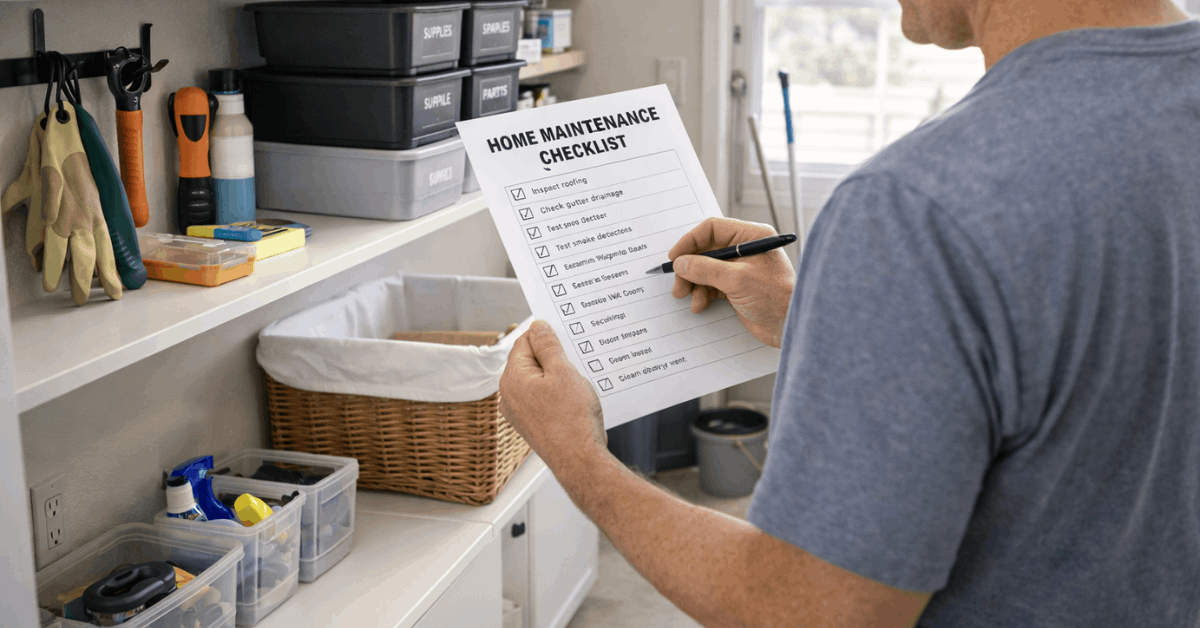
Winter lends itself to labeling bins, refreshing closet systems, and reviewing the home maintenance checklist. Summer supports outdoor furniture care, sealing decks, and checking screens when weather cooperates. Small rituals create continuity, and continuity keeps homes in shape.