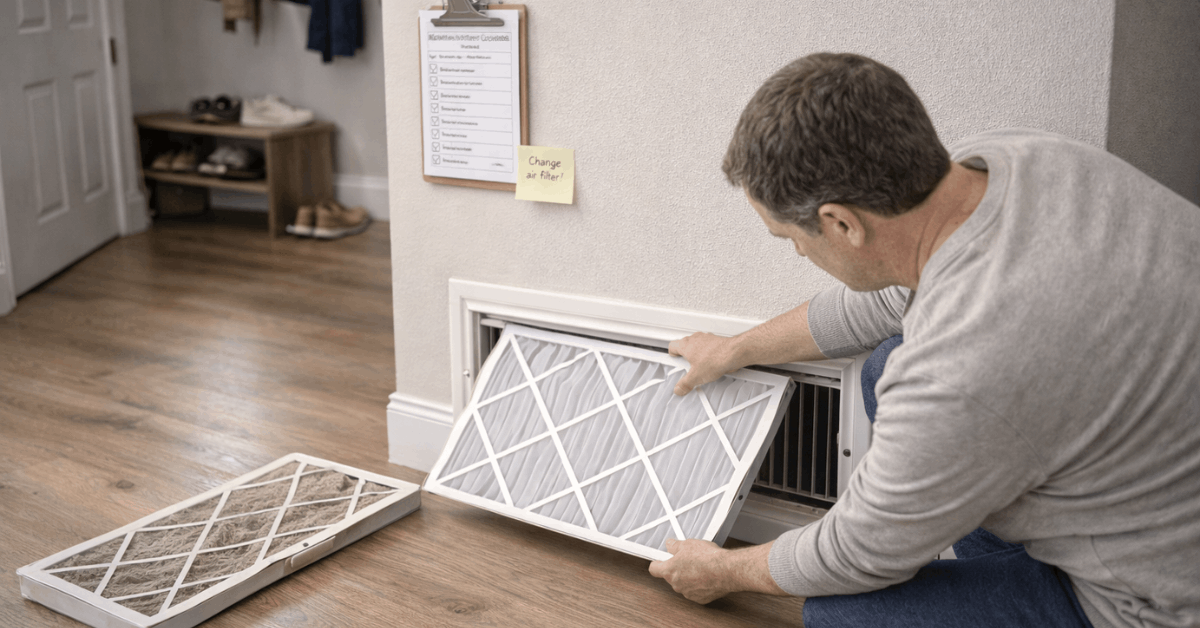
Protect Heating, Ventilation, and Airflow Before Problems Build
Heating and ventilation systems save time when they are kept predictable. Filters, vents, fans, and air pathways work better when they are not clogged with dust, lint, or debris.
A blocked vent or overdue filter can make a system work harder and may lead to poor airflow, higher energy use, or service calls. Regular attention keeps home systems running smoother.
Filter replacement should follow the manufacturer’s guidance, but your home conditions matter too. Pet hair, local dust, renovation work, or frequent use may mean filters need attention sooner.
Listen for unusual blower sounds and check exterior vents for lint or blockage. These small checks make it easier to explain issues if professional service becomes necessary.
Ventilation is also part of everyday maintenance. After showers, cooking, or laundry, moisture can settle on surfaces and create film or damp smells.
Running fans, opening doors briefly, or improving airflow in closed spaces can prevent buildup. This keeps rooms fresher and reduces repeat cleaning caused by moisture.
Keep Outdoor Areas From Creating Indoor Problems
Outdoor maintenance affects the inside of the home more than people realize. Overgrown plants can hide pests, block airflow, or trap moisture near walls and fences.
Leaves can clog gutters and push water toward areas that should stay dry. Keeping outdoor areas controlled helps protect the building around your home.
You do not need a perfect yard to prevent problems. Trim plants that touch walls, clear weeds before they spread into paths or drains, and sweep patios when algae or debris starts to build.
After storms or heavy leaf fall, check gutters and downpipes for visible blockages. These quick habits reduce water damage and slipping risks.
Watch Gutters, Paths, and Drainage Points
Gutters and downpipes deserve attention because water problems often start there. If water backs up into eaves, spills over walls, or pools near the foundation, it can create damp patches that take time and money to fix.
A quick seasonal glance can reveal clogs, sagging sections, or displaced parts. Drainage checks protect walls, roofs, and foundations.
Paths and patios need similar care. Wet leaves, algae, and dirt can make surfaces slippery and harder to clean later.
Sweeping small areas before buildup spreads is faster than restoring a neglected surface. Outdoor maintenance saves time because it prevents mess from becoming damage.
Use Seasonal Habits Instead of Last-Minute Repairs
Seasonal maintenance works because different problems appear at different times of year. Autumn may bring clogged gutters, winter exposes drafts, spring reveals exterior grime, and summer can dry out seals or expose rarely used fixtures.
A simple seasonal rhythm keeps you from reacting too late. It also gives you a clearer maintenance schedule.
A short seasonal calendar can help, but it should stay practical. In late autumn, clear gutters and check downspouts. Before winter, inspect weatherstripping, test radiators, and look for drafts.
In spring, wash exterior grime and check paint or sealant. In summer, run little-used fixtures and check outdoor taps so small issues stay visible.
The point is not to add more tasks. It is to group the right checks at the right time. When seasonal habits are predictable, you avoid rushed fixes during storms, heat waves, or cold snaps. That makes the home feel less reactive and stressful.
Keep Safety Tasks on a Predictable Schedule
Safety maintenance should never depend on memory alone. Smoke alarms, carbon-monoxide alarms, fire extinguishers, extension cords, locks, latches, and gas appliances need predictable checks because small failures can create serious problems.
These tasks do not take long, but they matter. A regular schedule protects the people in the home.
Test alarms monthly and replace batteries or devices according to their instructions. Check fire extinguisher dates, scan cords for heat marks or damage, and pay attention to gas appliances that smell unusual or burn oddly.
Locks and latches also count as maintenance. A stiff lock or misaligned strike plate can become a problem at the worst time.
Build Routines Around Real Household Pressure Points
Household routines work best when they match the busiest parts of the day. Morning departures, after-school returns, dinner prep, and bedtime are common pressure points where clutter and stress build quickly.
Anchoring small tasks to those moments prevents the home from sliding out of control. This makes routines more natural to follow.
Visual reminders can help, especially in shared households. A simple checklist near the door, kitchen, or bedroom can reduce repeated reminders.
Children can handle age-appropriate tasks such as clearing plates, matching socks, sorting toys, or wiping small spills. Shared responsibility saves time because the routine is not carried by one person alone.
Also read: How to Keep Items Working Well
Teach Small Responsibilities Early
Teaching responsibility early does not mean expecting perfect results. It means giving each person a clear, repeatable task that fits their ability.
A child may not fold towels perfectly, but they can place them in a basket or sort simple items into labeled bins. Practice builds speed, confidence, and independence.
This also reduces household friction. When everyone knows where shoes, bags, dishes, toys, or laundry belong, fewer items are left for someone else to handle later.
Small shared habits can return minutes to the day and lower stress. A home runs better when basic standards are shared.
Use a Simple Planner Without Turning It Into a Project
A maintenance planner should make life easier, not create more admin work. Use it to record recurring tasks, service dates, model numbers, filter sizes, repair notes, and professional visits.
This helps when you need to book service or explain a problem clearly. Good notes reduce guesswork during repairs.
The planner can be digital, paper, or a simple calendar. What matters is that tasks appear before they become urgent.
Group related jobs together, such as filter checks, alarm tests, and vent inspections, so each session feels manageable. A simple system helps keep preventive maintenance on track.
Time-Box Small Maintenance Sessions
Short time blocks make maintenance easier to start. A weekly 20- to 40-minute slot can cover one or two small tasks without taking over the day.
Choose visible wins first, such as sealing a small draft, clearing a gutter section, wiping vent covers, or fixing a loose handle. Progress feels better when the task has an endpoint.
Time-boxing also prevents overworking. Once the session ends, stop and leave the rest for another day. This keeps maintenance from feeling endless and helps you return to it next week. Consistent small sessions reduce the weekend backlog.
Know When a Professional Is the Safer Choice
Some problems should not be handled casually. Gas odors, persistent electrical faults, roof leaks, bulging ceilings, foundation cracks, and heating failures during extreme temperatures deserve qualified help. Waiting too long can increase risk and cost. Calling sooner may save time, money, and stress.
Good notes make professional visits more efficient. Take photos, record dates, and describe what changed, such as when a leak appears or what sound a system makes.
If you have model numbers or past service notes, keep them ready. Clear information can shorten diagnosis and reduce unnecessary back-and-forth.
Make Maintenance Easier to Keep Doing
Time savings show up when maintenance becomes part of normal life instead of a last-minute rescue effort. Frequent light cleaning, short inspections, seasonal checks, and early repairs keep systems stable and rooms usable.
Start with the tasks that prevent the most disruption in your home, whether that is moisture control, safety checks, outdoor cleanup, or daily resets.
The best maintenance habits that save time are the ones simple enough to repeat even during busy weeks.