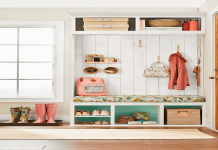
Keeping your home tidy daily is about using small routines that prevent clutter from building up.
You maintain order more easily when you focus on simple actions instead of occasional cleanups.
This approach saves time, reduces stress, and keeps your space consistently functional.
Build a Daily Tidying Mindset
A daily tidying mindset helps you keep control without spending much time. You focus on consistency and small actions that fit into your normal routine.
- Daily habit loop — Do small tidying actions at the same time each day.
- Consistency over intensity — A little every day prevents big messes later.
- End-of-day reset — Put main areas back to “ready” before you sleep.
- Tidy as you move — Clean up in the moment instead of saving it for later.
- Fast decision rule — Decide immediately where an item goes so it doesn’t sit out.
- Everything has a home — Give common items a fixed spot to reduce clutter.
- Attach it to routines — Pair tidying with meals, showers, or bedtime to remember it.
- Keep systems simple — Easy storage and simple rules make it easier to stick with.
Focus on High-Traffic Areas First
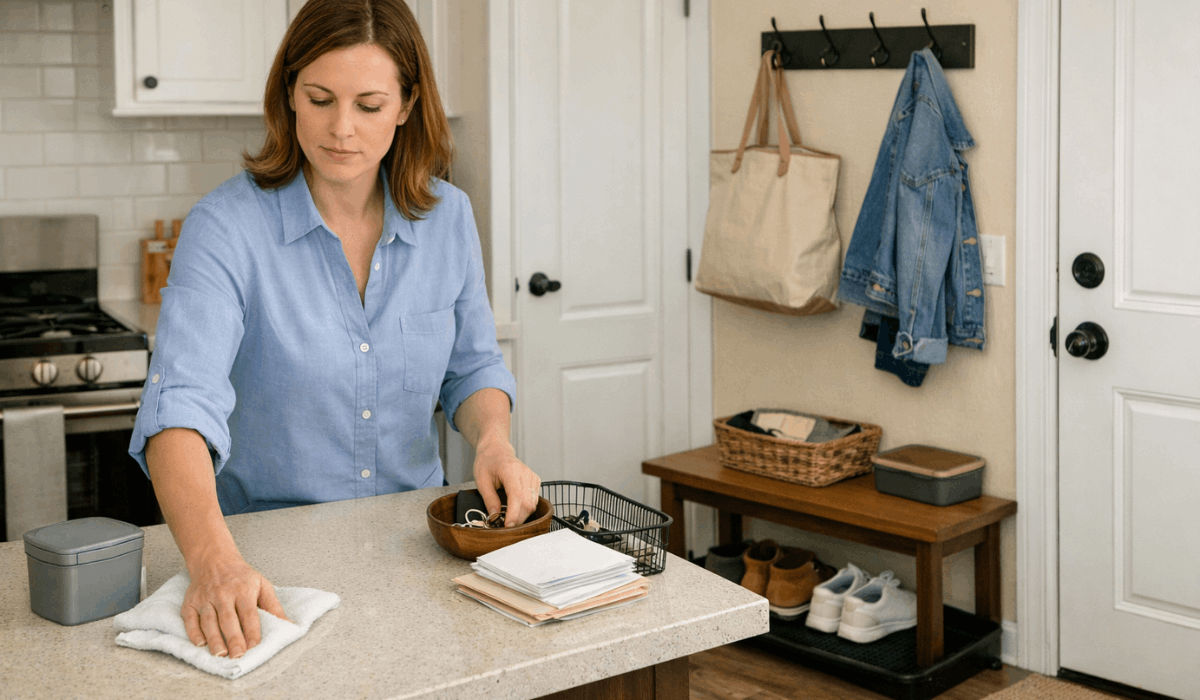
High-traffic areas get messier faster than the rest of your home. Keeping these spaces tidy first makes your entire home feel more organized with less effort.
- Kitchen and dining surfaces — Clear counters and tables daily to prevent buildup.
- Living room seating areas — Reset cushions, blankets, and small items after use.
- Entryway and door zones — Control shoes, bags, and keys before clutter spreads.
- Bathroom sink areas — Wipe surfaces and return items to their place each day.
- Hallways and walk paths — Keep floors clear so mess doesn’t migrate to other rooms.
Use the One-Minute Rule
The one-minute rule keeps small tasks from turning into clutter. If something takes a minute or less, handle it immediately rather than postponing it.
- Put items away instantly — Return objects to their place as soon as you’re done.
- Handle mail on arrival — Open, sort, or discard it right away.
- Clean small messes immediately — Wipe spills and crumbs before they spread.
- Close quick loops — Finish tiny tasks instead of leaving them half-done.
- Avoid “temporary” piles — Items left out usually stay longer than planned.
Create Simple Storage Systems
Storage only works when it supports your daily habits. Simple systems make it easier to put things away without having to think.
- Easy-to-reach storage — Keep frequently used items within reach so you can grab and return them quickly.
- Open and visible containers — Use bins or baskets you can see into to avoid forgetting items.
- One category per space — Store similar items together to reduce mixing and mess.
- Minimal storage rules — Fewer rules mean less hesitation when putting things away.
- Limit container size — Full containers signal when it’s time to remove excess items.
Do a Daily 10-Minute Reset
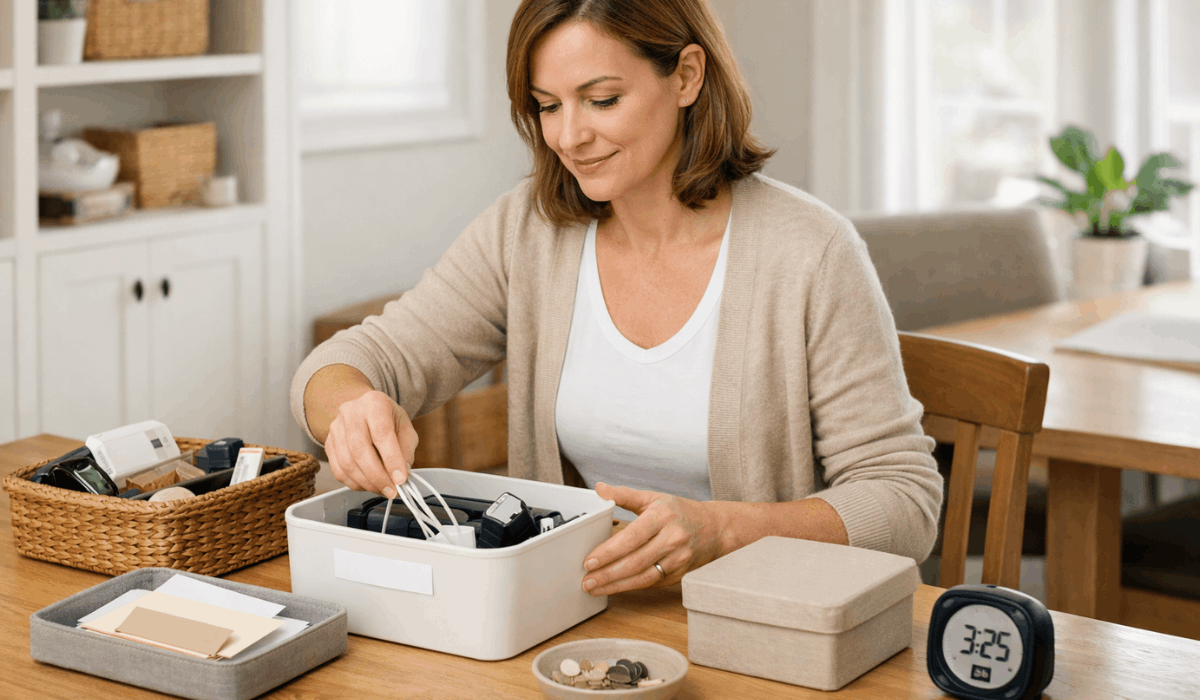
A daily 10-minute reset keeps clutter from carrying over to the next day. This short routine restores order without feeling overwhelming.
- Set a fixed time — Do the reset at the same time each day to build consistency.
- Start with visible surfaces — Clear tables, counters, and floors first for fast results.
- Return items to their home — Put everything back where it belongs instead of relocating piles.
- Prep for tomorrow — Set out what you’ll need so mornings stay smooth.
- Stop at ten minutes — Ending on time keeps the habit realistic and repeatable.
Involve Everyone in the Household
Daily tidying works better when everyone takes part. Shared responsibility keeps routines realistic and prevents one person from carrying the full load.
- Assign clear daily roles — Give each person simple tasks they own.
- Match tasks to ability — Keep responsibilities age-appropriate and manageable.
- Use shared reset times — Tidy together for a few minutes to move faster.
- Set clear expectations — Make it obvious what “tidy” means in each space.
- Keep rules consistent — Consistency helps habits stick for everyone.
Avoid Common Daily Tidying Mistakes
Some habits undo your daily effort without you noticing. Avoiding these mistakes helps you keep your home tidy with less work.
- Letting items pile up — Small piles grow fast and become harder to clear.
- Waiting for free time — Tidying works best in short moments, not long sessions.
- Over-organizing spaces — Complex systems slow you down and get ignored.
- Skipping daily resets — Missed resets lead to clutter carryover.
- Keeping items without purpose — Unused items make daily tidying harder.
Set Daily Clutter Limits
Clutter limits help you stop the mess before it spreads. Clear boundaries make daily decisions faster and easier.
- Surface limits — Keep tables and counters mostly clear at all times.
- Item quantity caps — Limit the number of items per space.
- One-in, one-out rule — Remove one item when you bring in a new one.
- No temporary piles — Avoid “just for now” stacks that linger.
- Overflow action rule — When a space fills up, remove items immediately.
Why Daily Tidying Reduces Stress
A tidy home lowers mental load and improves focus. Daily order removes constant visual and mental distractions.
- Less visual noise — Clear spaces help your mind stay calm.
- Fewer decisions — Organized areas reduce daily choice fatigue.
- Better control — Order gives you a sense of stability and control.
- Faster routines — You spend less time searching for items.
- Easier rest — Calm spaces make it easier to relax at home.
Daily Tidying vs Weekly Cleaning
Daily tidying and weekly cleaning serve different purposes. Using both keeps your home manageable and clean without burnout.
- Daily tidying — Focuses on putting items back and controlling clutter.
- Weekly cleaning — Handles deeper tasks like scrubbing and dusting.
- Time difference — Daily tidying takes minutes, weekly cleaning takes longer.
- Effort level — Tidying maintains order, cleaning restores cleanliness.
- Best results — Daily tidying makes weekly cleaning faster and easier.
How Long Daily Tidying Should Really Take
Daily tidying should fit easily into your schedule. Short, predictable routines work better than long sessions.
- 5–10 minutes per session — Enough time to reset key areas.
- 1–2 short sessions per day — Morning and evening work well.
- Focus on visible spaces — This gives fast, motivating results.
- Stop when time is up — Ending on time keeps the habit sustainable.
- Adjust as needed — Increase or reduce time based on your home size.
Final Section: Turn Daily Tidying Into a Habit
Keeping your home tidy daily is easier when you rely on small, repeatable routines rather than big cleanups.
You stay in control by setting limits, focusing on high-traffic areas, and doing quick resets that fit your day.
Start using these daily tidying habits today so your home stays organized with less effort and stress.