Organizing your space efficiently helps you move through daily tasks with less effort and fewer distractions.
This guide uses a comparison guide for a smarter choices approach, so you can pick simple systems that fit your space and routine.
You will learn practical steps to reduce clutter, place items logically, and keep your home organized without constant cleanup.
Assess Your Space Before Organizing
A quick assessment shows what the space needs before any changes happen.
- Identify clutter hotspots: Spot where items pile up daily, like entryways, desks, or counters.
- Measure available space: Check the width, depth, and height of shelves, drawers, and corners.
- Review usage frequency: Separate daily-use zones from occasional storage areas.
- Check access and movement: Notice blocked drawers, tight walkways, and hard-to-reach spots.
- Define each area’s purpose: Decide what each space is for before placing items.

Declutter With a Practical System
Decluttering works best when it follows a clear and repeatable process. A simple system helps reduce excess items without creating decision fatigue.
- Sort items by use: Group items into daily-use, occasional-use, and unused categories.
- Remove items that no longer serve a purpose: Let go of broken, expired, or unused items.
- Handle one category at a time: Focus on a single group to avoid overwhelm and half-finished work.
- Set clear limits: Use available space as a boundary for how much to keep.
- Finish with immediate removal: Take donations and trash out right away to prevent backtracking.
Use Storage Solutions That Match Your Space
Storage should support how the space is used, not complicate it. Choosing the right solutions keeps items easy to access and simple to maintain.
- Match storage to item size: Use containers and shelves that fit the items you store, without wasted space.
- Use vertical space wisely: Add shelves, hooks, or wall storage to free up floor areas.
- Choose hidden storage when needed: Use under-bed or behind-door options for less-used items.
- Keep storage simple: Avoid complex systems that take extra effort to maintain.
- Prioritize easy access: Place frequently used items within reach in one step.
Create Simple Organization Zones
Organization works best when items are grouped by purpose. Clear zones reduce searching and make daily routines easier.
- Group items by task: Keep related items together based on how they are used.
- Assign one zone per activity: Clearly separate work, storage, and relaxation areas.
- Limit each zone’s items: Avoid overcrowding by keeping only what belongs there.
- Place zones where tasks happen: Store items close to where they are actually used.
- Keep zone boundaries clear: Return items to their zone after use to maintain order.
Maintain Order With Small Daily Habits
An organization lasts when small actions are done consistently. Simple habits prevent clutter from building up again.
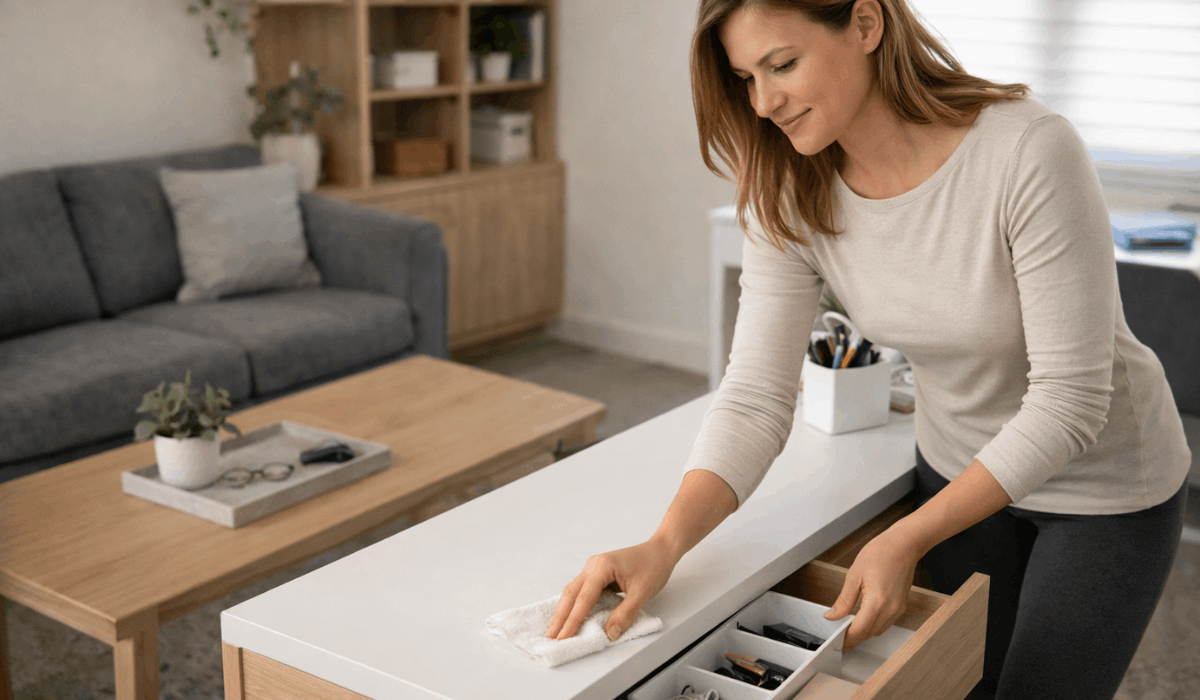
- Do a daily reset: Spend a few minutes returning items to their zones.
- Put items back immediately: Avoid leaving things out after use.
- Clear surfaces regularly: Keep desks, counters, and tables mostly empty.
- Remove new clutter quickly: Handle mail, packages, and small items the same day.
- Review problem areas weekly: Adjust systems that are not working.
Organize Small Items That Create Visual Clutter
Small items spread quickly and make spaces look messy. Simple control keeps surfaces clear.
- Group similar items together: Keep small items in one dedicated container.
- Use dividers or trays: Prevent items from mixing and shifting.
- Limit quantities: Keep only what fits in the assigned space.
- Store by frequency: Place daily items forward and rare items back.
- Label when needed: Make return placement obvious and fast.
Plan Storage Before Buying New Containers
Buying storage without a plan leads to wasted space. A short review prevents unnecessary purchases.
- Measure first: Check dimensions before choosing containers.
- Match containers to items: Avoid oversized or underfilled bins.
- Reuse what already exists: Repurpose boxes and drawers first.
- Buy only after decluttering: Storage should support fewer items.
- Keep styles consistent: Similar containers make spaces easier to scan.
Set Simple Rules to Prevent Clutter From Returning
Rules keep the organization stable over time. Fewer rules work better than many.
- One in, one out: Remove an item when a new one enters.
- One home per item: Avoid storing the same category in multiple places.
- No surface dumping: Clear flat surfaces daily.
- Immediate decision rule: Handle new items when they arrive.
- Quick weekly check: Reset areas that drift out of order.
Common Organization Problems and Fixes
Every space has limits that affect organization. Knowing common problems helps prevent frustration.
- Limited space: Use multi-purpose storage and prioritize essentials.
- Shared areas: Set clear boundaries and simple rules for everyone.
- Too many items: Declutter again using clear limits.
- Hard-to-reach storage: Move frequently used items to easier locations.
- Inconsistent habits: Simplify systems to make upkeep easier.
- No clear item categories: Group similar items and assign each to a storage spot.
- Overfilled storage bins: Reduce contents to make items easier to access.
- Lack of labels: Label shelves or bins to prevent misplaced items.
- Unused vertical space: Add shelves or hooks to free floor areas.
- Buying storage before decluttering: Remove excess items before adding containers.
Organizing for Different Life Situations
An organization works best when it matches how the space is actually used. Different routines require different systems.
- Small living spaces: Use vertical storage and multi-purpose furniture to reduce floor clutter.
- Homes with children: Set up open bins and simple zones for fast cleanups.
- Remote work setups: Separate work storage from personal items to avoid overlap.
- Shared homes: Assign clear boundaries for shared and personal storage.
- Busy schedules: Use low-effort systems that work even on tired days.
How Organization Affects Time, Focus, and Stress
Clutter changes how smoothly daily tasks get done. A clear setup reduces extra steps and distractions.
- Faster routines: Items are easier to find and return quickly.
- Fewer delays: Less searching means fewer interruptions during tasks.
- Cleaner surfaces: Clear counters and desks reduce visual noise.
- Lower decision load: Simple placement rules reduce the need for daily thinking.
- More consistent habits: Stable systems make upkeep feel automatic.
Minimal Maintenance Systems That Actually Last
Systems fail when they take too much effort to maintain. Low-maintenance setups stay effective longer.
- One-step storage: Choose solutions that let items return without extra sorting.
- Simple categories: Use broad groups rather than overly detailed organization.
- Easy access: Store daily items where they can be reached without moving other items.
- Flexible containers: Use bins and dividers that can change with your needs.
- Clear reset routine: A quick daily reset keeps the system stable.
When to Reorganize and When to Leave Things Alone
Not every messy moment means the system is broken. Knowing when to adjust prevents wasted effort.
- Reorganize when: Items keep landing in the wrong places repeatedly.
- Adjust when: Storage feels cramped or hard to reach during routine use.
- Leave it when: The mess is temporary and tied to an active project.
- Fix the cause: Target the habit or placement that creates the mess.
- Review monthly: Small tweaks prevent major resets later.
Final Section: Staying Organized Without Extra Effort
Organizing your space efficiently works best when systems match how the space is actually used.
Small, practical changes reduce clutter, save time, and make daily routines easier to maintain.
Apply these steps today and adjust your setup as needed to build an organized space that works for you long term.