These small home organization tips focus on habits that fit real schedules and real rooms.
You will use a few repeatable home organization techniques instead of big weekend cleanouts.
This guide includes home organization tips and tricks, plus practical organization tips for home and tips for organization at home. You can keep going.
Start with a weekly reset you can actually repeat
Pick one day and one time window so the reset becomes predictable rather than emotional.
Keep the reset short enough that you do not need motivation to begin.
Use one basket per room to collect items that drifted, then return them to their homes. End by clearing one visible surface so the house looks calmer right away.
Do a fast three-pile sort
Touch each item once and choose keep, move, or let go. Limit “move” items to what you can carry in two trips.
Put “let go” items straight into a bag so they do not re-enter the room.
Create a donation and discard station
Place a sturdy bag or bin where you naturally pass it, like near the entry or laundry. Set a simple rule that full bags leave the house within seven days.
Keep a small trash liner nearby so broken or expired items do not linger.
Use labels only where they reduce friction
Label shared zones like pantry shelves, toy bins, and cleaning caddies. Use big, simple words so everyone can follow the system at a glance.
Skip labels for private, flexible spaces where your habits change often.
Give high-traffic items a clear “home”
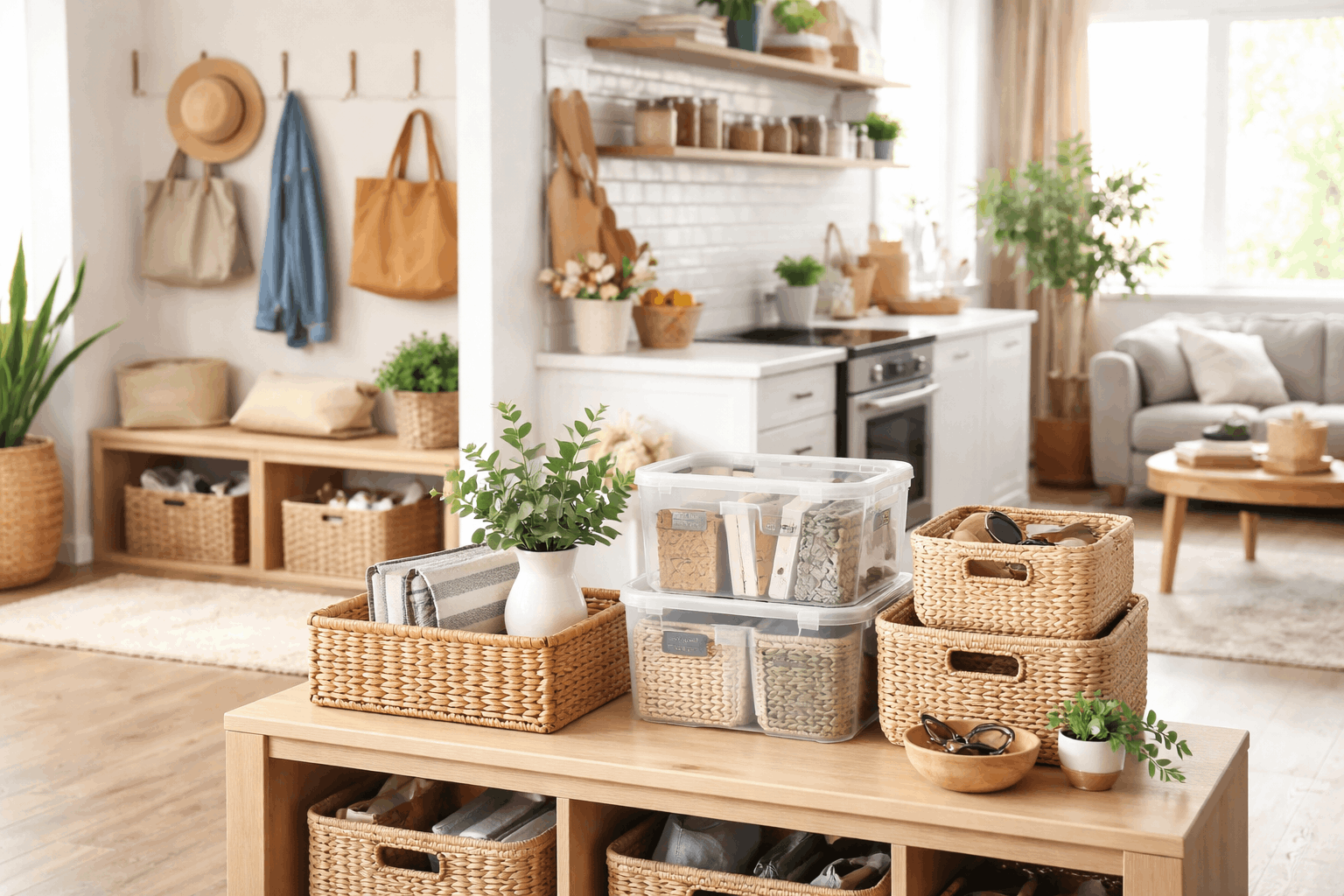
Clutter returns when daily items do not have a stable landing spot. Choose homes that match your movement, not the “perfect” spot from a photo.
Store the most-used items between shoulder and knee height to reduce effort.
Use open storage for everyday things and closed storage for backup or seasonal items.
Make an entryway drop zone that prevents piles
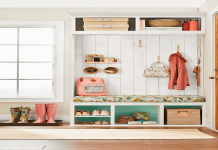
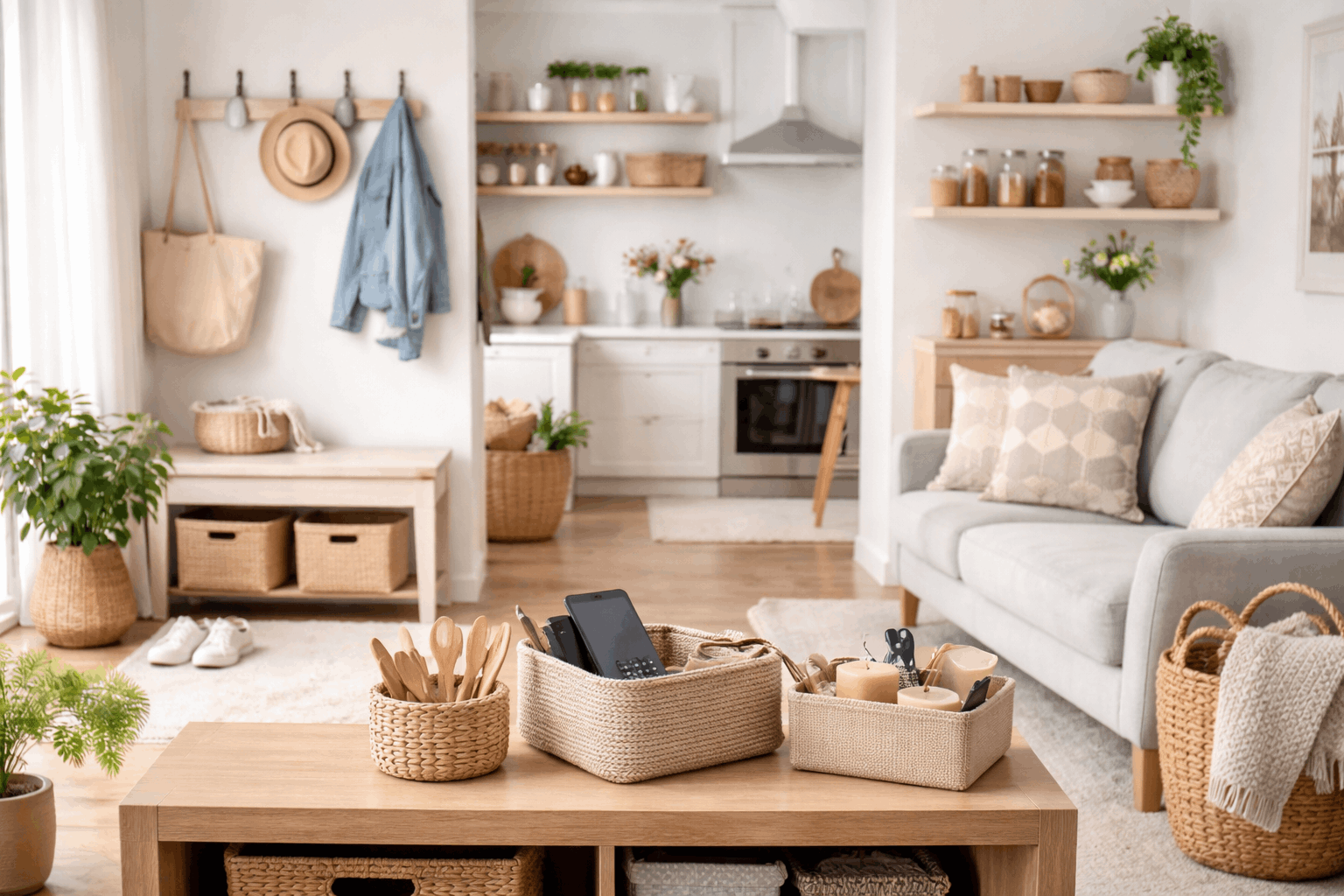
Use one tray or bowl for keys and small essentials you need tomorrow. Hang bags and jackets on hooks that are reachable without stretching.
Keep a small basket for shoes so the floor stays clear even on busy days.
Protect your kitchen counters with a “one-zone rule”
Pick one counter corner for daily appliances, mail, and quick notes. Make everything else counter-free so wiping down is fast and satisfying.
Store duplicates and rarely used tools away from the main cooking path.
Control living room clutter with a reset bin
Keep one attractive bin for remotes, chargers, and small items that appear daily.
Empty the bin during your weekly reset so it never becomes long-term storage. Limit décor to a few pieces so your surfaces are easy to maintain.
Build tiny routines that stop the mess before it starts
Maintenance works when routines take minutes, not hours. Attach each routine to something you already do, like coffee, dinner, or brushing teeth.
Keep supplies where the task happens so you do not wander around looking for them.
Track success by how often you reset, not by how perfect the room looks.
Use the two-minute evening reset
Set a timer and put away only what is visible and in your main path. Return items to their homes, even if the home is a simple bin.
Stop when the timer ends so the habit stays lightweight.
Keep laundry from becoming a room-by-room disaster
Place one hamper where clothes naturally come off, even if it is not “pretty.” Fold or hang one small batch at a time so it does not become a mountain.
Keep socks, underwear, and basics in easy-access drawers so putting away is quick.
Create a paper flow that prevents stacks
Decide where the paper lands the moment it enters your home. Use three slots or folders: act, file, and recycle.
Schedule one weekly moment to clear the “act” slot so it stays useful.
Use space-smart storage that stays simple
Storage should reduce decisions, not create new ones. Pick containers that fit your shelves and drawers so space is not wasted.
Avoid overbuying organizers until you know what you store and how you reach for it.
Choose a few repeatable container types so the look and system stay consistent.
Go vertical to free surfaces
Use wall hooks, over-door racks, and stackable shelves where floor space is tight.
Store lighter items higher and heavier items lower for safety and ease.
Keep frequently used items on the outside edge so you can grab them quickly.
Divide drawers so items do not migrate
Use simple dividers or small trays for categories like tools, cables, or toiletries. Give each category a boundary so you notice overflow early.
Leave some empty space so the drawer can breathe and stay usable.
Use clear bins for categories you forget about
Store backstock items, seasonal gear, and spare parts in clear containers. Face bins outward so you see what you have without opening everything.
Add a short label only if the contents look similar from the outside.
Care for items so they stop turning into clutter
An organization lasts longer when items stay clean, working, and easy to put away.
Maintenance is easier when you do small care tasks on a routine schedule. Keep a small “repair or replace” list so broken items do not linger in drawers.
Focus on the items you touch most, because they create the most visible mess.
Keep clothes in good shape to reduce wardrobe overflow
Wash by simple categories so you do not ruin items and feel forced to replace them.
Use matching hangers to keep closets tidy and reduce snagging or slipping. Set a rule that new clothing replaces old clothing when storage is tight.
Keep the pantry organized by freshness and access
Group staples together so you do not buy doubles and create backstock clutter. Rotate older items forward so they get used before they expire.
Keep snacks and lunch items at eye level so daily grabbing stays orderly.
Maintain cleaning supplies so you can act fast
Store supplies near where you use them, like bathrooms and kitchen zones. Refill and replace basics on a schedule so you do not hoard half-empty bottles.
Use one caddy for quick cleans so you can reset a room in minutes.
Room-by-room habits that fit real life
Different rooms need different rules because your behavior changes by space. Use the same core system, but adjust the container size and access level.
Start with the room that causes the most stress, because results show faster there.
Keep rules simple so everyone in the home can follow them without reminders.
Bedroom: keep surfaces clear for better routines
Limit your nightstand to the items you use every night and every morning.
Use one small basket for chargers and small accessories to prevent scattered clutter
Reset clothing by hanging, folding, or re-hemming it before sleep.
Bathroom: stop product build-up with one-in, one-out
Keep daily products in one tray so wiping the counter is easy. Store backups elsewhere so the sink area stays calm and functional.
Discard expired products during your weekly reset to avoid hidden clutter.
Home office: control cables, paper, and “project sprawl”
Use one container for active projects and close it when you are done for the day. Route cables into a simple clip system so your desk stays clear.
Empty downloads, screenshots, and desktop files weekly so digital clutter stays managed.
Conclusion
Choose three daily actions, three weekly actions, and one monthly action to keep things steady.
If you fall behind, restart with one surface and one routine instead of redoing everything.
Keep improving your system until it fits your life, because a sustainable organization is built by repetition.