A functional home supports your day instead of creating extra decisions, cleanup, and stress.
If you keep asking yourself how to make your home more functional, start by fixing the few points that slow you down the most.
You need simple zones, fewer categories, and routines that fit how you actually live.
Define “Functional” in a Way You Can Measure
Many people ask what is a functional house, and the clearest answer is that it reduces friction in daily routines.
Function is not a vibe, because it shows up in how fast you can start tasks, finish tasks, and reset spaces.
You get better results when you define function as clear surfaces, predictable storage, and fewer “where did I put that” moments.
You stay consistent when you measure small wins like faster mornings, cleaner counters, and fewer duplicate purchases.
Measure Function by Daily Friction
Notice the three moments that regularly annoy you, because those are your highest-return fixes.
Track where items land when you walk in, cook, get ready, and relax, because those drop zones reveal your real system.
Choose changes that remove steps, like placing a hook where the bag actually falls or adding a tray where keys actually land.
Pick Three Priorities per Room
Give each room a primary purpose, because a room that tries to do everything often does nothing well.
List three outcomes that matter, like “clear table,” “easy to clean floor,” or “find chargers in one place.”
Say no to extra storage projects until those outcomes are stable for two weeks in a row.
Build Zones Around the Routines You Repeat
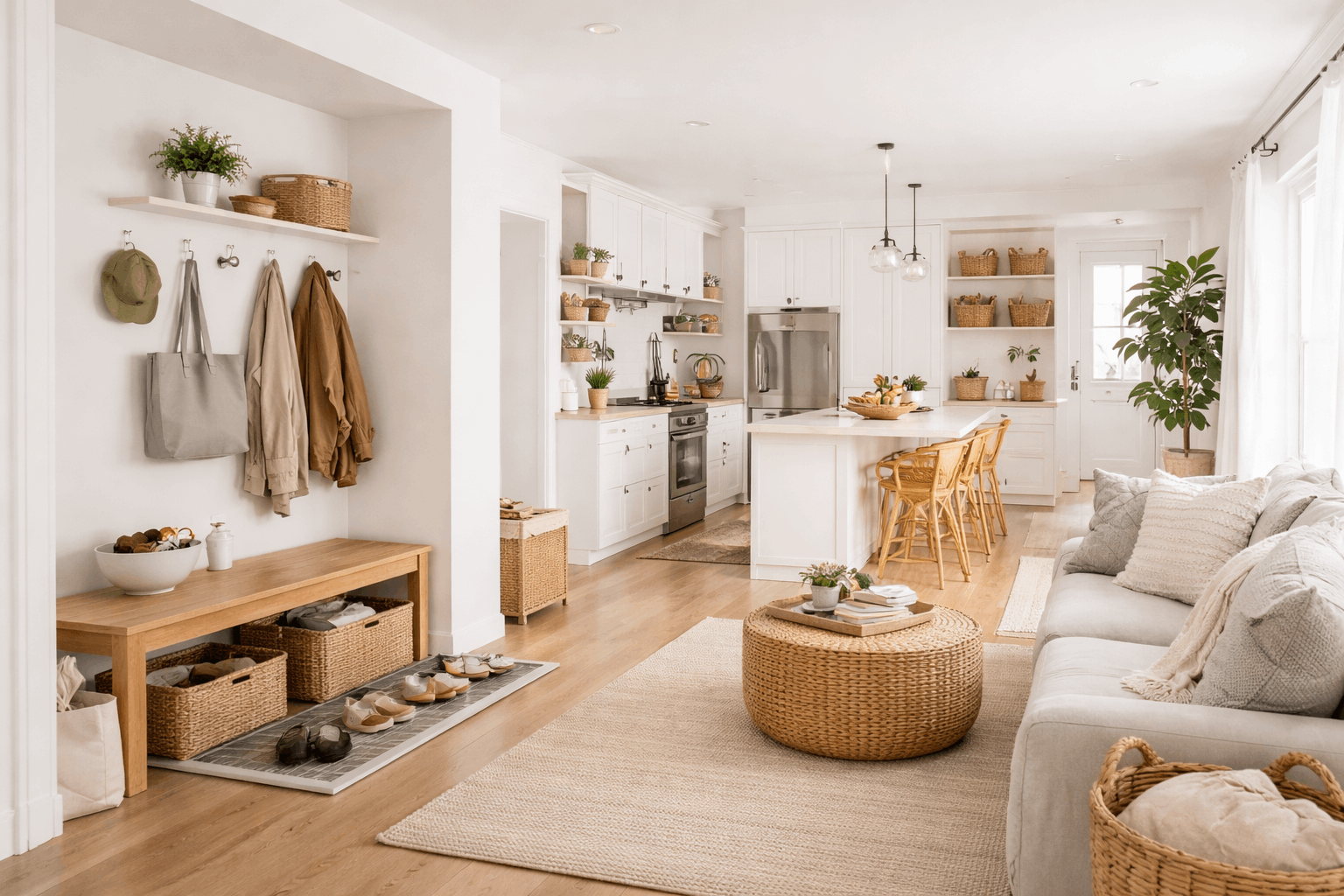
A functional home works best when the layout follows routines instead of categories like “miscellaneous” and “random.”
You create zones by grouping actions together, like unpacking groceries, charging devices, or getting out the door.
You keep zones visible and simple, because hidden systems fail when you are tired or busy.
You improve flow by reducing back-and-forth walking and giving each zone a clear start and stop point.
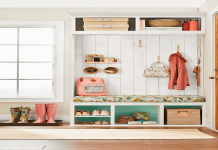
Create an Entryway “Launch Pad”
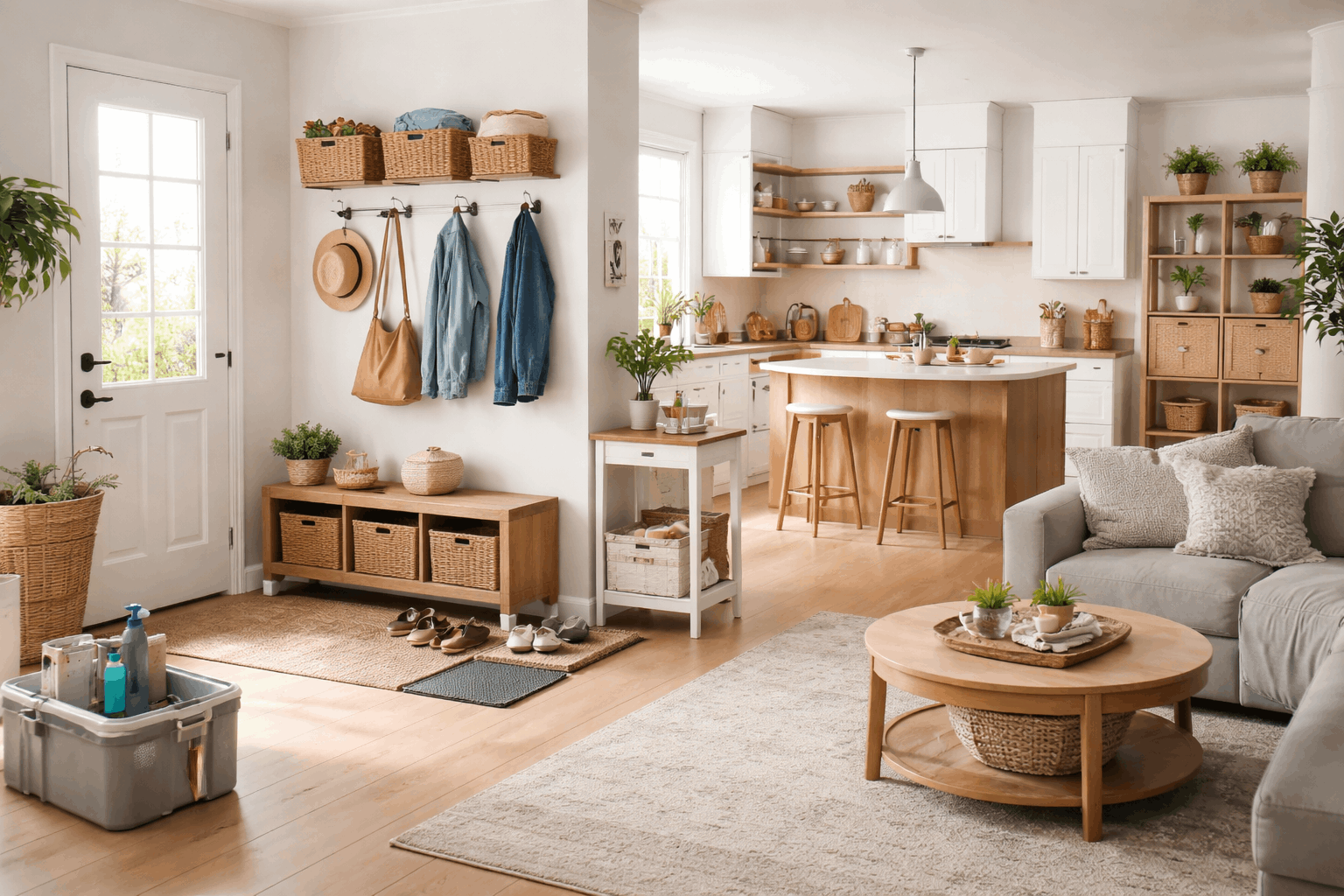
Use one hook area for bags and jackets, because hanging beats stacking when you are in a rush.
Place a small tray or bowl for keys and cards, because tiny essentials need a dedicated landing spot.
Add a shoe tray or mat boundary, because it sets a limit and keeps dirt from spreading through the home.
Set Up a Kitchen Workflow That Saves Time
Keep daily tools near where you use them, like cutting boards near prep space and cooking utensils near the stove.
Use one drawer or bin for “everyday” items, because you should not dig past rarely used tools to cook dinner.
Clear one counter section on purpose, because an open work surface is what makes cooking and cleaning easier.
Control Clutter With Container Limits
Clutter usually grows because you have unlimited space for “just for now” piles.
Container limits create a hard stop, because a full bin forces a decision before the mess spreads.
You make your home more functional when each problem category has one simple container, not five different systems.
You maintain results by keeping the limits visible, because hidden overflow becomes delayed clutter.
Use One-In-One-Out for Fast Categories
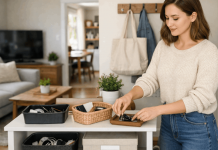
Pick one open bin for cables, because cables multiply and tangle when they do not have a single home.
Use one small basket for daily grab items to prevent surfaces from becoming storage.
When the bin is full, remove extras before adding new items, because a limit only works when it stays firm.
Keep Paper and Small Items From Taking Over
Use one tray for incoming mail and papers, because paper needs a single direction and a single deadline.
Create a “needs action” spot, because papers without a next step become permanent clutter.
Schedule a weekly paper sort, because small piles become big stress when they sit for months.
Make Storage Easy to Use and Easy to Reset
Storage fails when it requires too many steps, too many labels, or too much precision.
You create functional storage by using broad categories that match real behavior, not ideal behavior.
You reduce decision fatigue when every storage area answers one question, which is “where does this go back to quickly.”
Store by Frequency and Weight
Store heavy items low to reduce strain and make putting things away safer and faster.
Move rarely used items to higher shelves, because prime space should serve your daily routines.
Keep Categories Broad and Labels Minimal
Use labels only when you truly need them, because too many labels create maintenance work you will avoid.
Choose broad groups like “batteries,” “tools,” or “first aid,” because micro-categories break down during busy weeks.
Use clear bins or open baskets when possible, because visibility reduces searching and duplicate buying.
Create a Multi-Functional Home Without Making It Complicated
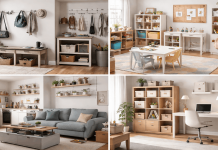
A multi-functional home works when flexibility is built in, not when every corner becomes a project.
You get more usable space by using furniture that supports two purposes, like working and dining or storage and seating.
You protect open areas by choosing a few portable setups instead of permanent clutter.
You avoid chaos by assigning every flexible item a “home base” where it returns after use.
Use Dual-Purpose Surfaces and Fold-Away Options
Choose a table that can work as a dining and homework space, because one strong surface beats two crowded surfaces.
Use a fold-away desk or wall shelf if space is tight, as it provides functionality without taking up floor space.
Keep one small caddy for work supplies, because packing up quickly is what makes shared surfaces possible.
Build Flexibility With Portable Kits
Create a cleaning kit that stays together, because searching for supplies is what makes cleaning feel bigger than it is.
Use a small “repair and care” kit for scissors, tape, batteries, and a screwdriver, because tiny fixes prevent bigger problems.
Store these kits where you use them, because portability only works when it is truly convenient.
Maintain Function
A functional house stays functional when you maintain it in small cycles, not rare deep cleans.
You keep progress by using short routines that prevent backlog, like weekly resets and monthly checks.
You reduce stress by choosing a fixed time cap, because routines fail when they expand.
You build confidence when maintenance feels predictable, because predictability is what makes a home easier to live in.
Conclusion
If you still wonder how to make your home more functional, focus on one room, one zone, and one limit at a time.
A functional home grows from small choices you repeat, not big reorganizations you avoid.
You can keep the results by maintaining simple zones, broad storage, and short reset routines.