Clutter builds because common items have no obvious place to land, so they collect on counters, chairs, beds, and tables. Simple systems work better because they are easy to repeat when the day is busy and the house is active.
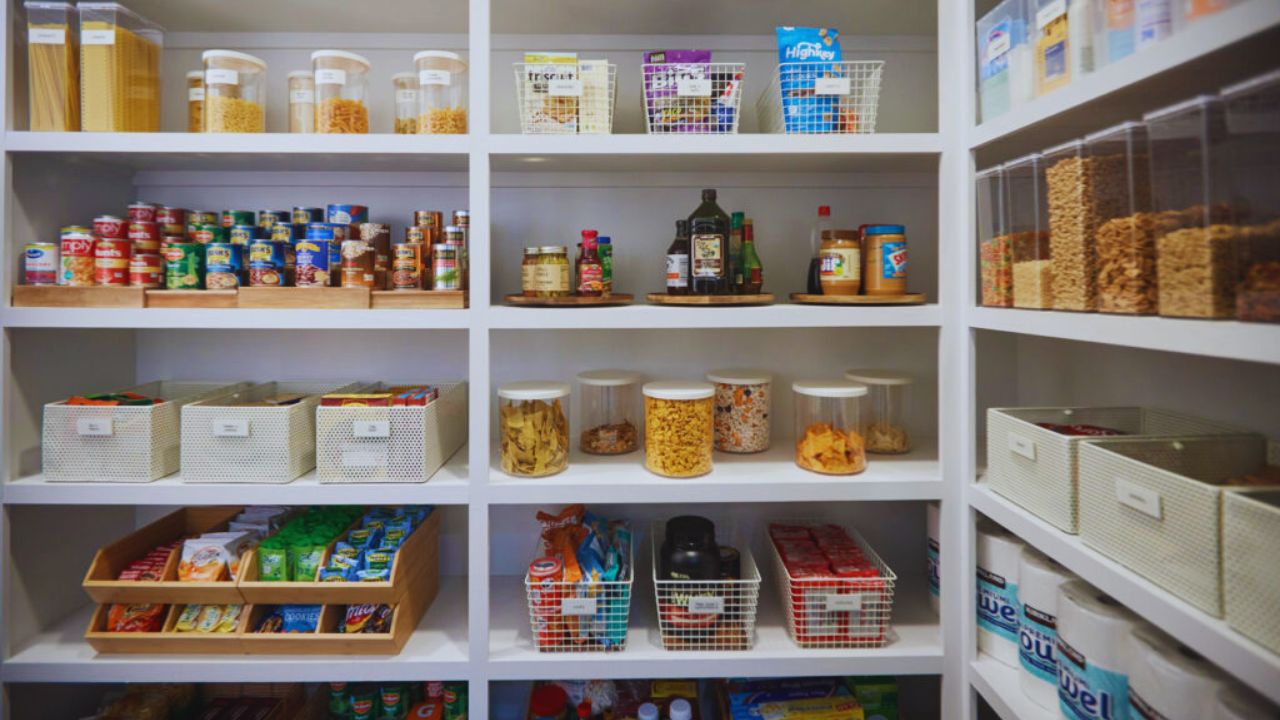
Start With Systems That Match Real Life
Complicated systems often fail because they add too many steps. If putting something away requires opening containers, moving items, or remembering detailed labels, the item will probably stay out. A good home system should make the right action easier than leaving clutter behind.
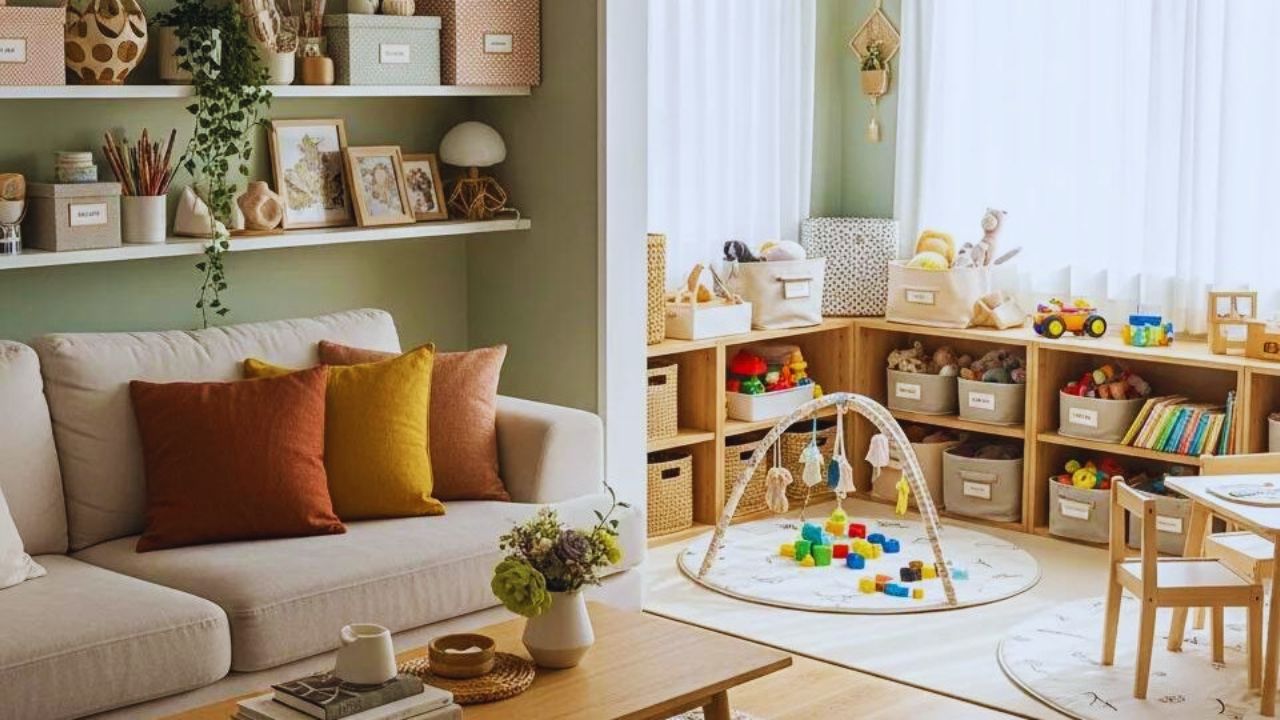
Start by watching where items naturally land. Shoes may gather near the door, mail may fall on the counter, and clothes may pile on one chair. These patterns show where your home needs better storage.
Define “Organized Enough”
A home does not need every drawer arranged perfectly to function well. Organized enough means essentials are easy to find, surfaces are mostly clear, and cleanup does not feel overwhelming. This functional order gives you a realistic standard.
Remove Steps That Slow You Down
If a system keeps failing, look at the steps involved. A lidded bin may look tidy, but it can become annoying for items used every day. A deep basket may hide too much. Easy storage should support the habit, not fight it.
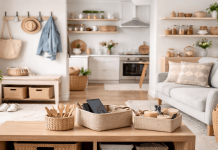
Use open trays, hooks, shallow bins, and visible baskets for daily items. Save hidden or stacked storage for seasonal supplies and backups.
Create Zones for Daily Clutter
Zones are small areas assigned to specific actions. They work because storage sits where the habit already happens. A good daily zone gives common items an obvious home before they spread through the house.
Start with the places that create the most visible clutter: the entryway, kitchen counter, bedroom chair, bathroom counter, and living room table. Fixing these areas makes the whole home feel calmer.
Set Up an Entry Drop Zone
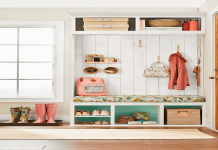
The entryway needs fast storage because people arrive and leave with several items at once. Use hooks for bags and jackets, a tray for keys, and a basket or shelf for shoes. This entry zone keeps clutter from moving deeper into the home.
Keep the setup close to the door. If children use the space, place hooks and bins low enough for them to reach. Easy systems survive rushed mornings.
Keep the Kitchen Counter Useful
The kitchen can feel messy even when only one counter is crowded. Choose one section as the main prep area and protect it from mail, bags, and random items. This clear counter makes cooking and cleanup easier.
Keep cooking tools, coffee items, or lunch supplies near where they are used. Store less-used appliances away from the main work surface. The kitchen should be ready for the next task.
Make Bedrooms Easier to Reset
Bedroom clutter often comes from clothing, chargers, books, and nightstand overflow. Give each category a simple place to return to. A bedroom reset becomes faster when clothing has a hamper, chargers have one outlet area, and rewear clothes have one controlled spot.
Avoid using chairs as temporary closets. If you need a place for tomorrow’s outfit, use one hook or one small closet section.
Also Read: How to Organize Your Home Step by Step
Use Short Resets Instead of Big Cleanups
A short reset keeps the home from sliding into a larger mess. It should take about ten minutes and focus on the areas that affect daily comfort most. A short reset works because it is repeatable even when energy is low.
Use the same order each time: return items, clear surfaces, handle dishes, and move laundry where it belongs. Stop before the routine becomes exhausting.
Create an End-of-Day Routine
An end-of-day routine prepares the home for tomorrow. Clear the sink, return chargers, reset the entryway, and place morning essentials where they are easy to grab. This night routine prevents small problems from becoming morning stress.
If you share the home, give each person one small task. One person can handle shoes, another can clear dishes, and another can return living room items.
Use a Weekend Overflow Check
Daily resets do not catch everything. Once a week, choose one zone that drifted, such as paper, laundry, pantry items, or bathroom products. A weekly check keeps overflow from turning into a full-house project.
Do not use the weekend check to reorganize everything. Remove trash, return misplaced items, and adjust one setup that keeps failing.
Contain Items Before Sorting Too Much
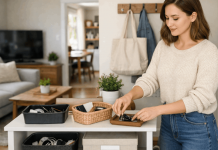
When clutter feels overwhelming, containment can create quick relief. Place related items into one tray, bin, basket, or drawer section before refining the category. Simple containers give loose items a boundary and make the area easier to use immediately.
This works well for toys, snacks, mail, toiletries, cleaning supplies, and hobby items. Once the pile is contained, you can see what belongs, what is extra, and what needs to leave.
Use Light Labels Where Needed
Labels help when more than one person uses the same space. They do not need to be decorative or overly detailed. Plain words such as snacks, cords, towels, mail, or cleaning cloths are enough. These clear labels reduce questions and make returns easier.
Use labels on shared bins, pantry containers, toy baskets, and entryway storage. Skip labels where they make the setup feel stiff.
Follow the One-Container Rule
A category should have a limit. One basket for snacks, one tray for mail, one bin for chargers, or one shelf for cleaning backups can prevent slow expansion. This container rule shows when it is time to edit.
When the container fills, remove something before adding more. This keeps storage honest and prevents the home from needing more bins.
Adjust Systems as Life Changes
A simple system should change when the household changes. New schedules, school needs, work shifts, pets, guests, and seasons can all affect how the home functions. Flexible systems last longer because they adapt instead of demanding perfect behavior.
If a zone keeps failing, move the storage closer, shrink the category, or simplify the routine. The problem may be that the system no longer fits the way the home is used.
Conclusion: Keep Organization Easy to Repeat
Home organization without complicated systems works when the setup fits real daily behavior. Use zones, short resets, simple containers, and realistic limits to keep clutter from spreading. Start with one hotspot, make it easier to maintain, then repeat the same idea in another room.
The goal is not a perfect house. It is steady order that makes rooms easier to use, clean, and reset. When the system has fewer steps and clear homes for daily items, the home feels calmer without constant organizing.