Stop Damp Areas From Creating Bigger Problems
Bathrooms, laundry rooms, and under-sink spaces need regular attention because moisture causes damage quietly.
Moldy smells, mineral streaks, bulging caulk, soft drywall, and dark marks near seams can all point to trapped water. These signs should not wait for a deep-cleaning day. Moisture control protects walls, cabinets, and flooring.
Ventilation is one of the simplest ways to reduce dampness. Run fans after showers, leave doors open briefly when possible, and keep laundry areas from holding damp items too long.
Re-caulk tubs, showers, and sinks when gaps appear because cracks can guide water into walls. Early action helps prevent hidden water damage.
Check for Small Plumbing Clues
Small plumbing problems often leave clues before they become obvious leaks. Look for discoloration, mineral tracks, rust around fittings, soft cabinet corners, or caulk that keeps separating.
Under sinks, check supply lines, traps, and shutoff valves without over-tightening anything. A careful glance can reveal early plumbing warning signs.
Slow drains should be handled with mechanical cleaning when possible. Hair catchers, basic drain snakes, and hot-water flushes are often safer for pipes than harsh chemical products.
Toilets that refill randomly may need a simple flapper or chain adjustment. Addressing these issues early reduces water waste and repair delays.
Keep Heating, Cooling, and Airflow Reliable
Heating and cooling systems affect comfort, indoor air quality, and energy use. Dusty filters, blocked vents, dirty coils, and restricted airflow make systems work harder than needed.
A simple routine can help prevent poor performance during peak seasons. HVAC care is one of the highest-impact home habits.
Replace filters based on manufacturer guidance, usage, and home conditions. Pets, dust, nearby construction, and heavy seasonal use can all mean filters need attention sooner.
Walk around exterior units monthly and clear leaves or debris so airflow remains open. A little airflow maintenance can reduce stress on system parts.
Spring and fall are good times for service checks. A cooling tune-up before hot weather and a heating check before cold weather can reveal problems before systems are under pressure.
Outdoor hose bibbs should also be closed and drained before freezing temperatures when needed. Seasonal preparation helps prevent last-minute emergency calls.
Keep Gutters and Outdoor Drainage Working
Gutters and downspouts protect more than the roofline. When they clog, water can spill onto siding, pool near the foundation, or enter basements and crawl spaces.
Look for staining on fascia, tiger-striping beneath gutters, or pooling at downspout outlets. Those signs suggest water is not moving properly.
Downspout extensions should carry water several feet away from the foundation when possible. If trees shed heavily near your home, check gutters during fall and again after major leaf drop.
Gutter guards can help in some settings, but they still need occasional rinsing because fine debris collects over time. Outdoor drainage care prevents expensive moisture problems.
Keep a Practical Home Supply Kit
A prepared home is easier to manage during small repairs, storms, outages, or routine fixes. You do not need a huge collection of tools, but a few essentials should be easy to find.
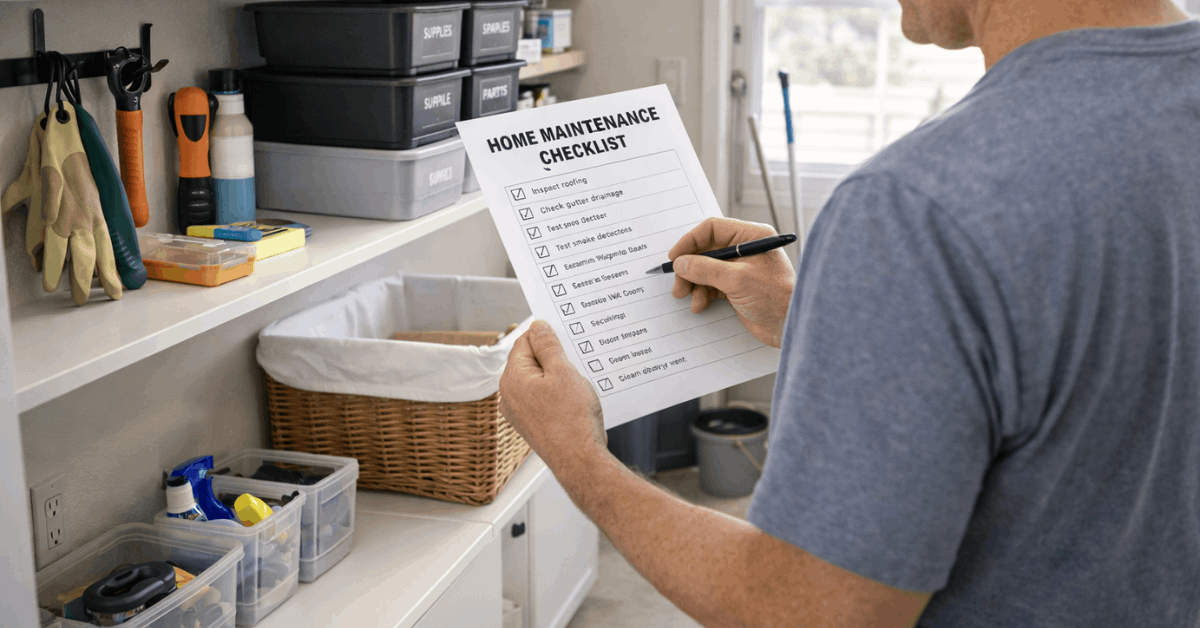
Keep items like an adjustable wrench, screwdrivers, pliers, a utility knife, a headlamp, batteries, gloves, masks, trash bags, and basic repair supplies in one labeled place. A simple kit saves time during small problems.
It also helps to keep household-specific items together. Teflon tape, silicone caulk, a plunger, a drain snake, touch-up paint, spare bulbs, and a small roller kit can solve common issues quickly.
When supplies are scattered, minor tasks get delayed. A labeled kit makes quick maintenance easier.
Use Walkthroughs to Notice What You Usually Miss
Some home problems start in places you do not look at every day. Attics, basements, garages, laundry areas, under-sink cabinets, exterior walls, large trees, and water heater areas deserve occasional attention.
A monthly loop through these spaces can reveal rust blooms, mineral streaks, damp insulation, dead branches, or pest activity. Walkthroughs help catch problems outside daily view.
After heavy rain, peek into the attic or basement if those areas are accessible and safe. Check behind laundry units and near water heaters for damp spots or corrosion.
Garage doors should move smoothly, and photo eyes should stay clean and aligned. These quick observations can prevent small issues from escalating.
Keep Notes That Help Later
A simple note or photo can save time later. Record the date, the issue, what you noticed, and what action you took.
This is useful when a problem returns or when a professional asks how long something has been happening. Good records make home maintenance decisions clearer.
Photos are especially useful for warranties, insurance, and resale. Capture serial numbers, paint formulas, filter sizes, model numbers, and completed repairs in one folder.
Scanned receipts can also help if you need proof of service. A lightweight record system keeps important details easy to find.
Use Seasonal Timing Instead of Rushed Fixes
Seasonal maintenance works because different risks appear at different times of year. Spring is a good time to service air conditioning, clean gutters, wash windows, and check roof edges.
Summer can be used for exterior touch-ups, pest screening, and trimming vegetation away from walls. Timing tasks this way makes home upkeep more predictable.
Fall should focus on furnace service, weatherstripping, water heater checks, and preparing outdoor faucets for freezing temperatures where applicable.
Winter is useful for watching ice-prone areas, testing alarms, reversing ceiling fans, and organizing indoor storage. Seasonal routines prevent everything from piling up at once. They also make maintenance feel lighter and better planned.
Also read: Everyday Maintenance Habits That Save Money: Simple Care Routines For Busy Homes
Know Which Problems Need Professional Help
Some tasks carry safety, licensing, or warranty concerns. Electrical work beyond simple fixture changes, gas appliance service, structural repairs, foundation cracks, main-line plumbing problems, persistent roof leaks, and bulging ceilings should be handled by qualified professionals.
Waiting too long can raise both risk and cost. Calling early may prevent damage from spreading further.
When hiring help, gather clear information before the visit. Photos, notes, model numbers, dates, and a short description of what changed can make the diagnosis faster.
For larger jobs, compare two or three quotes, confirm insurance, and request written details about the work and warranty terms. Clear communication makes professional repairs more efficient.
Make Budgeting Part of Maintenance
Maintenance is easier when costs are expected rather than surprising. Set aside a small repair fund and adjust it after major projects, equipment replacements, or seasonal service.
Even a modest sinking fund can reduce stress when something needs attention. Budgeting turns unexpected repairs into planned decisions.
A home inventory also helps with insurance and resale. Record model numbers, purchase photos, receipts, and upgrades after renovations or major furniture buys.
This keeps coverage aligned with what you actually own. A tidy record packet can support claims, warranties, and future sale conversations.
Build Simple Skills That Reduce Service Calls
A few small skills can save time throughout the year. Fixing a running toilet flapper, quieting a squeaky hinge, clearing a basic shower clog, touching up paint, or sanding a sticky door edge can prevent small frustrations from becoming repeated issues.
These tasks do not require advanced expertise, but they should still be done carefully. Simple skills support faster everyday fixes.
Know your limits, though. If a task involves gas, complex electrical work, structural changes, or signs of serious water damage, it is safer to call a qualified professional.
DIY maintenance should reduce risk, not create more of it. The best approach is knowing what you can handle and what should be reviewed by an expert.
Make Maintenance a Normal Part of Home Life
Simple home care works best when it becomes part of the household rhythm. Spring cleanup, fall yard preparation, winter organization, and summer outdoor checks can become short shared routines instead of stressful one-time projects.
When everyone understands the basic system, the work feels less like a burden. Shared habits create more consistent home care.
Start with one routine that protects safety, moisture control, or daily comfort. Add records, seasonal reminders, and small repairs once the basics feel manageable.
A home stays in better shape when care is steady, visible, and realistic. Over time, simple maintenance for everyday needs helps protect comfort, value, and peace of mind.