Life gets easier when home organization and cleaning happen in small, repeatable steps instead of big weekend marathons.
These organizational routines are built for real schedules, small spaces, and normal mess.
If you are new to this, they also work as home organization for beginners because each routine is simple and predictable.
1) The 10-Minute Daily Reset
This routine is a quick reset that prevents “today’s stuff” from becoming “this week’s mess.”
It works best at the same time each day, like after dinner or before bed. You focus on visible surfaces and high-traffic zones, not deep cleaning.
You stop at 10 minutes even if everything is not perfect, because consistency beats intensity.
What counts as a reset
A reset means returning items to their “home” so they are ready for tomorrow.
It includes quick actions like hanging bags, clearing the table, and putting shoes in one spot.
It does not include reorganizing drawers, sorting paperwork, or wiping every surface.
How to make it automatic
Tie the reset to something you already do, like starting the dishwasher or plugging in your phone.
Keep supplies visible, such as a small basket, a trash bag, and a microfiber cloth in one drawer.
If you miss a day, restart the next day without “catch-up,” because the routine is the system.
2) The Entryway Drop Zone Routine
This routine controls the clutter that enters your home through bags, mail, coats, and shoes.
It reduces the daily scavenger hunt for keys and wallets. It also makes the rest of the house feel organized because the first area stays clear.
It is one of the fastest wins for home organization for beginners because it prevents mess at the source.
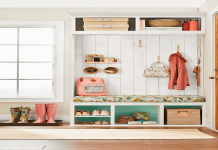
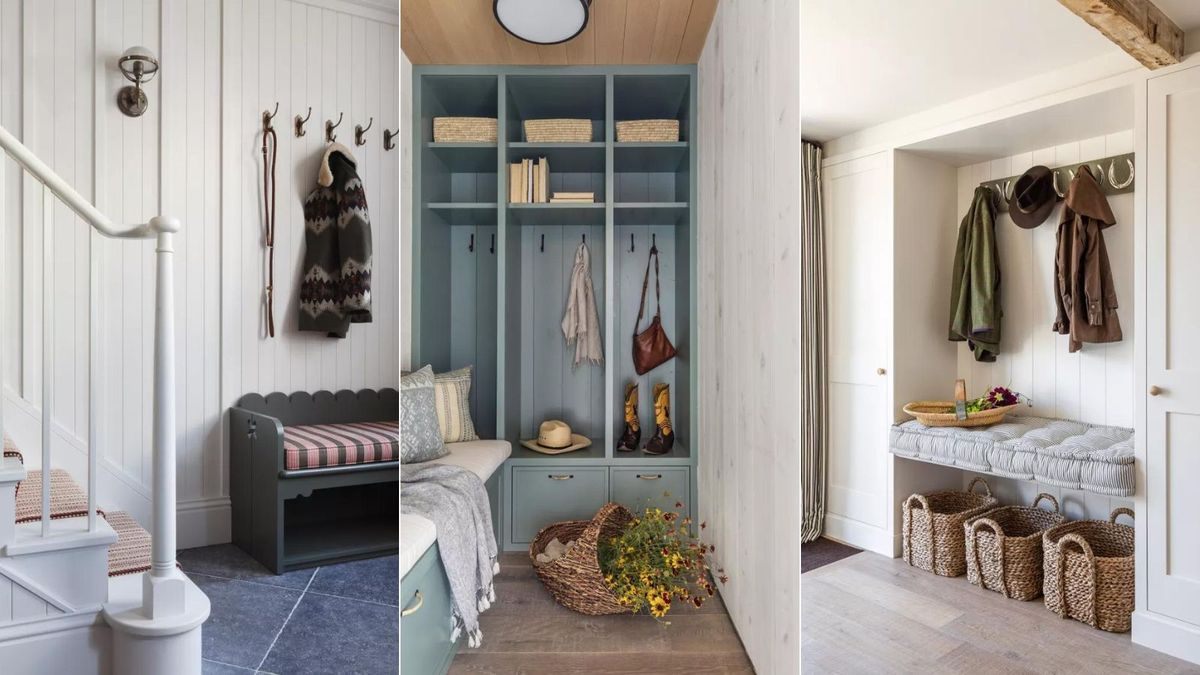
Set up one landing spot
Choose one small area near the door and limit it to essentials only. Use a hook for bags, a tray for keys, and one bin for shoes or daily items.
Labeling helps, but a consistent location helps more than labels.
Handle mail in 60 seconds
Stand over a trash can and recycle junk immediately. Put action items in one thin folder or “inbox” that stays in the same place.
File or scan important papers once a week, not every day.
Keep it from overflowing
Set a hard limit like one tray, one bin, and one hook per person. If the space fills up, remove items before you add new ones.
Do a quick check during your 10-minute reset so the drop zone stays functional.
3) The Two-Day “Organize Your Home Room by Room” Sweep
This routine keeps every room from slowly drifting into chaos. You do not clean the whole house in one day, because that is harder to repeat.
Instead, you split the home and organize your home room by room in short sessions across two days.
You build momentum while keeping effort realistic, which supports establishing routines at home long-term.
Day 1: High-traffic rooms only
Focus on the kitchen, living room, and entryway because these collect the most clutter.
Return items to their homes, reset surfaces, and clear floors so the space feels open.
Stop when the room is functional, not showroom-perfect, because “functional” is the goal.
Day 2: Private rooms and storage zones
Focus on bedrooms, bathrooms, and one storage area like a closet shelf or hallway cabinet.
Do a fast scan for laundry, toiletries, and items that migrated into the wrong room.
End by putting one “maybe donate” bag in the car or near the door so it leaves soon.
A timer makes it repeatable
Use 20 minutes per room so you stay focused and avoid overthinking. Play one playlist or set a phone timer so the routine has a clear start and stop.
Track progress by noting what got easier each week, because ease is your real measure of success.
4) The Weekly “Laundry + Linens Loop”
This routine prevents laundry piles from taking over chairs, floors, and spare beds. It also keeps towels and sheets from becoming a last-minute emergency.
You pick a simple weekly rhythm that matches your household, not an ideal schedule.
This supports home organization and cleaning because textiles are one of the biggest clutter drivers.
Choose one laundry rhythm
Pick a repeatable plan like one load per day or two bigger laundry days per week.
Match the plan to your capacity, like after school, after work, or weekend mornings. The best plan is the one you can repeat without dread.
Make folding and putting away faster
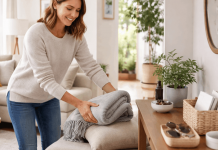
Fold in one place, like a cleared bed or table, so you do not wander mid-task.
Use simple categories like “tops,” “bottoms,” and “socks” instead of perfect sub-sorting.
Put away immediately after folding, because folded piles still count as clutter.
Add a linen reset to the loop
Pick one day to swap towels and one day to refresh sheets, even if it is every other week.
Keep one spare set accessible so changes are easy without digging through closets.
Store linens by room if possible, because “near where it’s used” makes routines easier.
5) The Monthly 30-Minute Declutter + Supply Check
This routine keeps clutter from building up silently in drawers, cabinets, and closets.
It also prevents buying duplicates because you forgot what you already own. You only do one small zone per month, so it stays simple and low-stress.
Over time, it strengthens your organizational routines by keeping storage aligned with real use.
Pick one zone, not the whole house
Choose a single spot like a bathroom cabinet, one kitchen drawer, or one shelf in a closet.
Empty only that zone, sort quickly, and put back what you actually use. If you feel stuck, start with expired items, broken items, and duplicates first.
Use a simple keep-or-go rule
Keep items you used in the last month or that support a real near-future need.
Let go of items that require “someday” motivation, because someday rarely arrives. When in doubt, keep the best version and release the extras.
Do a supply check while you are there
Write down low items like trash bags, dish soap, or batteries as you see them. Store backups together so you can check stock at a glance without rummaging.
This small step supports home organization and cleaning because it stops last-minute shopping and cluttered overflow.
Conclusion
When you focus on small resets, you make establishing routines at home feel normal instead of exhausting.
If you want the fastest results, start with the daily reset and the drop zone, then add one routine each week.
Try these routines today, adjust them to your space, and build a home that stays organized without constant effort.