
Small, consistent actions keep homes functional and calm. Maintenance Habits That Save Time focus on simple routines that prevent bigger problems, free mental space, and minimize weekend marathons.
Place upkeep inside normal days, not as an occasional event, and the result is fewer emergencies and more predictable weeks. Clean rooms stay usable, minor defects get fixed early, and stress drops because nothing lingers for long.
Regular Checks and Simple Inspections
Quick walkthroughs beat guesswork. Test smoke alarms monthly, note boiler or water-heater pressure, and scan lofts or basements for damp patches or musty smells.
After heavy rain or strong winds, look at the roofline and run a fast gutter glance for blockages or displaced tiles. Short inspections reveal changes before they become repairs, which saves time and money later.
A Consistent Cleaning Routine
Light daily cleaning prevents clutter from turning into a project. Wipe kitchen surfaces after use, load or handwash dishes promptly, and return items to their storage spots.
Rooms remain ready for use, and small faults become visible sooner, such as slow drips under sinks or lifting sealant around tubs. A steady rhythm also supports a weekly cleaning schedule that fits real life.
Looking After Heating and Ventilation
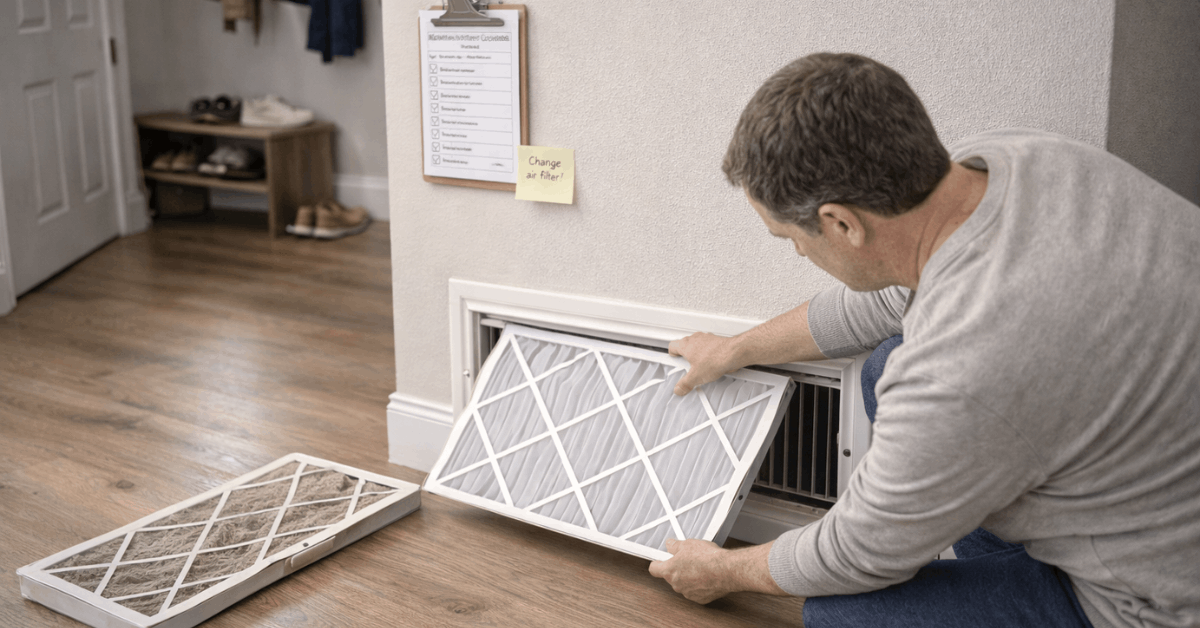
Healthy airflow and reliable heat reduce delays and callouts. Replace filters on schedule, check exterior vents for lint or debris, and listen for unusual blower noises.
Schedule HVAC filter replacement based on manufacturer guidance and local dust levels. Regular attention keeps systems efficient during peak seasons and makes service visits shorter because issues are identified early.
Keeping Outdoor Spaces Under Control
Overgrown plants invite pests and hide defects. Trim hedges, edge paths, and remove weeds before they spread to fences or drains. Keep patios swept so algae does not create slippery patches.
A simple gutter cleaning routine after leaf fall and storms prevents damp patches on walls and keeps downpipes working as designed.
Seasonal Maintenance Habits
Seasonal patterns protect the building envelope and utilities. This is the right place for a short calendar that prevents rushed fixes.
- Clear gutters and downspouts in late autumn to stop water backing up into eaves.
- Inspect weatherstripping before winter, then test radiators and bleed trapped air.
- Wash exterior grime in spring and touch up paint or sealant to keep water out.
- Water outdoor traps, run little-used fixtures, and check hose bibs in summer heat.
Staying On Top Of Safety Basics
Safety tasks deserve predictable slots. Test smoke and carbon-monoxide alarms, replace batteries where applicable, and check expiry dates on fire extinguishers. Scan extension cords and multi-plugs for heat or damage, and confirm gas appliances show steady flames without odd smells.
Security counts as maintenance too; stiff locks, damaged latches, or misaligned strike plates justify locksmith services before a failure strands anyone outside.
Using Schedules and Professional Support
A simple calendar converts intentions into results. List recurring tasks, assign them to specific days, and group related items so each session feels manageable. Service contracts for boilers, furnaces, or heat pumps reduce mental load and keep warranties intact.
A home maintenance planner also makes it easier to brief professionals because dates, notes, and part numbers live in one place.
Routines That Reduce Household Friction
Clear rhythms prevent chaos during pressure points. Anchor routines around morning departures, after-school resets, dinner prep, and bedtime.
Post simple visual checklists at kid height so responsibilities move from memory to habit. Independence builds when each person knows the sequence, which reduces reminders and frees attention for higher-value work.
Teaching Responsibility Early
Age-appropriate chores save time now and build capability later. Start with clearing plates, wiping small spills, matching socks, and sorting toys into labeled bins.
Embrace imperfect attempts because practice improves speed and quality quickly. Every task shifted to a capable helper returns minutes to the household while reinforcing shared standards.
Clean As You Go
Micro-cleaning prevents pileups that consume evenings. Put tools away after each use, wipe counters during simmer time, and empty small trash cans before they overflow. Bathroom sinks stay clear when products are returned to caddies immediately.
The habit to declutter as you go keeps rooms reset without scheduling a separate session.

Simple Home Maintenance Schedule Template
Short, recurring blocks cover 80 percent of household needs. Keep this lean table as a starter, then adjust for climate, building age, and equipment models. The goal is a seasonal home checklist that prevents surprises and supports predictable weeks.
| Frequency | Tasks | Notes |
| Weekly | Kitchen wipe-downs, vacuum high-traffic floors, quick bathroom reset | Pair tasks with existing routines to reduce context switching. |
| Monthly | Smoke-alarm test, HVAC filter glance, door lock lubrication | Replace filters sooner in dusty climates or pet households. |
| Quarterly | Gutter inspection, deep appliance clean, drain maintenance | Use enzyme or hot-water flushes where safe for pipes. |
| Biannual | Roofline check, exterior caulk/paint touch-ups, window track clean | Schedule around spring and autumn weather. |
| Annual | Professional HVAC service, water-heater check, insulation review | Capture model numbers and service notes in the planner. |
Troubleshooting Signals Worth Acting On
Early indicators deserve immediate attention. Water stains on ceilings, persistent moldy smells, tripped breakers, or unexplained boiler pressure drops point to issues that worsen with delay.
Unusual drafts, doors that stick after rain, or sudden pest activity can also reveal moisture ingress. Fast action typically reduces labor time and lowers material costs.
How To Build A Personal System That Sticks
Systems fail when they demand heroics. Start small, attach new tasks to existing anchors, and preposition supplies where work happens. Micro-bins under each sink keep cloths and cleaner ready.
A yard tote with gloves, pruners, and bags eliminates back-and-forth trips. Calendar reminders and a home maintenance planner ensure tasks appear before they become urgent.
Budgeting and Time Boxing
Tiny budgets and short windows still move the needle. Assign a weekly 20- to 40-minute slot for preventive home maintenance and pick one mini-project per session.
Choose visible wins first, such as sealing a small draft or replacing a showerhead washer. Progress compounds, and the backlog shrinks without consuming entire weekends.
When To Call A Professional
Some problems carry safety or warranty risk. Gas odors, persistent electrical faults, roof leaks, bulging ceilings, or foundation cracks justify qualified help.
Heating issues in extreme temperatures also merit service calls to prevent outages during peak demand. Clear notes, photos, and dates shorten diagnosis time and lower visit costs.
Conclusion
Time savings appear when maintenance becomes part of daily life. Frequent light cleaning, short inspections, and seasonal touch-ups keep systems stable and spaces usable.
Predictable routines reduce decision fatigue, while early fixes stop small faults from escalating. Maintenance Habits That Save Time deliver calmer weeks because nothing becomes urgent without warning.