Care and maintenance keep your home running smoothly without constant deep cleaning or expensive replacements.
A few repeatable habits protect the things you already own and reduce daily frustration.
Use the basics in this guide to build simple routines that prevent damage, clutter, and avoidable repairs.
Start With a “Prevent Problems” Mindset
Maintenance works best when you focus on stopping wear before it starts instead of reacting after something breaks.
Treat dirt, moisture, heat, and friction as the main causes of damage, because most item problems come from these four.
Pick a realistic baseline that you can repeat weekly, since consistency beats occasional marathon cleaning sessions.
Keep your plan simple by doing small checks while you already use a space, so maintenance feels like part of normal life.
Build a Weekly Care Loop for the Whole Home
A weekly loop is a short set of tasks that resets your space and prevents buildup from turning into an overwhelming project.
Choose the same day and time each week, so you stop negotiating with yourself and start relying on routine.
Keep the loop visible by storing supplies where you use them, which reduces friction and keeps the system going.
Aim for “clear, clean, and ready” in each area, because a reset makes daily habits easier to keep.
Kitchen and Food Zones
Wipe grease and crumbs from counters and handles weekly, because small buildup becomes sticky grime that is harder to remove later.
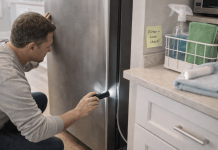
Check the fridge for old food and wipe one shelf, since a five-minute reset prevents odors and wasted groceries.
Empty and rinse the sink strainer and run hot water, because standing debris and residue are common sources of smells.
Bathroom and Laundry Zones
Wipe moisture from high-splash surfaces like the sink rim and faucet base, because mineral buildup forms fast in damp areas.
Clean the toilet touch points and floor edge weekly, since those spots collect dust and cause lingering odors.
Leave the washer door open after loads and clear the lint trap area, because trapped moisture and lint shorten appliance life.
Entryway and Living Areas
Reset the entry by clearing shoes, bags, and mail into simple zones, because clutter at the doorway spreads into the rest of the home.
Dust the most used surfaces and vacuum high-traffic paths, since grit acts like sandpaper on floors and furniture.
Do a quick “lost and found” sweep into one basket, because loose items stay manageable when they have a temporary holding spot.
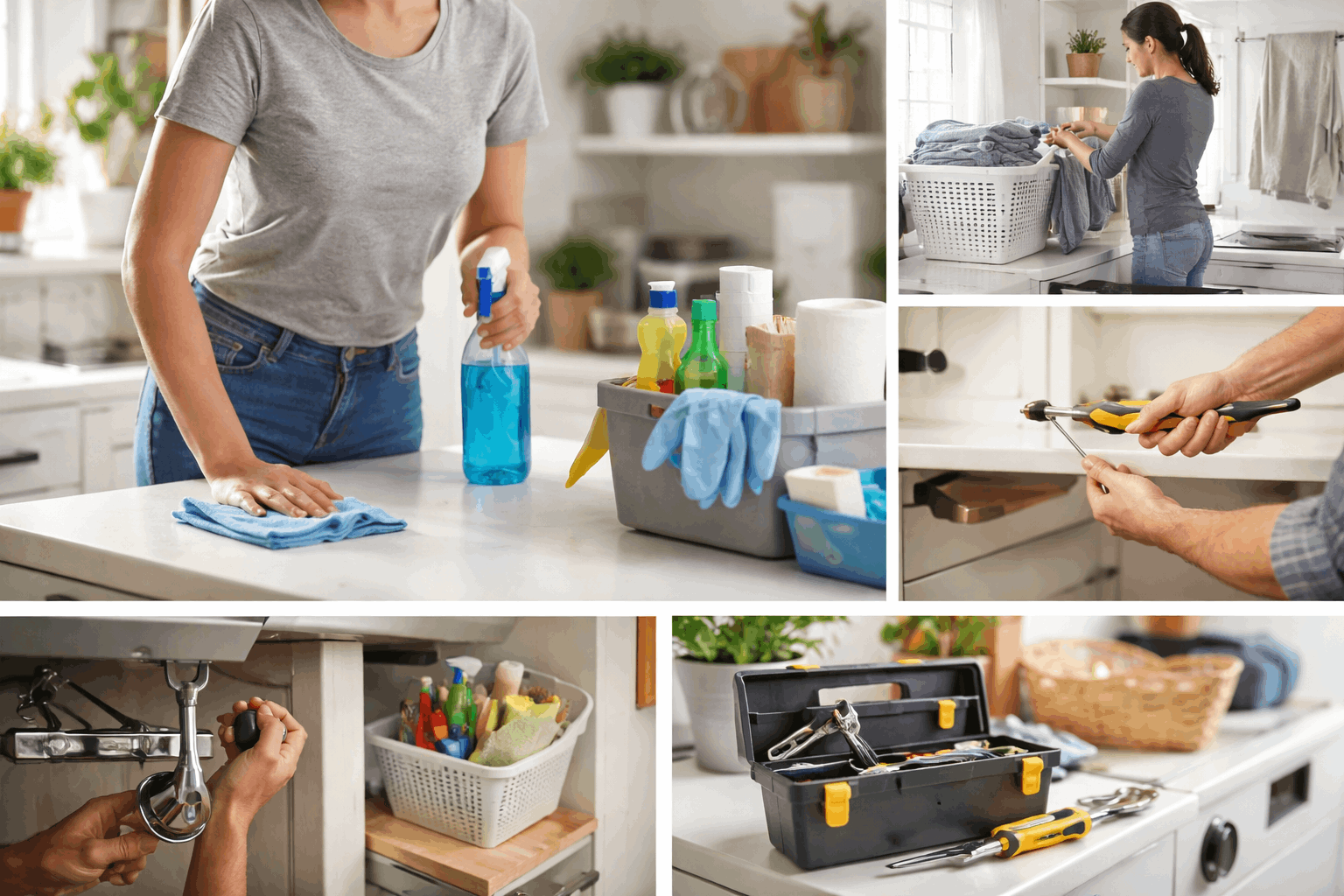
Cleaning Basics That Prevent Damage
Cleaning is not only about appearance, because the right method protects finishes, fabrics, and moving parts from wear.
Use gentle tools first and increase strength only if needed, because scratches and stripped coatings are usually caused by harsh methods.
Work from dry to damp and from top to bottom, since that reduces rework and stops dirt from spreading.
Test any new product in a hidden spot, because even common cleaners can react with paint, stone, or synthetic fabrics.
Dusting Without Spreading It
Use a microfiber cloth or a slightly damp cloth, because dry feather dusters often push dust into the air and onto nearby surfaces.
Dust before you vacuum, since particles fall downward and get picked up more effectively in a single pass.
Focus on vents, baseboards, and electronics weekly, because these areas collect fine dust that affects air quality and performance.
Removing Stuck-On Grime Safely
Soak first with warm water or a mild cleaner, because time loosens residue without heavy scrubbing that can damage finishes.
Use a soft sponge or non-scratch pad, since abrasive tools leave marks that attract future dirt and look permanently dull.
Rinse and dry after cleaning, because leftover cleaner film can cause streaks, sticky surfaces, or corrosion over time.
Spot Cleaning Fabrics and Upholstery
Blot spills instead of rubbing, because rubbing pushes stains deeper and frays fabric fibers.
Use a small amount of mild soap and water, since over-wetting can leave rings and encourage mildew in cushions.
Let fabric dry with airflow and space, because trapped moisture is a common cause of odor and long-term staining.
Protect Items With Storage That Matches Use
Storage is maintenance, because the way you put things away controls dust, moisture exposure, bending, and accidental breakage.
Keep everyday items easy to access, because hard-to-reach storage leads to piles, clutter, and rushed handling.
Group items by how they are used, since use-based storage reduces searching and lowers the chance of damage.
Use simple containers that fit the space, because a system that is easy to reset is more protective than a complex one.
Clothing, Linens, and Shoes
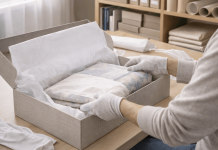
Store clean, fully dry fabrics, because moisture trapped in folds causes mildew and weakens fibers over time.
Use hangers that match the garment’s weight, since thin hangers stretch shoulders and heavy items sag when folded poorly.
Rotate seasonal pieces into closed bins or breathable bags, because protection from dust and light keeps fabrics looking new longer.
Electronics, Cables, and Small Gear
Keep chargers and cords in one open bin, because loose cables get crushed, tangled, and replaced more often than necessary.
Avoid storing electronics on the floor, since dust and accidental spills are common near baseboards and under desks.
Label by placement instead of text if needed, because clear “homes” reduce decision fatigue and keep gear easy to return.
Fix Small Issues Before They Become Big Repairs
Most costly problems start as small signs like a drip, wobble, squeak, or smell that gets ignored for too long.
Do quick checks while using the item, because small fixes are easier when the problem is still minor.
Keep a basic kit with a screwdriver, tape, mild cleaner, and a few spare batteries, since simple tools solve many everyday issues.
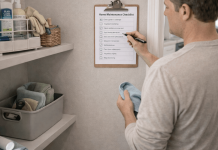
Write down what needs attention when you notice it, because memory fades and small tasks pile up when they stay vague.
Leaks, Loose Parts, and Wear Signals
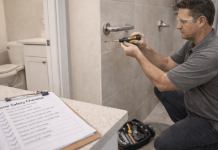
Tighten loose handles and hinges early, because movement widens screw holes and turns a simple fix into a bigger repair.
Address drips and damp spots quickly, since water damage spreads quietly and can ruin cabinets, floors, and stored items.
Replace worn pads, filters, and small parts on schedule, because these cheap components often protect more expensive systems.
Make Maintenance Automatic With Practical Triggers
Routines stick when they are attached to moments you already repeat, such as arriving home, finishing dinner, or starting laundry.
Keep supplies where the task happens, because walking to another room is a common reason people skip small maintenance steps.
Use short time limits like ten or fifteen minutes, since a clear stop point makes routines easier to restart on busy days.
Review your home seasonally and adjust the loop, because weather and schedules change what needs attention and what can be simplified.
Conclusion
Care and maintenance basics work best when you repeat small actions instead of waiting for big problems.
Choose a weekly loop, store supplies where you use them, and keep your baseline realistic so the routine lasts.