Three shoeboxes, two bowls from your kitchen, and 15 minutes can outperform a closet full of matching bins when you understand where clutter collects in the first place.
Most organizing advice starts with a shopping list. Buy this. Label that. Create a color-coded system that looks good on camera.
But buying containers before fixing the habits that created the mess just gives your clutter nicer homes.
The system below uses psychology instead of products. It works because it removes steps instead of adding them.
Start Where Clutter Actually Builds
Walk through your home right now and notice something. Clutter does not spread evenly. It pools.
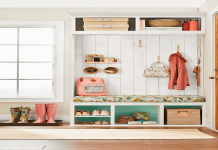
The corner of the kitchen counter. The chair in your bedroom. The space next to the front door.
These are high-friction spots. Places where putting things away requires too many steps, so you stop halfway.
Pick Two Problem Zones and Ignore Everything Else
Most people fail at organizing because they try to fix the whole house at once.
Pick two spots where clutter collects fastest. That might be your entryway table or the bathroom counter or the dining room chair that became a laundry station.
Solve those two zones first. Leave the rest alone.
My take on this is simple: a functional entryway and a clear kitchen counter will calm your home more than 10 perfectly labeled bins tucked in a closet you open twice a year.
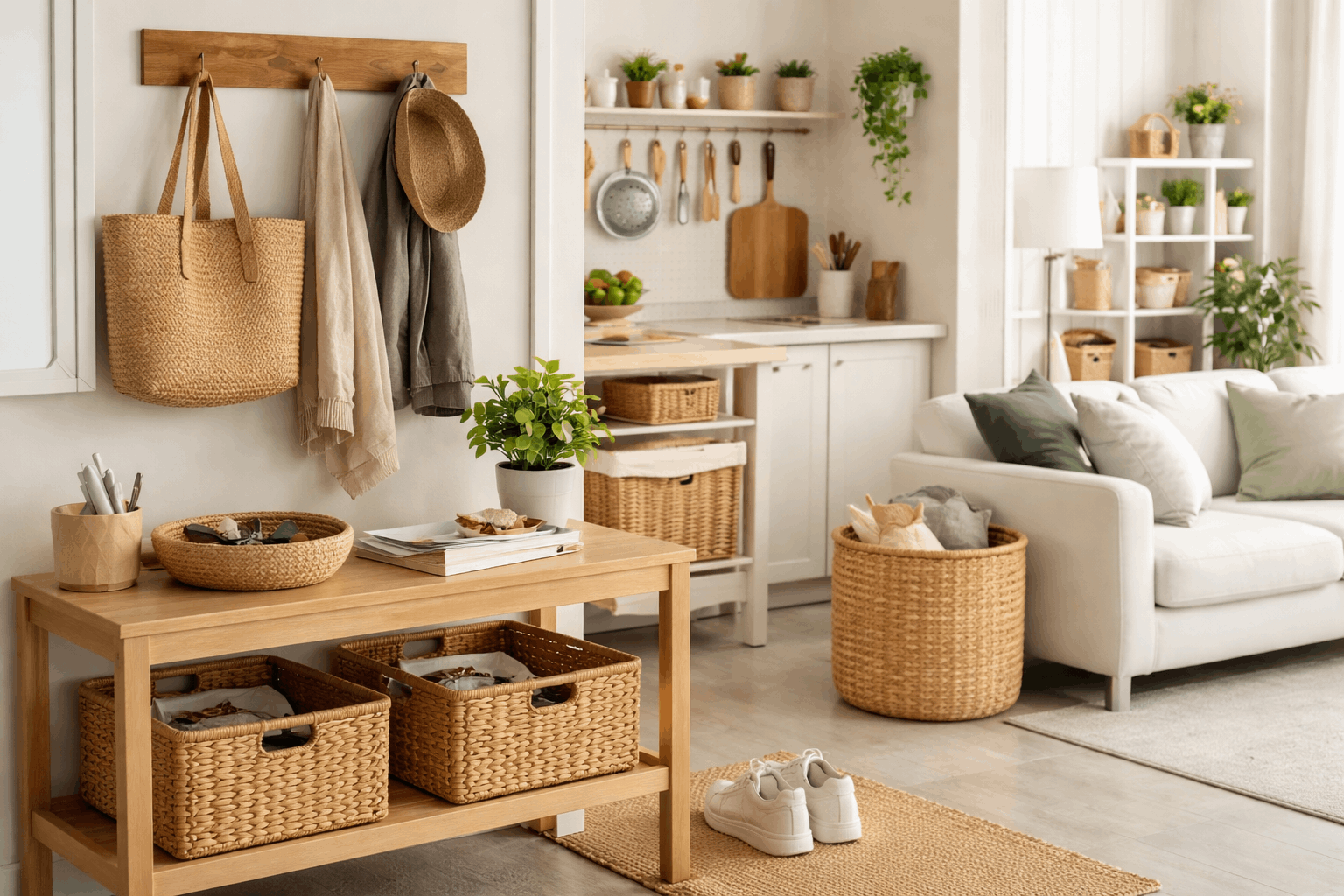
Run a 15-Minute Inventory Walk
Grab a laundry basket. Walk room to room and collect anything obviously out of place.
Stop after 10 to 15 minutes. This is not a deep cleaning session. This is data collection.
Set the basket somewhere visible and sort it later. The goal right now is momentum, not completion.
The Container You Already Own Works Fine
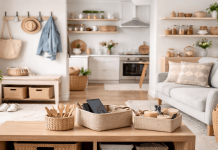
Open your kitchen cabinets and look for bowls, mugs, baking trays, and small baskets you barely use. Those are your organizers.
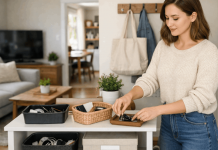
One bowl becomes a key drop. A shoebox holds charging cables. A muffin tin sorts small office supplies.
Call me biased, but I think the mixing bowl sitting unused in your cabinet will organize your mail better than a $30 acrylic tray because the bowl is already in your home and requires zero extra decisions.
Keep Containers Open and Visible
Hidden storage sounds tidy. But if you cannot see it, you will forget it exists.
An open bowl on the counter catches keys every single time. A closed drawer with a “keys” label gets skipped when your hands are full.
This frustrates people who want Instagram-worthy spaces. But visible systems win because they remove the step where you have to remember the system exists.
Also read: How To Keep Items In Good Condition: A Room By Room Care And Maintenance Routine
Declutter With One-Touch Decisions
Pick up each item once. Decide immediately whether it stays here, belongs elsewhere, or leaves your home.
If you hesitate, ask this: would I buy this again today with my own money and limited space?
That question cuts through the “maybe I’ll need it someday” fog faster than any organizing method I have tried.
Place “elsewhere” items in a single return basket. Do not create new scattered stacks while trying to fix the old ones.
Let the Container Decide the Limit
Most organizing systems fail because they rely on willpower. “Only keep what you love.” “Be intentional about your belongings.”
Screw that. Let physics decide.
One drawer for gadgets means one drawer. When it is full, remove the least-used item before adding anything new.
One shelf for mugs means one shelf. No bonus stacks. No “I’ll deal with it later” overflow.
This keeps storage from silently expanding and prevents temporary clutter from becoming permanent.
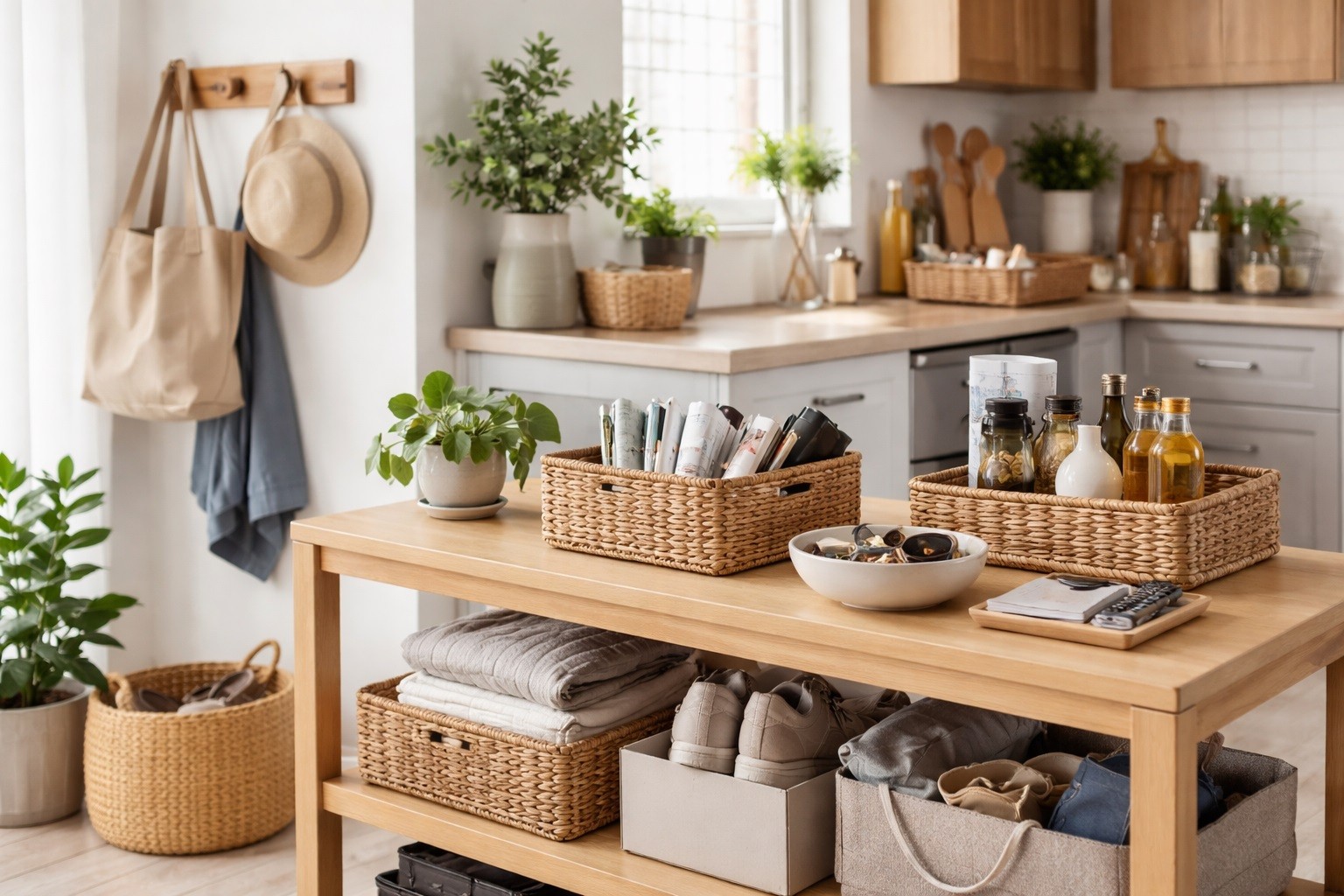
Zones Beat Perfect Categories Every Time
Stop trying to create perfect categories like “office supplies” and “craft materials” that need complicated cross-referencing.
Assign locations based on action instead. Drop. Charge. Eat. Work. Clean. Relax.
These match how you move through your home, not how a professional organizer would label your stuff.
Build Inbox and Outbox Zones
Choose one spot for incoming chaos. Papers, packages, random items that arrive daily.
A shoebox works. A shallow drawer works. The goal is containment, not beauty.
Create an outbox using a tote bag or reusable shopping bag for returns, donations, and items leaving your house.
I review both zones every Sunday morning. Takes maybe five minutes. Keeps them from becoming permanent clutter.
Store Items at the Point of Use
Motivation is unreliable. Distance kills good habits.
If you have to walk across three rooms to put something away, you will not put it away.
Phone chargers live where you charge your phone. Scissors live where you open packages. Dog leashes live by the door you use for walks.
Sounds obvious. But look around right now. How much of your stuff lives somewhere “logical” instead of somewhere useful?
Store It Where You Use It, Not Where It Looks Good
Better storage is about placement and visibility, not buying new products.
Use the easiest-to-reach spots for daily items. The highest shelf, the back of the closet, under the bed? Those spots are for things you touch twice a year.
People do this backward constantly. They store everyday items in hard-to-reach places because it “looks cleaner,” then wonder why they stop putting things away.
Stack Everything Upright Like Books
Piles require you to lift the top three items to grab the bottom one. That extra friction adds up.
Stack pans, cutting boards, and baking sheets vertically using existing magazine holders or sturdy folders.
Use file-style storage for papers and manuals with cereal boxes or cardboard dividers you cut yourself.
This single change will make your kitchen drawers and cabinets dramatically easier to use. I cannot overstate how much digging through piles slows you down.
Hijack Back-of-Door and Under-Bed Spaces
Hang lightweight items on existing hooks or over-the-door spots you already own. Scarves, bags, robes, cleaning tools.
Store off-season bedding in suitcases and duffel bags instead of buying plastic bins. Those bags are sitting empty anyway.
Keep only one category under your bed. Linens or sports gear or gift wrap. Not all three.
If you shove everything under the bed, you create a hidden clutter zone that eventually explodes back out into your room.
Micro-Routines Keep It From Falling Apart
Organizing systems do not fail because they are bad. They fail because they require massive rescue cleanups instead of tiny daily maintenance.
Short routines work when they are tied to moments that already happen. After dinner. Before bed. Sunday morning.
Pick a repeatable order so you do not waste mental energy deciding what to do.
Run a Weekly Quick Review
Choose one time each week. Sunday morning works for me, but pick what fits your life.
Empty the inbox. Reset the outbox. Return anything that drifted from its zone.
Do one small maintenance task. Wipe a counter. Clear the sink area. Something that prevents buildup.
If a zone keeps failing, simplify it. Move it closer to where you use the items. Remove a step. Make it dumber.
Complexity is the enemy of maintenance. The simpler your system, the longer it survives real life.
Problem Areas That Trip Everyone Up
Some spaces stay messy because they attract mixed categories and constant traffic.
These areas need fewer items and one clear job per surface. Good enough boundaries beat perfect alignment.
Tame Kitchen Counters Fast
- Move rarely used appliances to higher shelves. Keep only daily tools on the counter.
- That bread maker you use twice a year? It does not deserve prime real estate next to your coffee maker.
- Group pantry items by meal purpose using boxes or bowls you already own. Breakfast. Snacks. Dinner basics.
- Keep one “use first” spot for open items. Prevents half-empty boxes from spreading across multiple shelves.
Simplify Closets and Laundry Flow
- Hang your most-worn outfits at eye level. Move occasional items to the ends.
- Use one hamper and one “rewear” hook or chair. Half-clean clothing becomes a growing pile when it has nowhere to land.
- Real talk: that pile on your bedroom chair exists because you need a designated rewear spot. Give it a home.
- Store matching sets together using folded bundles or shoeboxes. Socks with socks. Workout gear with workout gear.
- Hunting for the other sock while you are already late is a high-friction moment that makes your whole morning harder.
Questions People Ask About Organizing Without Buying New Items
Q: What if I really do need more storage containers?
Use everything you own first, then reassess in three weeks. Most people discover they need fewer items, not more containers. If you still need something specific after clearing the clutter, buy one item and test it before buying more.
Q: How do I organize when I share a home with messy people?
Focus on shared high-traffic zones first and make the system absurdly simple. One bowl for keys. One basket for mail. If it requires remembering steps, it will not work for everyone. Control your personal spaces and make shared spaces easy enough that anyone can maintain them.
Q: Can this work in a really small space like a studio apartment?
Small spaces benefit the most from action-based zones because every item needs to work harder. Use vertical storage and store items at the point of use. The less you own and the more visible your storage, the easier a small space becomes.
Q: What if my clutter is sentimental items and papers I might need?
Sentimental items get one container limit, like one box or one shelf. Papers you might need go in a single inbox with a monthly review habit. If you have not touched a paper in six months, scan it or recycle it. Keeping everything means finding nothing.
Q: How long does it take to see results?
The 10 to 15-minute inventory walk gives immediate visual calm. Full system setup takes one focused weekend for most homes. Maintenance takes five minutes daily and one weekly review. Results compound fast when you stop fighting your habits.
Stop Waiting for the Perfect System Before You Start
Organizing without buying new items works because it forces you to solve the real problem, which is usually habit design, not storage shortages.
Store items where you use them and keep one easy reset routine so clutter has fewer chances to rebuild.
Keep adjusting based on what keeps getting left out, not based on what organizing accounts post, and your home will stay calmer with far less effort than you expect.