
Warehouse packing jobs remain an important part of the global logistics industry as online shopping, retail distribution, and international shipping continue to expand. These positions can provide accessible employment for people looking for entry-level or hands-on work.
This guide explains what warehouse packing jobs involve, where opportunities can be found, and what employers typically expect from applicants. It also covers working conditions, contracts, pay, safety, training, and career growth opportunities across different countries.
What Are Warehouse Packing Jobs?
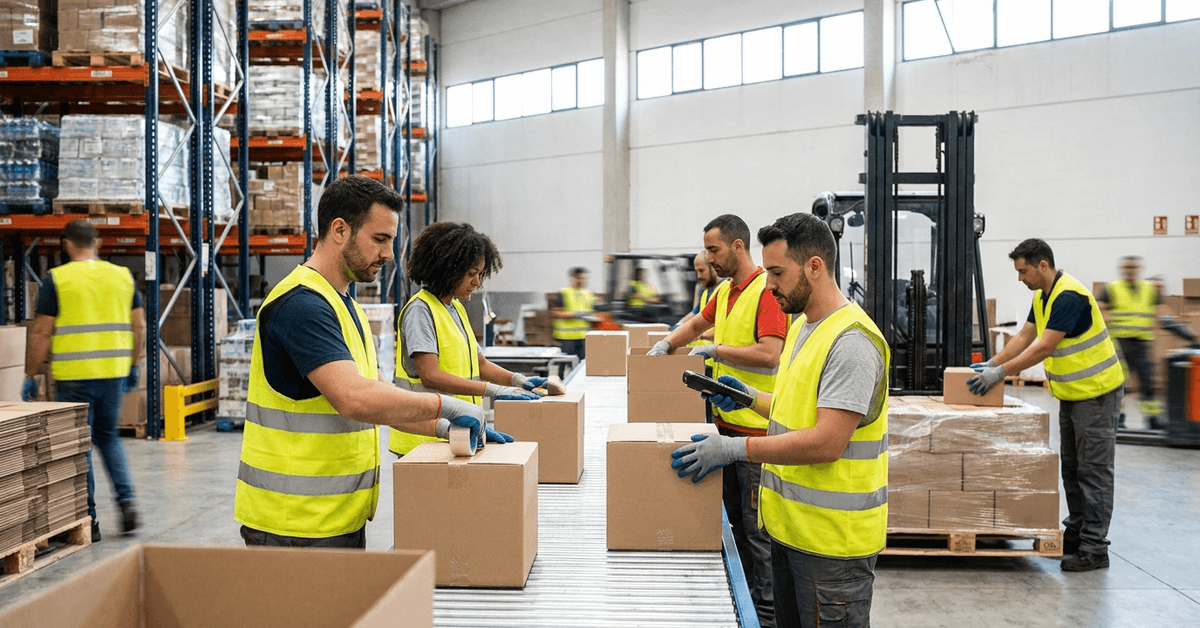
Warehouse packing jobs involve preparing products for storage or shipment. Workers may check items, wrap products, label packages, organize orders, prepare boxes, and ensure goods are ready for delivery.
The work can sometimes be repetitive, but its structured daily routine can suit people who prefer practical and physically active tasks. Many entry-level positions require limited previous warehouse experience.
Why Warehouse Packing Jobs Continue to Grow Worldwide
Growth in e-commerce, international trade, retail distribution, and last-mile delivery has created ongoing demand for warehouse workers in many regions. Logistics hubs near major cities, ports, airports, industrial parks, and transportation networks frequently provide warehouse opportunities.
Demand varies according to country and local economic conditions, so job seekers should check current vacancies in their area rather than assuming the same opportunities exist everywhere.
Demand Throughout the Year
Many warehouses operate throughout the year because retailers and logistics companies need workers to process regular customer orders. Hiring can increase significantly during holidays, promotional campaigns, seasonal sales, and other peak shopping periods.
Temporary contracts are common during busy seasons. Depending on the employer and performance, some temporary workers may later find opportunities for longer-term employment.
Accessible Entry Requirements
Many packing positions do not require a university degree or advanced professional qualification. Employers may place greater importance on reliability and accuracy, physical readiness, punctuality, and the ability to follow instructions.
Previous experience can help, but many companies provide basic workplace training after hiring.
Typical Working Conditions in Warehouses
Warehouse schedules vary considerably between companies and countries. Facilities may operate during the daytime, evening, overnight, weekends, or continuously depending on customer demand.
Packing work can involve standing, walking, bending, lifting items, scanning products, and repeating similar movements during scheduled shifts.
Temperature conditions can also vary. Some workers operate in standard distribution centers, while others may work in refrigerated facilities, food warehouses, manufacturing environments, or outdoor loading areas.
Applicants should carefully review the job description to understand the physical requirements before accepting a position.
Where to Find Warehouse Packing Jobs Worldwide
Warehouse vacancies can be found through company career websites, employment portals, recruitment agencies, logistics companies, retailers, manufacturers, and local employment services.
Searching several sources can provide a broader picture of opportunities available in your country.
Major Online Job Portals
Large employment platforms regularly advertise warehouse, logistics, packing, order-picking, and fulfillment positions.
Useful search terms include:
- Warehouse worker
- Warehouse associate
- Packer
- Packing operative
- Package handler
- Order picker
- Fulfillment associate
- Logistics assistant
- Sortation associate
- Shipping and receiving associate
The most useful job platform varies by country. International job boards can be a starting point, but applicants should also check popular employment websites in their local market.
Direct Company Career Pages
Major retailers, delivery companies, manufacturers, and logistics providers often advertise jobs directly through their official career portals.
Large international employers such as Amazon and DHL operate warehouse and logistics networks across multiple countries. Amazon's global careers portal includes hourly warehouse opportunities across several international markets.
Applying directly through an employer's career website can also help applicants avoid unofficial job advertisements or recruitment scams.
Recruitment and Staffing Agencies
Recruitment agencies frequently help warehouses find workers during periods of higher demand. These agencies may advertise temporary and permanent positions for packing, sorting, loading, inventory, and fulfillment work.
Temporary work can provide useful experience for people entering the logistics sector for the first time.
Before providing documents, applicants should confirm that the recruitment agency operates legally in their country and that the vacancy is legitimate.
Local Employment Services
Government employment agencies, municipal job centers, community organizations, and local recruitment services may also advertise warehouse vacancies.
These services can be especially helpful for finding local employers that may not advertise extensively on international websites.
What Warehouse Employers Typically Look For
Requirements vary according to the company, warehouse, country, and type of products being handled. However, many entry-level warehouse employers value similar basic qualities.
Candidates may benefit from demonstrating:
- Reliability and punctuality
- Attention to detail
- Basic organization skills
- Ability to follow safety procedures
- Teamwork
- Flexibility with shifts
- Basic communication skills
- Ability to perform physical tasks
Language requirements depend on the workplace. Basic knowledge of the local working language can often make communication, training, and safety instructions easier to understand.
Physical Requirements and Expectations
Warehouse packing can be physically demanding. Depending on the role, workers may need to remain standing for several hours, walk considerable distances within a facility, move boxes, operate carts, or repeatedly handle products.
Some employers establish maximum lifting requirements or require applicants to complete physical job tasks safely.
The demands are not identical in every warehouse. Packing lightweight cosmetics or clothing, for example, can differ considerably from working with furniture, industrial products, or large grocery shipments.
Applicants should review the physical requirements listed for each vacancy.
How to Prepare a Strong Warehouse Job Application
Warehouse applications are often straightforward, but a clear CV or résumé can improve an applicant's chances.
Candidates should highlight experience related to logistics, retail, manufacturing, transportation, inventory, customer orders, or physical operations.
Useful information may include:
- Previous warehouse experience
- Order picking or packing experience
- Inventory skills
- Forklift or equipment certifications
- Retail experience
- Manufacturing experience
- Availability for different shifts
- Language skills
- Safety training
Applicants without previous warehouse experience can emphasize reliability, willingness to learn, punctuality, teamwork, and previous experience in physically active jobs.
Certifications and Training
Many basic packing jobs require no special certification. However, additional training can open access to more warehouse roles.
Depending on the country and position, useful training may include:
- Forklift operation
- Occupational health and safety
- Manual handling
- First aid
- Inventory management
- Warehouse management systems
- Hazardous materials handling
Applicants should only obtain certifications recognized by employers or authorities in their country.
Training requirements differ internationally, so a certification used in one country may not automatically be valid elsewhere.
Warehouse Salaries Around the World
There is no reliable worldwide warehouse salary because wages vary significantly between countries, cities, companies, contract types, experience levels, and working hours.
Workers in countries with higher living costs may receive considerably higher nominal wages than those in other regions, but living expenses also differ.
Pay may be structured as:
- Hourly wages
- Daily wages
- Weekly wages
- Monthly salaries
- Temporary agency rates
- Productivity-based incentives
Night shifts, weekends, public holidays, overtime, or specialized duties may qualify for additional compensation depending on local law and company policy.
Always check the salary displayed in the actual job listing before applying.
Common Warehouse Contract Types
Employment arrangements vary by country and employer.
Warehouse workers may be hired under:
- Permanent contracts
- Fixed-term contracts
- Temporary contracts
- Seasonal agreements
- Part-time employment
- Full-time employment
- Staffing agency contracts
Some companies hire directly, while others use employment agencies to manage temporary staffing.
Applicants should read the contract carefully before beginning work and confirm details such as wages, schedules, overtime, holidays, benefits, and termination conditions.
Benefits and What to Expect
Employee benefits can differ dramatically between countries and organizations.
Depending on the employer, workers may receive additional benefits such as:
- Paid training
- Transportation assistance
- Employee discounts
- Meal allowances
- Performance bonuses
- Paid holidays
- Health benefits
- Retirement benefits
- Shift allowances
- Career development programs
Not every warehouse offers these benefits, and eligibility may depend on employment status.
Official job descriptions should provide the most reliable information about compensation and benefits.
Legal Rights and Workplace Safety
Employment laws are different in every country. There is no universal set of warehouse labor rules that applies worldwide.
Workers should understand their local employment rights, including regulations concerning minimum wages, working hours, rest periods, overtime, workplace injuries, discrimination, contracts, and occupational safety.
Government labor departments or employment authorities can provide official information for each country.
Workers should also report unsafe conditions through the appropriate workplace or government channels available locally.
Tips for Starting Warehouse Packing Work
Starting a warehouse job can feel unfamiliar because employees need to learn new layouts, scanning systems, procedures, targets, and safety practices.
Paying attention during initial training can make the transition easier.
New workers should consider:
- Arriving on time for every shift
- Wearing appropriate footwear and protective equipment
- Asking questions when instructions are unclear
- Learning warehouse layouts quickly
- Following lifting and safety procedures
- Keeping work areas organized
- Communicating problems early
- Avoiding shortcuts that create safety risks
Consistency can be particularly important because warehouse operations depend on teams completing tasks within scheduled periods.
Tips for Improving Job Stability
Workers interested in longer-term logistics careers can build additional skills after gaining basic experience.
Being willing to learn new tasks can increase workplace flexibility and prepare employees for more advanced positions.
Useful strategies include:
- Learn order-picking and inventory procedures.
- Volunteer for appropriate workplace training.
- Gain experience using scanners and warehouse software.
- Obtain recognized equipment certifications when useful.
- Learn different warehouse departments.
- Develop communication and teamwork skills.
- Maintain a reliable attendance record.
These skills can make workers more adaptable when new positions become available.

Where Warehouse Jobs Are Usually Concentrated
Warehouse jobs are typically found near areas with strong transportation and distribution infrastructure.
Common locations include:
- Large metropolitan areas
- Industrial zones
- Airports
- Ports
- Highway corridors
- Distribution parks
- Manufacturing centers
- Retail fulfillment hubs
Many warehouses are located outside city centers because large facilities require substantial space and easy transportation access.
Applicants should consider commuting time and transportation costs before accepting a position.
Warehouse Opportunities in Smaller Cities
Large logistics hubs are not the only places offering warehouse employment.
Smaller cities and regional areas may have distribution centers serving supermarkets, manufacturers, agricultural businesses, wholesalers, online retailers, or regional transportation companies.
Seasonal industries can also generate temporary packing jobs during harvesting, holiday shopping, or production peaks.
Searching locally can sometimes reveal opportunities that do not appear prominently on international job websites.
Potential Career Growth in Warehouse Operations
Packing jobs can serve as an entry point into the wider logistics and supply chain industry.
With experience and additional training, workers may eventually move into roles such as:
- Senior warehouse associate
- Inventory controller
- Forklift operator
- Shipping coordinator
- Receiving clerk
- Quality control assistant
- Team leader
- Shift supervisor
- Warehouse administrator
- Operations coordinator
Some employers also provide internal development programs that help experienced workers progress into supervisory or management positions.
DHL, for example, lists warehouse positions ranging from package handling and order picking to inventory-related work through its global careers portal.
How to Apply for Warehouse Jobs Worldwide
The application process usually starts with searching by country or city on an employer's official career website.
Applicants should read each vacancy carefully because requirements, schedules, work authorization rules, and hiring processes vary by location.
A typical application may involve:
- Search for warehouse jobs in your preferred location.
- Open the official vacancy.
- Review requirements and working conditions.
- Create an applicant profile.
- Upload your CV or résumé if requested.
- Complete the online application.
- Provide employment eligibility information.
- Attend an interview or assessment if required.
- Complete background or employment checks where applicable.
- Review the employment offer before accepting.
- Never pay an unknown recruiter simply for access to a warehouse vacancy.
Start Your Warehouse Job Search
If you're ready to explore warehouse, packing, fulfillment, and package-handling opportunities, start with an employer's official careers website and select your country or location.
Search and Apply for Amazon Warehouse Jobs
Amazon's official jobs platform allows applicants to explore hourly opportunities and warehouse hiring options across supported countries and regions.
You can also explore logistics and warehouse opportunities through the official DHL Careers portal, which provides warehouse and package-handling vacancies across its network.
Job availability changes regularly, so always select your location and review the latest requirements directly on the employer's website before applying.
Conclusion
Warehouse packing jobs can provide accessible employment opportunities across many countries and industries. Openings can be found through direct employers, logistics companies, recruitment agencies, job portals, and local employment services.
Pay, contracts, legal rights, benefits, and requirements vary considerably by country, so applicants should check local conditions before accepting a position. Building experience in packing, inventory, equipment, and warehouse systems can also create opportunities for long-term career development.
For those ready to begin, checking official employer career portals is one of the safest ways to find current warehouse vacancies. Compare available roles, review the requirements carefully, and apply for positions that match your location, experience, and preferred schedule.