
The US food stamp program, officially known as SNAP, helps many Americans afford groceries when household budgets are limited. It supports individuals, families, older adults, and other eligible groups through monthly food benefits.
This guide explains how SNAP works, who may qualify, how benefits are calculated, and how to apply. It also covers eligible purchases, common misconceptions, related programs, and participant rights and responsibilities.
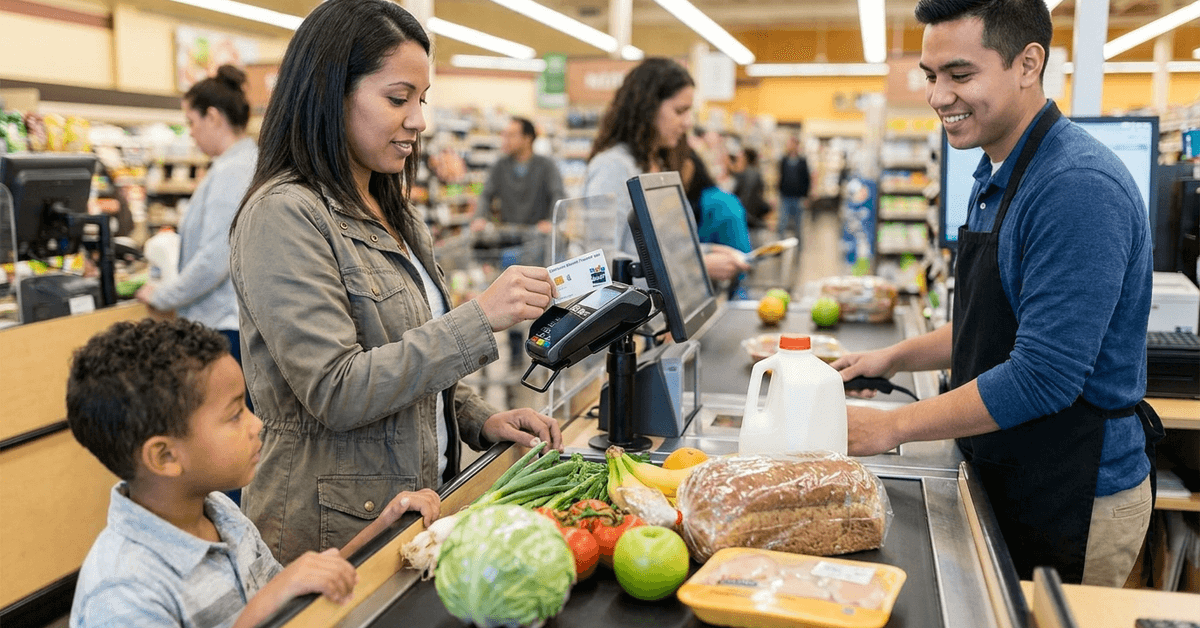
What Is SNAP and How Does It Work?
The Supplemental Nutrition Assistance Program, or SNAP, is a federal food assistance program that helps people with limited income purchase groceries.
Funding comes from the federal government, while states handle applications, eligibility decisions, and benefit distribution through Electronic Benefit Transfer cards.
Who Can Qualify for US Food Stamps?
SNAP eligibility depends on household circumstances, including income, household size, citizenship or immigration status, and certain program rules.
Some people who work may still qualify when their income falls within the limits that apply to their household.
Income Thresholds and Household Size
Income is a main factor used to determine SNAP eligibility, with gross and net monthly income compared against program limits.
- Larger households generally have higher thresholds because more people share expenses, while both income measures can affect eligibility.
- Gross income means income before taxes and allowed deductions.
- Net income means income remaining after permitted deductions are applied.
Citizenship and Residency
SNAP is generally available to US citizens and certain qualified noncitizens who meet program requirements. Eligibility rules for immigrants can vary according to status, history, and other federal conditions.
Mixed-status households may still apply for eligible members even when some people in the household do not qualify.
Assets and Resource Limits
Some households may need to meet resource limits involving money in accounts or other countable assets. Certain resources, such as a primary home or retirement accounts, may be excluded from the calculation.
Rules can differ by state because some states use broader eligibility policies that change how assets are treated.
Work Requirements
Some adults may need to follow work requirements to continue receiving SNAP for an extended period. These rules can involve employment, work programs, job training, or other qualifying activities, with exemptions for certain groups.
Age ranges, exemptions, and time limits may change, so applicants should check rules in their state.
Special Groups and Exceptions
Older adults, people with disabilities, and households with children may be subject to special eligibility rules or deductions.
Some households can receive additional deductions for medical expenses, shelter costs, or other qualifying needs. Supplemental Security Income recipients may also qualify for SNAP depending on state procedures and household circumstances.
How SNAP Benefits Are Calculated
SNAP benefits are based on household size, net income, maximum allotments, and allowed deductions under program rules. The benefit formula estimates how much a household can contribute toward food and subtracts that amount from the maximum allotment.
- Maximum SNAP allotments vary by household size and are updated periodically.
- Deductions can reduce countable income for eligible housing, utilities, dependent care, or other expenses.
- Benefit amounts can change when household income, size, or qualifying expenses change.
Example of SNAP Benefit Calculation
A household’s final benefit depends on its net monthly income and the maximum allotment available for its size.
The program generally expects households to contribute a portion of net income toward food. Actual calculations vary, so official state tools or guidance should be used for an accurate estimate.
How to Apply for US Food Stamps
SNAP applications are handled by state agencies, with online, mail, telephone, or in-person options depending on location. Applicants can use the official SNAP directory to find their agency and prepare identity, income, household, expense, and status information.
What You Need for SNAP Applications
Applicants should gather supporting documents before applying so the agency can verify the information provided. Exact documentation varies by state and household, but several common items may be requested.
- Proof of income, such as pay stubs, benefit letters, or tax records.
- Proof of household members or living arrangements when requested.
- Social Security numbers for applicants when program rules require them.
- Government-issued identification or another accepted identity document.
- Proof of expenses, including rent, utilities, childcare, or other qualifying costs.

After You Apply: What Happens Next?
After an application is submitted, a state eligibility worker reviews the information and may schedule an interview or request additional documents.
Standard processing can take several weeks, while households with very limited income or resources may qualify for expedited processing under applicable rules.
Approved households receive benefits through an EBT card, with monthly funds added according to the state schedule. Recipients generally need to complete recertification and report certain household changes when required.
What Can You Buy With SNAP?
SNAP benefits are intended for eligible food purchases for household consumption. Program rules exclude some products, so recipients should understand what can and cannot be purchased with an EBT card.
- Eligible items include fruits, vegetables, meat, dairy, bread, rice, snacks, and nonalcoholic beverages.
- Ineligible items generally include alcohol, vitamins, supplements, household supplies, and most hot prepared foods.
Common Myths and Misconceptions About SNAP
SNAP is not limited to unemployed households or parents with children. Working families, older adults, people with disabilities, and individuals living alone may qualify when they meet program requirements.
Eligibility is also not automatically easy or difficult because household circumstances differ significantly. Income, deductions, family size, disability status, and state procedures can all influence a final decision.
SNAP and Other Benefit Programs
SNAP is separate from WIC, TANF, and other public assistance programs, although one household may participate in more than one program. Eligibility for one benefit does not automatically guarantee eligibility for another because each program follows its own rules.
Some states offer combined applications or coordinated services that make it easier to request several benefits. Applicants should review local resources to see which options are available where they live.
Understanding Your Rights and Responsibilities
SNAP participants have privacy protections and the right to receive information about eligibility decisions, benefit amounts, and appeal procedures.
They are also responsible for providing accurate information and reporting required changes involving income, address, or household composition.
Mistakes do not always mean fraud, but intentional misrepresentation can lead to penalties or loss of benefits. Keeping records, reading agency notices, and responding to requests can help prevent avoidable problems.
Conclusion
SNAP provides food assistance to eligible households that need help paying for groceries. Qualification depends on income, household size, status, expenses, and other program rules.
Understanding applications, allowed purchases, benefit calculations, and reporting duties can make the process easier to manage. Checking official state and federal information helps applicants and recipients stay informed about current requirements.