
Everyday success gets easier when you rely on simple routines you can repeat without thinking.
You stay organized by using a short daily anchor, quick resets, and clear zones for common items. Start with one small habit today and build consistency.
Start With One Daily Anchor Routine
A daily anchor routine is one small set of actions you do every day, even when you’re busy.
It keeps your home from sliding into disorder because you always “reset” a few basics. Use this listed plan and keep it consistent.
- Pick one time you can repeat daily: Choose morning or evening, so it becomes automatic.
- Limit it to 5–10 minutes: Short routines are easier to stick with and still make a difference.
- Start with one high-impact area: Focus on a kitchen counter, entryway, or desk to reduce visible mess fast.
- Use the same order every time: A fixed sequence helps you avoid overthinking and skipping steps.
- Include one “prep for tomorrow” action: Set out essentials like keys, bag, or clothes to reduce morning stress.
- End with a clear stop point: When the timer ends, you stop, so the routine stays sustainable.
Use Reset Zones to Stop Clutter From Spreading
Reset zones give everyday items a clear “home,” so clutter stops spreading across your surfaces.
You set a few simple spots, then you use them daily to contain mess before it grows. Keep the system small so you actually maintain it.
- Essentials tray: Keep keys, wallet, and daily grab items in one open tray to prevent random drop-offs.
- Loose-items basket: Drop anything you can’t deal with right now into one basket to keep clutter at bay.
- Tech bin: Store chargers, cables, and small devices in one open bin so cords don’t spread across rooms.
- Place zones at drop points: Put zones in the entryway, kitchen counter area, or desk area where clutter usually starts.
- Do a 2-minute daily reset: Return essentials, move the basket to a sorting spot, and stop when the timer ends.
Follow a Same-Order Micro Reset
A same-order micro reset is a short routine you repeat in the exact same sequence, so you don’t waste energy deciding what to do first.
It works best when you’re tired, rushed, or mentally overloaded because the order stays fixed. Keep it focused on a single surface or a small area.
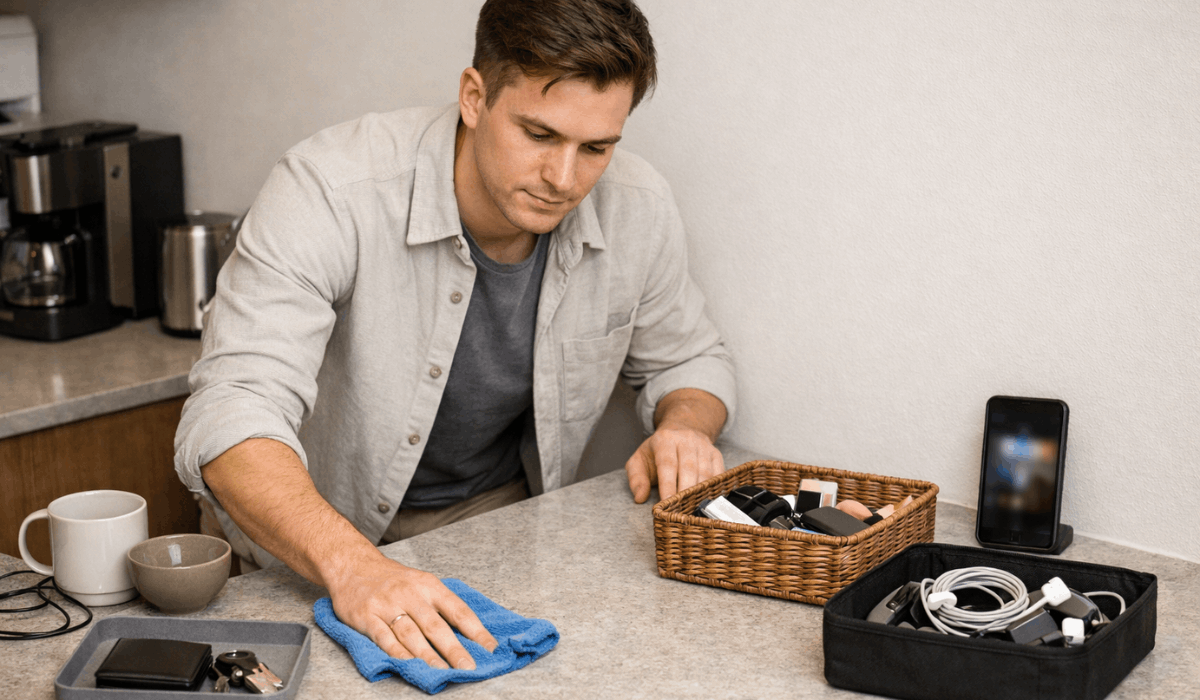
- Step 1 — Clear one surface: Remove everything that doesn’t belong on that surface and place loose items into your basket or zone.
- Step 2 — Wipe fast: Do a quick wipe with a cloth to make the space feel “finished” and easier to maintain.
- Step 3 — Return only the essentials: Put back the few items that truly belong there, then move the rest to your reset zones.
- Use a timer to stop on time: Set it for 5–10 minutes and end when it rings, so the routine stays easy to repeat.
- Repeat the same order every time: Don’t add extra steps in the moment, because consistency is what makes it work.
Keep One Weekly “Light Maintenance” Block
A weekly light maintenance block keeps small problems from turning into weekend chaos.
You focus on the highest-impact tasks that make your home feel stable and clean enough. Keep it short, repeat it weekly, and stop when the list is done.
- Move laundry forward: Wash, dry, fold, and put away one full cycle to keep clothes from piling up.
- Do a fridge quick check: Toss expired items, wipe one shelf, and group the basics so you can find food fast.
- Reset one bathroom: Wipe the sink and mirror, clean the toilet quickly, and swap towels if needed.
- Clear floors in high-traffic areas: Vacuum or sweep the entry, kitchen, and main walkway to reduce dust and crumbs.
- Empty “catch-all” zones: Sort the loose-items basket, clear the papers tray, and return items to their real homes.
Build Routines Around Triggers, Not Motivation
Triggers make routines automatic by attaching them to something you already do every day.
You don’t wait to “feel motivated,” because the trigger tells you it’s time to act. Keep each trigger routine small, so it stays realistic.
- Use a reliable daily action as the cue: Pick something you already do, like making coffee, eating dinner, or brushing your teeth.
- Attach one short routine to that cue: Do a 2–10 minute task, like clearing one surface or resetting your zones.
- Keep the trigger and routine in the same place: If the cue happens in the kitchen, make the routine a kitchen reset, not a bedroom task.
- Make it specific and repeatable: Use a simple rule like “After dinner, I reset the sink and counters for five minutes.”
- Track consistency, not intensity: If you do the small version daily, you win, even when you’re tired.
Fix Common Routine Breakers
Routine breakers are the moments that knock you off track, like missed days, low energy, or a messy starting point.
You don’t fix them by “trying harder,” you fix them by making the routine smaller and easier to restart. Use these five fixes to stay consistent.
- Missed day: Restart with the smallest version of your routine and stop when it’s done.
- Low energy: Use the one-surface rule, then return only the highest-impact items to your zones.
- No time: Set a 5–10 minute timer and end on time, even if it isn’t perfect.
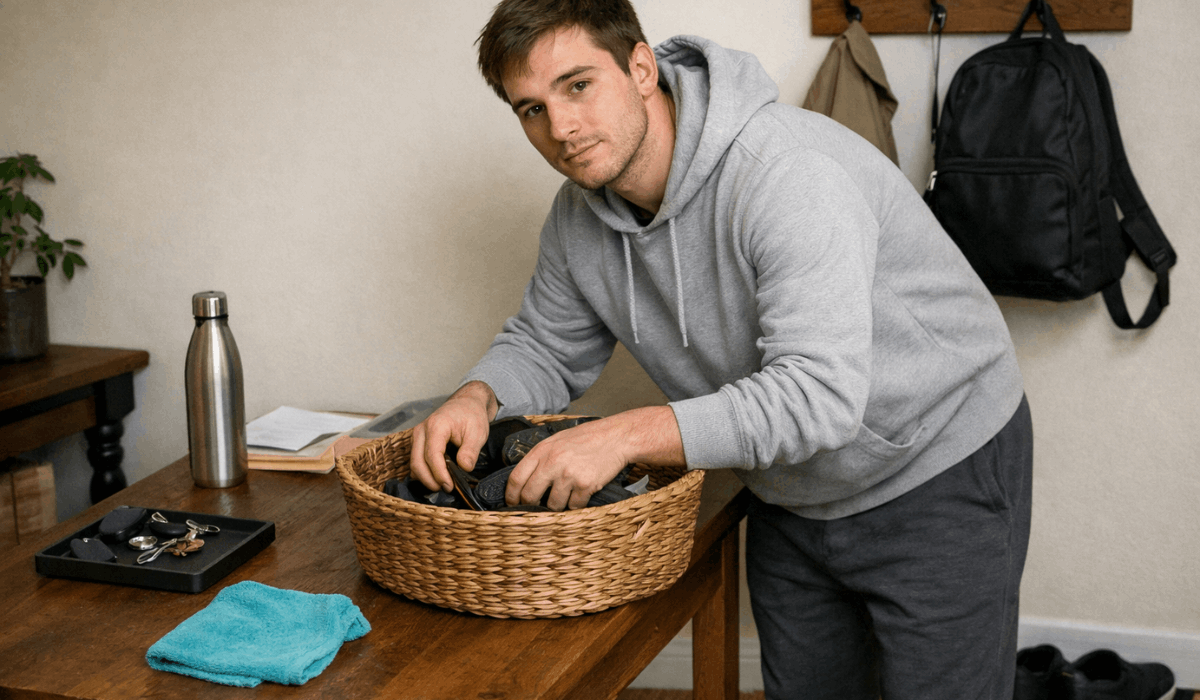
- Overwhelm from clutter: Use a catch-all basket as a pause point so you can continue later without losing progress.
- Too many routines at once: Drop everything except one daily anchor and one weekly block until it feels automatic.
Routine Templates (Pick One)
Routine templates help you stop overplanning by following a simple pattern instead of guessing each day.
You pick one template that matches your time and energy, then you repeat it for two weeks. Keep it steady and adjust only after you’ve tested it.
- Busy Week Template: Do a 5-minute morning anchor, a 10-minute evening reset, and one 30-minute weekly maintenance block.
- Low-Energy Template: Do one 5-minute same-order micro reset daily and one 20-minute weekly maintenance block.
- Family Template: Use shared reset zones, do a 10-minute nightly team reset, and split one weekly block into two short sessions.
- Small-Space Template: Use one landing pad, reset one surface daily, and do a weekly quick clean focused on floors and trash.
- Weekend Catch-Up Template: Do 10 minutes daily on weekdays and one longer weekly block to handle laundry, paper, and sorting.
Final Section: Keep It Simple and Repeatable
Keep your routine plan simple and repeat it until it feels automatic. With simple routines, you can actually maintain them.
Start today by choosing one anchor routine and one reset zone, then stick with them for the next two weeks.
Pick your template now and do your first 5-minute reset today.