
Most routine advice assumes you wake up energized, remember complex sequences, and have the mental bandwidth to execute 12-step morning rituals.
Real life looks different. Some days you can barely clear the kitchen counter before collapsing into bed.
The routines below survive low-energy days because they remove decisions instead of adding them. They work when you are tired, rushed, or barely holding it together.
Start with one anchor routine today. Build from there only when the first one runs on autopilot.
Why Most Routines Fail When You Need Them Most
Elaborate routines fall apart the moment life gets messy. You miss one day, then three, then quit entirely because starting over feels impossible.
Overwhelm builds when daily tasks have no structure or clear stopping points. Your brain burns energy deciding what to do, when to stop, and whether you did it right.
Simple routines reduce mental load by turning repeated decisions into automatic actions that require almost no thought.
Perfect Systems Break Under Real Pressure
Most routine advice comes from people who have never juggled shift work, chronic illness, ADHD, or three kids under five.
They build systems that work beautifully when everything goes right. Those systems collapse instantly when energy drops or schedules shift.
Unpopular opinion, maybe, but a 5-minute reset that happens every day beats a perfect 30-minute routine that you skip half the time because it demands too much energy and decision-making.
Consistency matters more than completeness. A tiny routine repeated daily compounds into calm. A perfect routine attempted monthly creates cycles of guilt and mess.
What Makes a Routine Simple Enough to Survive
A simple routine works because it removes decisions and limits effort. You can start it quickly, finish it clearly, and repeat it without stress.
Look for these five markers:
- Clear start and stop means you know exactly when the routine begins and ends. No vague "organize the kitchen" instructions that could take 15 minutes or three hours.
- Short time limit keeps it contained in 5 to 20 minutes without dragging on. Longer routines require motivation. Short ones just require showing up.
- One purpose only means each routine solves one specific problem. Morning counter reset. Evening bag drop. End-of-week paper clear. Not "get organized."
- No setup required means you use what is already in reach. Routines that need special tools or prep steps die fast.
- Easy to repeat means you can do it even on busy or low-energy days. The routine adapts to your worst day, not your best one.
Build One Daily Anchor Routine First
A daily anchor routine gives your day structure without adding pressure. You place it at the same time every day so it becomes automatic.
Pick one. Just one. Not three. Not five.
Choose a Fixed Moment That Already Happens
Attach your routine to something that already occurs daily: waking up, arriving home from work, finishing dinner, or getting ready for bed.
Habit stacking works because you borrow the existing trigger instead of creating a new one from scratch.
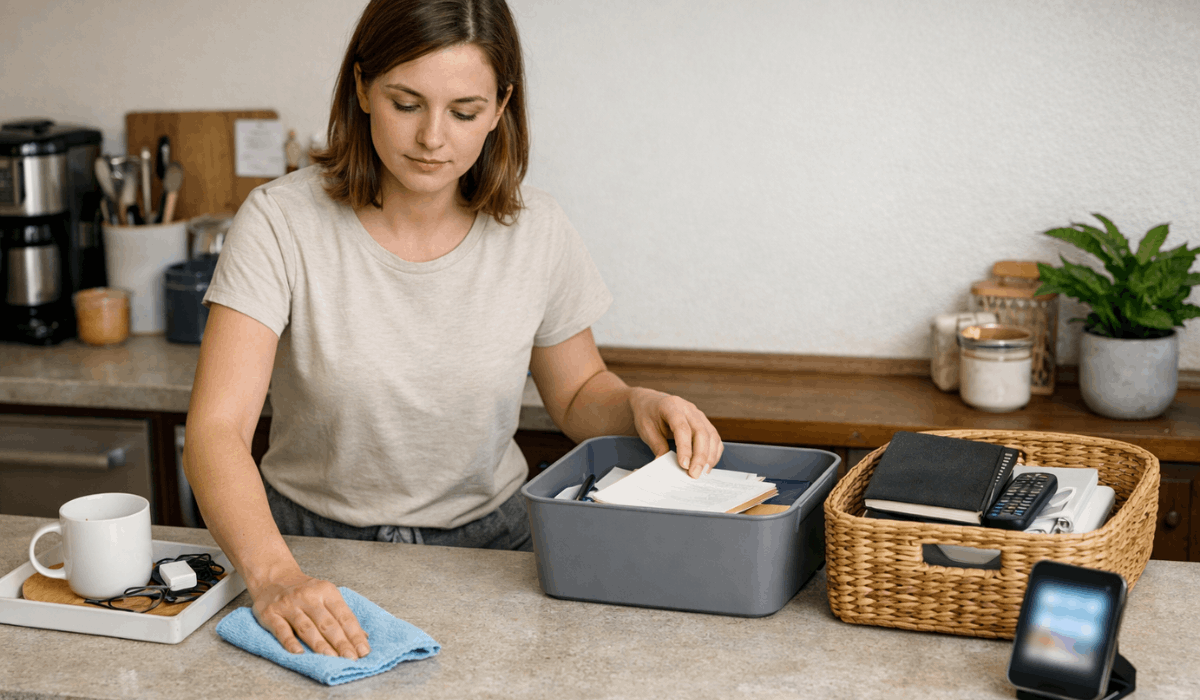
My morning counter reset happens while my coffee brews. I do not decide whether to do it. The coffee maker beeping is the signal.
Also read: Daily Routine Maintenance for People Who Keep Quitting and Restarting
Focus on One High-Impact Zone
Pick one surface or area with daily impact. The kitchen counter. The entryway table. Your desk.
Not the whole kitchen. Not the entire bedroom. One specific zone that stays clear makes your whole space feel calmer.
Set a clear time cap and stop at 10 to 20 minutes every time, even if the zone is not perfect.
Follow the same order each time to avoid decisions. Counter left to right. Table front to back. Desk top drawer then surface.
End with a reset that leaves the space ready for the next use. This creates a satisfying stopping point your brain recognizes.

Use Micro-Routines to Stop Mess From Spreading
Micro-routines stop small messes before they turn into cleanup sessions. They work because you use them immediately and keep them ultra-short.
These are 60-second interventions that prevent 20-minute cleanups later:
- One-minute resets clear a surface as soon as you leave it, before moving to the next task
- End-of-task habits put items away right after use instead of creating a "deal with later" pile
- Single-touch rule handles each item once rather than moving it multiple times across surfaces
- Visible checkpoints trigger a reset when a space starts to look full instead of waiting for overflow
- No expansion allowed stops the routine when the mess is contained instead of chasing perfection
I was skeptical about one-minute resets until I tracked how much time I spent moving the same mail pile across three surfaces over four days before finally dealing with it.
Handling it once during a 60-second reset beats shuffling it repeatedly for a week.
Create Easy Reset Zones That Stop Decision Fatigue
Easy reset zones give items a clear place to land. They make resets faster because you stop having to decide where things go.
- An entry reset zone uses a tray or hooks for keys, bags, and daily items that arrive with you.
- A temporary holding zone uses one basket for items that need action later, like returns or repairs.
- A shared surface zone keeps one tray or bin on counters so they stay usable instead of becoming dumping grounds.
- A return zone designates one area for items returning to other rooms during your next trip.
Each zone needs a capacity limit, a clear full point that triggers a reset before overflow starts.
Zones Follow Behavior, Not Ideal Storage Plans
Build routines around use, not storage labels. You place and reset things based on daily behavior, not Pinterest-perfect organizational systems.
Daily-use items stay visible where you use them most. Occasional items move away from daily zones.
Use fewer categories to speed up resets. Combine similar items instead of creating 12 micro-categories that require constant sorting.
Place items so they can be returned without moving other things. If putting something away requires shifting three other items, the spot is wrong.
Fast put-away rule: if it takes more than a few seconds, adjust the spot. Friction kills routines.
Weekly Routines That Prevent Backlog From Building
Weekly routines stop small delays from turning into backlog. You reset key areas before problems pile up and create weekend-destroying cleanup sessions.
Set one fixed day and use it every week to avoid forgetting. Sunday evening works for many people. Friday afternoon works for others.
Focus on high-impact zones: entryway, kitchen, and shared surfaces where mess accumulates fastest.
Clear unfinished items like papers, returns, and loose objects that have been sitting for days.
Do a light item review to remove broken, expired, or unused things before they become clutter.
Hard stop rule: end the routine on time even if the result is not perfect. Functional beats flawless.
Monthly Routines for Maintenance and Care
Monthly routines handle maintenance before small issues become bigger problems. You spread care across the month instead of reacting to failures.
Rotate tasks by splitting cleaning and checks across weeks so nothing feels overwhelming.
Inspect high-use items for wear, leaks, or damage while problems are still small and fixable.
Refresh storage areas with quick wipes of shelves and bins to prevent dust buildup.
Replace basics by restocking supplies before they run out and create urgent shopping trips.
Log problems by noting issues that need future attention so they do not get forgotten.
Match Routines to Your Actual Energy Levels
Your routines should work even when your energy drops. You plan different effort levels instead of quitting entirely.
This is the part most routine guides skip. They assume consistent energy and motivation.
Real life includes sick days, bad sleep, stressful work weeks, and periods where just existing feels hard.
Build Three Versions of Each Routine
A low-energy default consists of short resets that keep things contained without requiring full completion.
A normal-energy routine is your standard daily or weekly flow when you have typical capacity.
The no-zero rule means doing the smallest version instead of skipping entirely when energy crashes.
Same order every time reduces decisions when you are tired and cannot think clearly.
Clear stop points end the routine before fatigue causes burnout and makes you hate the whole system.
Call me biased, but I think the no-zero rule saved my routines more than any other concept because it gave me permission to do a 2-minute version on bad days instead of feeling like a failure for not doing the full 15-minute routine.
Reduce Visual Noise With Surface Management
Visual noise increases stress even when things are technically organized. Simple habits keep what you see calm and usable.
Studies on cognitive load show that cluttered visual environments drain mental energy faster than people realize, even when the clutter is organized.
- A clear surface rule keeps only active items on flat surfaces. Everything else goes in a drawer, cabinet, or designated zone.
- A one-bin limit gives each area a single container for loose items instead of multiple scattered holders.
- A daily visual reset removes anything not used that day so surfaces stay clear overnight.
Contain instead of spread by grouping items together rather than leaving them scattered across zones.
Empty before adding means clearing a bin before putting new items in, which prevents invisible overflow.
Use End-of-Day Routines to Close Open Loops
An end-of-day routine closes open loops in your space and mind. You reset so tomorrow starts without cleanup pressure.
Keep it to a five-minute limit. Consistency requires brevity.
Clear main surfaces like counters, tables, and desks so they are ready for use.
Return daily items including keys, bags, and tools to their designated zones.
Prepare for morning by setting out what you need next: coffee setup, lunch containers, work bag.
Stop completely once finished. No more fixing or organizing after the routine ends.
Adjust Routines When Life Changes
Routines fail when life changes and the system stays the same. You adjust routines to fit new schedules, spaces, and demands.
Change one variable at a time by updating timing without overhauling everything at once.
Shorten before quitting by reducing duration instead of dropping the routine entirely during busy periods.
Shift zones as needed by moving reset zones closer to new activity areas when your daily patterns change.
Lower the baseline by redefining what done means for this phase of life instead of maintaining impossible standards.
Review monthly to check what still works and remove what does not instead of forcing outdated systems.
Keep Routines Flexible Instead of Perfect
Perfect routines break under real-life pressure. Flexible routines survive because they adapt and restart easily.
Restart without guilt after missed days. Skipping does not cancel the routine or require starting over from scratch.
Simplify when stuck by removing steps rather than adding effort to power through.
Keep only what works and drop rules that slow you down or create resistance.
Allow imperfect results because functional is enough. Done beats perfect.
Review and adjust the routine as needs shift instead of treating it as permanent law.
Honestly? I think routine flexibility matters more than routine design because rigid systems create shame spirals when you inevitably fall off track.
Protect Your Time With Batching and Boundaries
Time-protecting routines stop tasks from expanding and stealing your day. You set limits in advance and stick to them.
- Batch similar tasks by handling related actions in one session instead of scattering them across the day.
- Set fixed time blocks with clear start and stop times that you honor regardless of completion.
- Use decision rules by predefining what gets done and what waits instead of deciding in the moment.
- Limit touch points by handling items once whenever possible to avoid repeated decision-making.
- End on schedule by stopping when time is up, not when it feels finished or perfect.
Questions People Ask About Simple Routines
Q: What if I miss several days of my routine?
Restart immediately with the smallest version instead of waiting for the perfect moment to begin again. One 2-minute reset today matters more than planning to restart perfectly on Monday. Missed days do not erase the routine or require punishment.
Q: How many routines should I have at once?
Start with one daily anchor routine and add nothing else until it runs automatically for at least two weeks. Most people fail by starting five routines simultaneously. Build one habit at a time until it requires zero conscious thought before layering another.
Q: What if my routine stops working after a few weeks?
Review whether your life changed, your energy shifted, or the routine became too complicated. Simplify by removing steps, shortening duration, or adjusting timing to match current reality instead of past conditions. Routines should evolve with you.
Q: Can routines work for people with ADHD or executive function challenges?
Simple routines work especially well for ADHD because they remove decisions and create external structure. Use visible timers, clear stopping points, and sensory cues like music or specific locations. The simpler and more automatic, the better for executive function challenges.
Q: How do I build routines when I share space with messy people?
Focus on personal zones you control and shared high-traffic areas with simple one-action resets anyone can do. A bowl for keys requires no explanation. A complicated filing system requires constant negotiation. Make shared routines absurdly simple or control only your own spaces.
Start Small and Build Calm One Routine at a Time
Simple routines reduce overwhelm by giving your day a clear structure and stopping points instead of endless open-ended tasks.
Pick one daily anchor routine that takes under 10 minutes, attach it to something that already happens, like coffee brewing or arriving home, and repeat it for two weeks before adding anything else.
Match routines to your lowest energy days rather than your best ones, and remember that a 2-minute reset you do consistently beats a perfect system you abandon after three days.