
Managing tasks becomes easier when your routines reduce friction rather than add pressure.
This guide shows you how to build practical routines that help you start, move, and finish tasks with less effort.
You will learn how to adjust routines so they stay useful as your days change.
Design Routines Around Real Constraints
Routines fail when they ignore the limits of your day. You build stronger routines by working with what you actually have, not ideal conditions.
- Account for time limits – Design routines that fit into the time you truly have, not the time you wish you had.
- Respect physical space – Use the tools and locations you already use instead of creating new setups.
- Factor in daily obligations – Work, family, and personal duties will interrupt plans, so routines must absorb interruptions.
- Reduce setup requirements – The more preparation a routine needs, the less likely you are to start it.
- Focus on controllable elements – You cannot control the day, but you can control your actions and triggers.
Separate Core Tasks From Optional Tasks
Not every task deserves the same priority or repetition. You manage tasks better when you clearly separate what must happen from what can wait.
- Identify core tasks – These keep your day running and support essential responsibilities.
- Label optional tasks clearly – Optional tasks add value but are not required every day.
- Avoid stacking optional work – Treating optional tasks as mandatory creates overload.
- Protect core task time – Core tasks get done first, even on low-energy days.
- Allow flexibility for optional tasks – Optional work moves without guilt when time is limited.
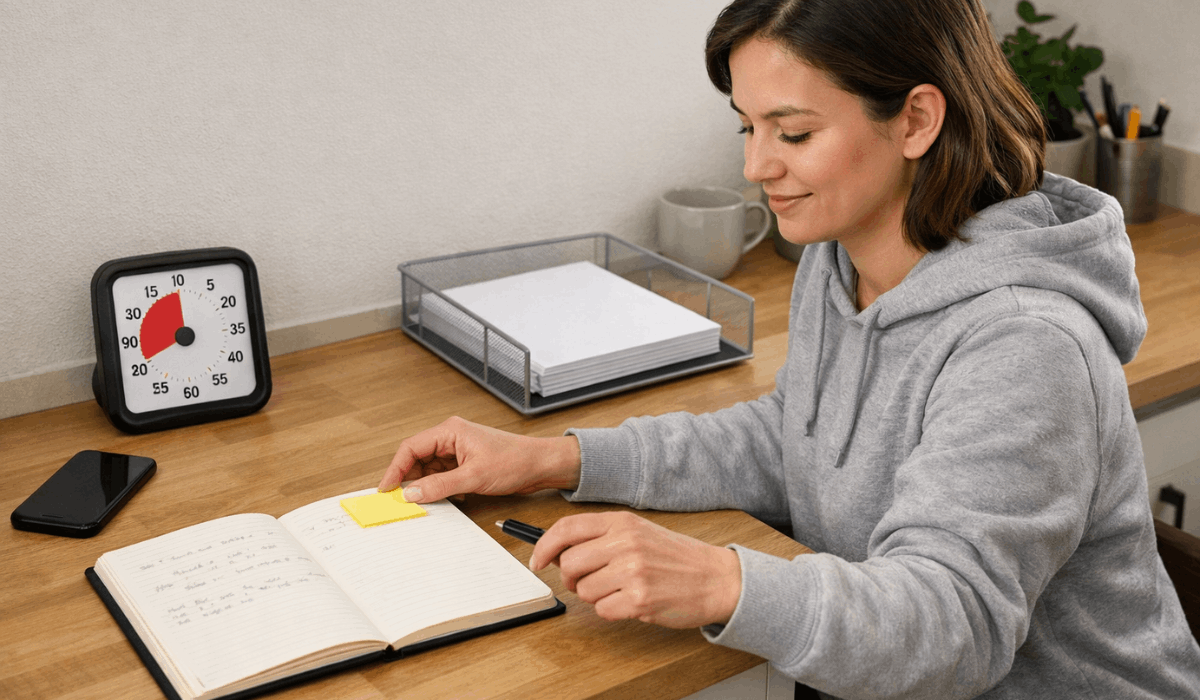
Use Simple Start and Stop Cues
Clear cues remove hesitation and prevent routines from dragging on. You move through tasks faster when starting and stopping are clearly defined.
- Use a single start trigger – One clear action signals that the task begins.
- Keep start cues physical – Simple objects or placement work better than reminders.
- Define a clear stop point – Every routine needs a visible end condition.
- Avoid open-ended tasks – Tasks without stop cues take longer than planned.
- End routines deliberately – Stopping on purpose preserves energy for the next task.
Build Routines That Handle Transitions
Switching between tasks is where most time and energy get lost. Transition routines help you move from one activity to the next without hesitation.
- Acknowledge transition costs – Changing tasks always requires a mental reset.
- Create a reset action – Use one small action to signal the shift to a new task.
- Close the previous task cleanly – Finish or park work before moving on.
- Use the same transition every time – Consistency reduces restart friction.
- Limit transitions per day – Fewer switches lead to better focus and flow.
Limit Decisions During Active Hours
Too many decisions slow execution and drain energy. You protect focus by removing choices while you are actively working.
- Pre-decide task order – Decide what comes next before the workday starts.
- Use default behaviors – Repeat the same actions to avoid daily decisions.
- Apply simple rules – Clear rules replace moment-to-moment judgment.
- Reduce input options – Fewer tools and channels mean fewer distractions.
- Save decisions for review time – Decide during planning, not during execution.
Use Time Caps to Control Task Size
Tasks grow when there is no clear limit. Time caps keep effort controlled and prevent work from taking over your day.
- Set a fixed time limit – Decide how long you will work before starting.
- Use short work windows – Smaller blocks make it easier to start tasks.
- Stop when time ends – Ending on time prevents overworking.
- Accept partial completion – Progress matters more than finishing everything.
- Review after the cap – Decide next steps only once the time limit ends.
Adjust Routines Based on Friction
Friction shows you where a routine is failing. You improve routines by fixing what feels heavy instead of forcing more effort.
- Notice resistance – Hesitation and avoidance signal poor design.
- Identify heavy steps – Steps that drain energy need to be changed or removed.
- Simplify first – Fewer actions reduce friction faster than new rules.
- Test small adjustments – Change one element at a time to see what helps.
- Review ease, not discipline – A good routine feels easier over time.
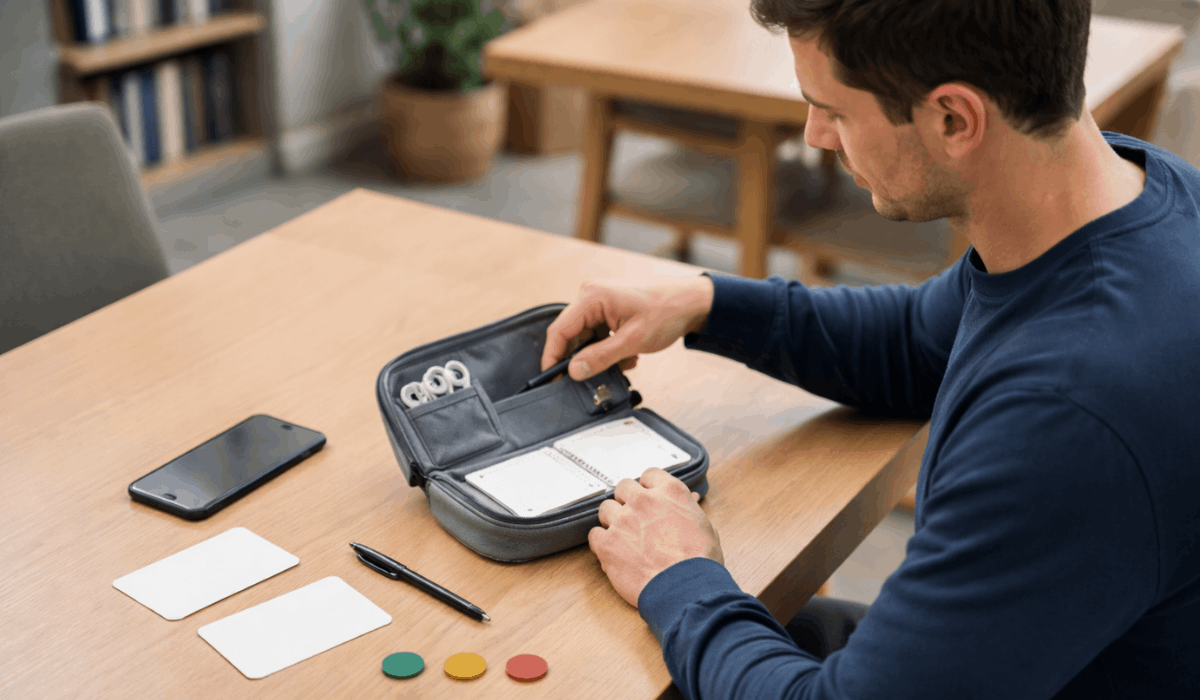
Create Portable Versions of Key Routines
Routines often break when your location changes. Portable routines keep your behavior consistent even when your environment shifts.
- Identify essential actions – Focus only on the steps that truly matter.
- Reduce required tools – Fewer items make routines easier to repeat anywhere.
- Use the same trigger – Start the routine the same way in every location.
- Allow flexible setup – The routine adapts to the space you have.
- Test in different environments – A routine is reliable only if it works everywhere.
Break Tasks Into Minimum Viable Actions
Large tasks create hesitation before you even begin. You make progress faster when each task starts with the smallest useful action.
- Define the smallest starting step – Choose an action that requires little effort.
- Remove pressure to finish – Starting matters more than completing everything.
- Lower mental resistance – Smaller actions reduce avoidance.
- Create quick wins – Early progress builds momentum.
- Expand only after starting – Do more work only once movement begins.
Batch Similar Tasks Together
Switching between different types of work drains focus and time. You work more efficiently when similar tasks are handled in the same block.
- Group tasks by type – Handle related actions together to reduce context switching.
- Use shared tools and setups – One setup supports multiple tasks in a batch.
- Schedule batch blocks deliberately – Assign specific times for grouped work.
- Limit batch size – Smaller batches prevent fatigue.
- Complete or pause cleanly – End batches with a clear stop point.
Handle Small Tasks Immediately
Small tasks create mental clutter when they pile up. You keep your task list light by dealing with quick actions right away.
- Define what counts as small – Set a clear time limit for immediate tasks.
- Act without tracking – Complete the task instead of adding it to a list.
- Prevent task buildup – Quick action stops backlog from forming.
- Reduce mental load – Fewer pending items free attention.
- Keep momentum steady – Fast wins support consistent progress.
Remove Routines That No Longer Help
Keeping unnecessary routines adds pressure and wastes energy. You improve your system by cutting what no longer supports your day.
- Watch for growing resistance – Increased friction signals a routine has expired.
- Remove without replacement – You do not need a new routine to justify removal.
- Stop maintaining habits out of guilt – Past value does not equal current value.
- Reduce routine overload – Fewer routines are easier to maintain consistently.
- Keep systems lean – Lean routines adapt better as your life changes.
Use Weekly Reviews to Reset Tasks
Weekly reviews prevent tasks from piling up and drifting off track. You reset your workload by stepping back and checking what still matters.
- Review completed work – See what actually moved forward.
- Remove outdated tasks – Drop tasks that no longer serve a purpose.
- Reconfirm priorities – Decide what deserves attention next week.
- Adjust workload size – Reduce tasks if the list feels heavy.
- Start the week with clarity – Enter the new week knowing what to focus on.
Final Section: Keep Routines Practical and Adaptable
Practical routines help you manage tasks with less friction and more consistency.
When your routines fit real constraints and adjust over time, starting and finishing work becomes easier.
Review your routines this week and adjust routines that no longer support how your day actually works.