
Overwhelm builds when daily tasks have no structure or clear stopping points.
Simple routines reduce mental load by turning repeated decisions into automatic actions.
This guide shows you how to use small, practical routines to keep your home and day manageable.
What Makes a Routine Simple and Effective
A simple routine works because it removes decisions and limits effort. You can start it quickly, finish it clearly, and repeat it without stress.
- Clear start and stop: You know exactly when the routine begins and ends.
- Short time limit: It fits into 5–20 minutes without dragging on.
- One purpose only: Each routine solves one specific problem.
- No setup required: You use what is already in reach.
- Easy to repeat: You can do it even on busy or low-energy days.
Start With One Daily Anchor Routine
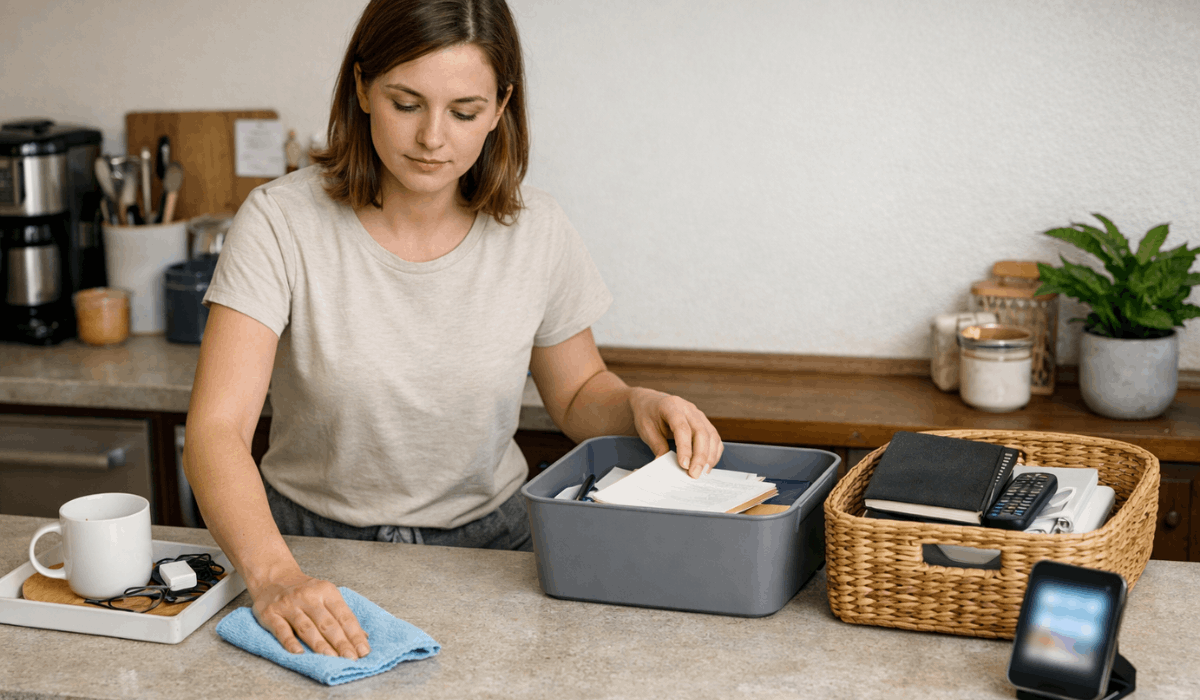
A daily anchor routine gives your day structure without adding pressure. You place it at the same time every day, so it becomes automatic.
- Choose a fixed moment: Attach it to morning, after work, or before bed.
- Focus on one zone: Pick one surface or area with daily impact.
- Set a clear time cap: Stop at 10–20 minutes every time.
- Follow the same order: Repeat the same steps to avoid decisions.
- End with a reset: Leave the space ready for the next use.
Use Micro-Routines to Stop Mess From Spreading
Micro-routines stop small messes before they turn into cleanup sessions. They work because you use them immediately and keep them short.
- One-minute resets: Clear a surface as soon as you leave it.
- End-of-task habits: Put items away right after use.
- Single-touch rule: Handle each item once, rather than moving it later.
- Visible checkpoints: Reset when a space starts to look full.
- No expansion allowed: Stop the routine when the mess is contained.
Create Easy Reset Zones
Easy reset zones give items a clear place to land. They make resets faster because you stop having to decide where things go.
- Entry reset zone: Tray or hooks for keys, bags, and daily items.
- Temporary holding zone: One basket for items that need action later.
- Shared surface zone: One tray or bin to keep counters usable.
- Return zone: A designated area for items returning to other rooms.
- Capacity limit: Each zone has a clear “full” point to trigger a reset.
Build Routines Around Use, Not Storage Labels
Routines work better when they follow how you actually use items. You place and reset things based on daily behavior, not ideal storage plans.
- Daily-use items stay visible: Keep them where you use them most.
- Occasional items move away: Store them outside daily zones.
- Fewer categories: Combine similar items to speed up resets.
- Reach-first placement: Items should be returned without moving others.
- Fast put-away rule: If it takes more than a few seconds, adjust the spot.
Weekly Routines That Prevent Backlog
Weekly routines stop small delays from turning into backlog. You reset key areas before problems pile up.
- Set one fixed day: Use the same day each week to avoid forgetting.
- Focus on high-impact zones: Entryway, kitchen, and shared surfaces.
- Clear unfinished items: Handle papers, returns, and loose objects.
- Light item review: Remove broken, expired, or unused items.
- Hard stop rule: End the routine on time, even if not perfect.
Monthly Routines for Maintenance and Care
Monthly routines handle maintenance before small issues become bigger problems. You spread care across the month instead of reacting later.
- Rotate tasks: Split cleaning and checks across weeks.
- Inspect high-use items: Look for wear, leaks, or damage.
- Refresh storage areas: Wipe shelves and bins quickly.
- Replace basics: Restock supplies before they run out.
- Log problems: Note issues that need future attention.
Routines That Protect Your Time
Time-protecting routines stop tasks from expanding and stealing your day. You set limits in advance and stick to them.
- Batch similar tasks: Handle related actions in one session.
- Set fixed time blocks: Work within clear start and stop times.
- Use decision rules: Predefine what gets done and what waits.
- Limit touch points: Handle items once whenever possible.
- End on schedule: Stop when time is up, not when it feels finished.
Match Routines to Energy Levels
Your routines should work even when your energy drops. You plan different effort levels instead of quitting entirely.
- Low-energy default: Short resets that keep things contained.
- Normal-energy routine: Your standard daily or weekly flow.
- No-zero rule: Do the smallest version instead of skipping.
- Same order every time: Fewer decisions when tired.
- Clear stop point: End before fatigue causes burnout.
Reduce Visual Noise With Simple Habits
Visual noise increases stress even when things are technically organized. Simple habits keep what you see calm and usable.
- Clear surface rule: Keep only active items on flat surfaces.
- One-bin limit: Each area gets a single container for loose items.
- Daily visual reset: Remove anything not used that day.
- Contain, don’t spread: Group items instead of leaving them out.
- Empty before adding: Clear a bin before adding new items.

Use End-of-Day Routines to Reset Your Space
An end-of-day routine closes open loops in your space and mind. You reset, so tomorrow starts without cleanup pressure.
- Five-minute limit: Keep it short and consistent.
- Clear main surfaces: Counters, tables, and desks.
- Return daily items: Keys, bags, and tools go back to their zones.
- Prepare for morning: Set out what you need next.
- Stop completely: Once finished, no more fixing or organizing.
Adjust Routines When Life Changes
Routines fail when life changes, and the system stays the same. You adjust routines to fit new schedules, spaces, and demands.
- Change one variable at a time: Update timing, not everything at once.
- Shorten before quitting: Reduce duration instead of dropping the routine.
- Shift zones as needed: Move reset zones closer to new activity areas.
- Lower the baseline: Redefine what “done” means for this phase.
- Review monthly: Check what still works and remove what doesn’t.
Keep Routines Flexible, Not Perfect
Perfect routines break under real-life pressure. Flexible routines survive because they adapt and restart easily.
- Restart without guilt: Missed days do not cancel the routine.
- Simplify when stuck: Remove steps rather than add effort.
- Keep only what works: Drop rules that slow you down.
- Allow imperfect results: Functional is enough.
- Review and adjust: Change the routine as needs shift.
Final Takeaway
Simple routines reduce overwhelm by giving your day a clear structure and stopping points.
You do not need perfect systems, only small actions you can repeat consistently.
Start with one routine today and build calm into your daily life step by step.