
Daily routines only work when they fit real schedules and real energy levels.
You keep them easy by using simple actions that repeat without planning or motivation.
This guide shows you how to maintain daily routines without stress, resets, or overthinking.
Set a Routine Baseline You Can Actually Keep
A routine baseline is the smallest version of your routine that you can complete on any day. It keeps your system going even when time or energy is limited.
- Define the minimum: Choose only actions that keep your home and day functional.
- Keep it short: Cap it at a few minutes so it never feels heavy.
- Make it repeatable: Use the same steps every time to avoid decisions.
- Treat it as default: This is your main routine, not a backup.
- Write a stop point: Decide exactly when you’re done so you don’t expand it.
Pick Routine Actions That Protect Your Whole Day
The best routine actions prevent problems later in the day. You focus on moves that reduce mess, stress, and wasted time across your home.
- Choose high-impact actions: Pick tasks that keep multiple areas usable.
- Prevent buildup early: Reset small messes before they spread.
- Protect key spaces: Prioritize entry, kitchen, and one main surface.
- Reduce future effort: Choose actions that save time later.
- Focus on bottlenecks: Fix the one thing that repeatedly slows you down.
Build a “Same Order” Routine to Stop Overthinking
A fixed routine order removes decisions and keeps you moving without hesitation. You follow the same steps every time, so your routine runs on habit rather than effort.
- Use one sequence: Start and finish in the same order each day.
- Avoid task jumping: Complete one step before moving to the next.
- Create a clear end: Decide where the routine stops so you don’t overdo it.
- Build muscle memory: Repetition makes the routine automatic.
- Keep it location-based: Move through spaces in a logical path to stay efficient.
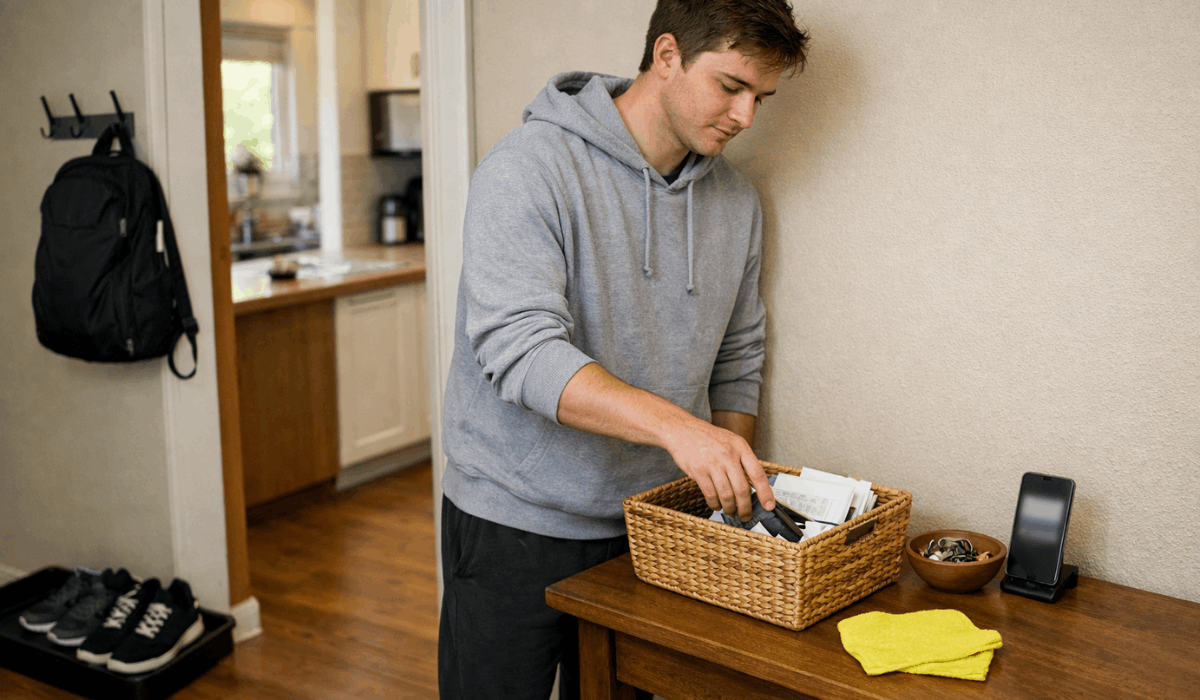
Make Your Routine Work Even When You’re Low-Energy
Low-energy days are normal, so your routine must still function without extra effort. You keep it going by removing friction and lowering the required output.
- Reduce setup: Keep tools and supplies within reach.
- Simplify storage: Use open bins and broad categories.
- Shorten tasks: Break actions into quick, finishable steps.
- Accept completion: Done matters more than done perfectly.
- Use a “one-surface rule”: Reset one surface fully when you can’t do more.
Keep Routines Stable With Simple Triggers
Simple triggers help you start routines without reminders or planning. You use cues that already exist in your day to maintain consistency in your routines.
- Use one clear cue: Attach the routine to a specific moment or place.
- Keep triggers visible: Place cues where you naturally look or stop.
- Avoid stacking too much: One trigger is enough to start action.
- Repeat daily: Consistency builds automatic response over time.
- Make the cue physical: Use a tray, basket, or placed tool as a start signal.
Restart Fast After a Missed Day
Missing a day does not break a routine unless you delay restarting. You recover faster by returning to the smallest version of the routine immediately.
- Start with one action: Reset a single surface or area first.
- Use the baseline: Skip extras and complete only the core steps.
- Avoid catch-up mode: Do not try to fix everything at once.
- Resume normal flow: Continue the routine the next day without changes.
- Set a quick win: End with one visible improvement so restarting feels worth it.
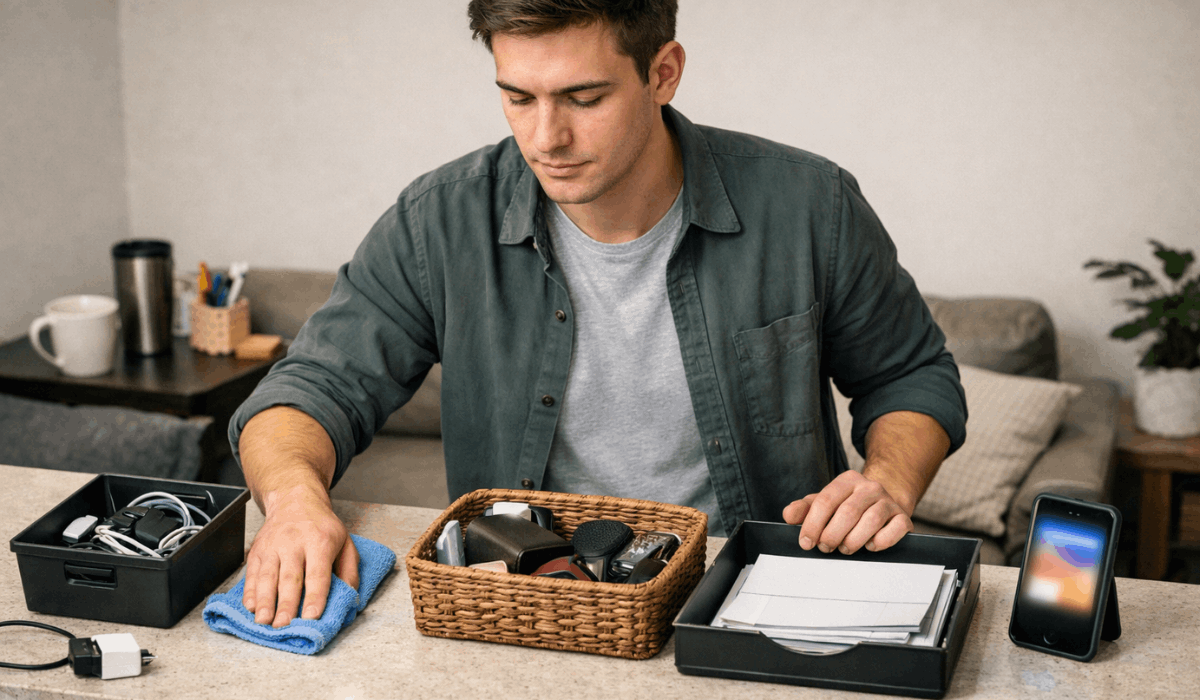
Build a “Routine Menu” for Different Day Types
A routine menu keeps you consistent because you choose a version that matches your day. You keep the same goal and adjust the size so you can still finish.
- Create three versions: A normal day, a busy day, and a low-energy day.
- Pick by reality: Choose based on time and energy, not guilt.
- Keep the same goal: Change the amount of work, not the purpose.
- Keep steps familiar: Reuse the same order across versions.
- Set a minimum finish: Define what “complete” means for each version.
Track Consistency Without Apps or Journals
Simple tracking helps you notice patterns without adding another task. You keep it visible so you remember and you measure effort, not perfection.
- Use a visible cue: A small card, magnet, or checklist in your routine area.
- Track completion fast: One mark per day, no notes required.
- Measure effort: Count the days you showed up, even if you did the baseline.
- Keep it honest: No backfilling days you missed.
- Review weekly: Take under two minutes to spot what worked and what didn’t.
Protect Your Routine From Common Interruptions
Interruptions are normal, so you need a routine that can pause and continue. You make it resilient by using short blocks and a clear return point.
- Build short blocks: Split the routine into parts you can finish quickly.
- Set a pause point: Choose one place where you can safely stop.
- Leave a return cue: Keep one item out that tells you where to resume.
- Resume with the next step: Do not restart from the beginning.
- Use a fallback option: If interrupted twice, switch to the baseline and finish.
Use Time Caps to Keep Routines From Expanding
Time limits stop routines from turning into long projects. You work faster and finish more consistently when you know exactly when to stop.
- Set a hard limit: Choose a fixed time, such as 5, 10, or 15 minutes.
- Use a visible timer: Keep it simple and easy to start.
- Stop when time ends: Finish the step you’re on and move on.
- Avoid “just one more thing”: Respect the cap every time.
- Review impact weekly: Adjust time only if results are lacking.
Match Routine Size to Your Energy Levels
Energy changes daily, so your routine must adapt without breaking. You stay consistent by scaling effort instead of skipping entirely.
- Check energy first: Decide routine size before starting.
- Lower effort, not standards: Keep the same goal with less work.
- Avoid forcing full routines: Consistency matters more than volume.
- Use smaller tools: Lighter tasks help you start.
- End on a win: Finish with a visible result.
Keep Routine Tools in One Dedicated Zone
Searching for supplies breaks momentum. A single tool zone removes delays and excuses.
- Choose one location: Store routine tools together.
- Limit tool count: Keep only what you actually use.
- Store at arm level: Easy reach encourages action.
- Return tools immediately: Reset the zone after each routine.
- Review monthly: Remove unused items to keep it light.
Reduce Visual Noise That Slows You Down
Too much visual clutter makes routines feel heavier. A calmer space helps you move faster with less resistance.
- Clear one surface fully: Start with your main work area.
- Use closed storage sparingly: Hide only what distracts you.
- Group similar items: Fewer visual categories reduce friction.
- Limit colors and textures: Keep storage visually quiet.
- Reset daily: Maintain clarity with small, fast resets.
Build Routine Confidence Through Repetition, Not Motivation
Motivation is unreliable, but repetition builds trust in your system. You improve routines by showing up, not pushing harder.
- Repeat the same steps: Familiarity reduces effort.
- Track completed days: Focus on showing up, not results.
- Avoid constant changes: Let routines settle before adjusting.
- Notice ease over time: Effort drops as habits form.
- Commit to one routine first: Build confidence before adding more.
Final Takeaway
Daily routines last when they stay simple, flexible, and easy to restart.
You maintain them by protecting your energy, reducing decisions, and repeating small actions that fit real life.
Start today by choosing one baseline routine and commit to repeating it tomorrow.