Daily routines often become complicated through small, unnecessary steps added over time.
Simplifying your routine helps you move through home tasks with less effort, less mess, and fewer decisions.
This guide shows practical ways to reduce friction and build routines that are easy to maintain every day.
Start With Your Real Daily Tasks
Before you simplify anything, you need to understand what actually fills your day at home.
Focusing on real tasks prevents you from building routines that look good but don’t align with your daily life.
- Observe your day from morning to night. Notice the tasks you repeat daily, such as meals, quick cleaning, and setting up work tools.
- Write down only what you do daily. Ignore weekly or occasional chores and focus on actions that happen every single day.
- Include home, work, and personal tasks. Daily routines often mix household duties, job responsibilities, and basic self-care.
- Notice tasks that happen together. Some actions naturally follow each other and can later be combined into a single routine.
- Identify tasks you delay or avoid. These often signal routines that are too complex or poorly placed.
Build Simple Home-Based Routines
Simple routines work best when they fit your home and reduce unnecessary movement.
The goal is to make daily tasks easier by using your space more effectively.
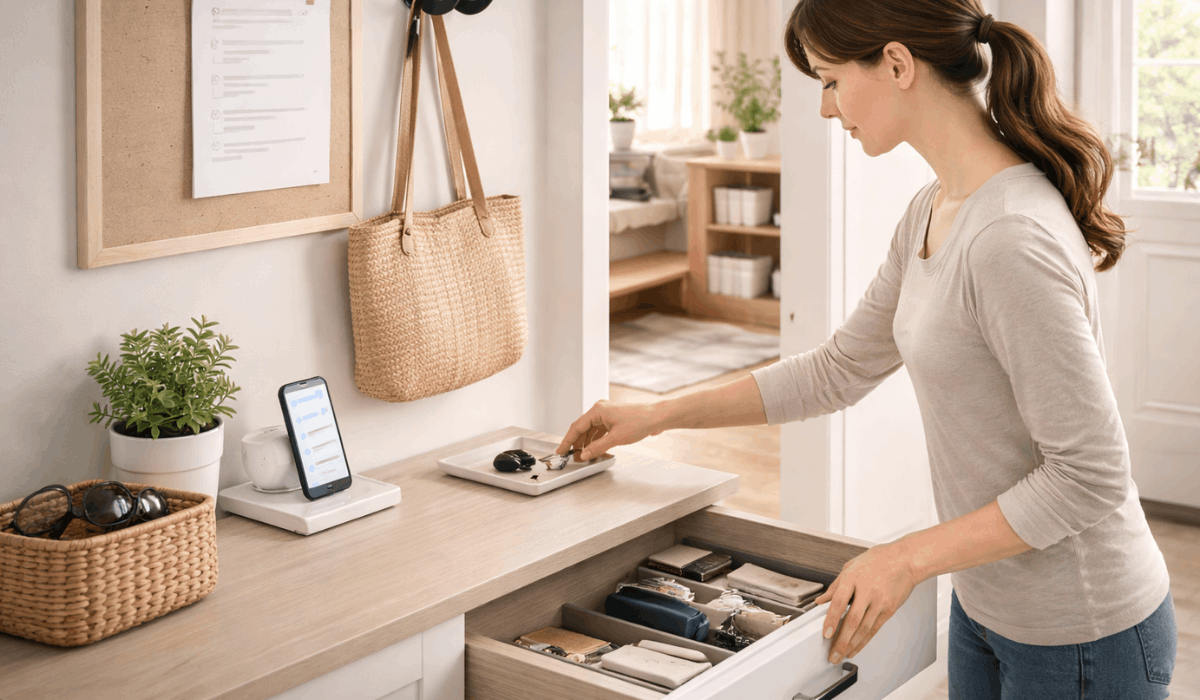
- Assign fixed places for everyday items. Keep keys, bags, chargers, and tools in the same spots so you do not waste time searching.
- Match routines to each room. Do tasks where the supplies are already there instead of moving items around the house.
- Limit routines to a few steps. Short routines are easier to remember and repeat than long checklists.
- Create clear start and end points. This helps you complete tasks without dragging them out.
- Adjust routines to your space size. Small homes need compact routines, while larger spaces benefit from zone-based routines.
Make Daily Tasks Easier to Maintain
Daily routines last longer when they require little effort to keep up. Making tasks easier helps you stay consistent without feeling overwhelmed.
- Prepare supplies in advance. Keep commonly used items ready and within reach.
- Reduce the number of tools you use. Fewer tools mean less setup and cleanup time.
- Break tasks into small actions. Short steps feel easier to start and finish.
- Clean as you go. Small resets prevent mess from building up.
- Focus on “good enough” results. Practical routines work better than perfect ones.
Control Distractions Inside the Home
Distractions make simple routines harder to follow and easier to abandon. Reducing visual and digital clutter helps you stay focused on daily tasks.
- Limit notifications during routine tasks. Silence alerts when cleaning, cooking, or organizing.
- Keep devices out of work areas. Place phones and tablets away from task zones when possible.
- Clear surfaces before starting a task. Fewer items reduce visual noise and confusion.
- Return items to their place immediately. This prevents clutter from spreading.
- Set specific times for screen use. Checking devices on a schedule keeps routines uninterrupted.
Simplify Transitions Between Daily Activities
Switching between tasks often creates small delays and frustration. Simple transition habits help your day move smoothly without breaking focus.
- Create visual cues for task changes. Use baskets, trays, or notes to signal the next activity.
- Group tasks by location. Finish related tasks in the same room to reduce movement.
- Add short reset actions between tasks. A quick tidy or tool reset prepares you for the next step.
- Avoid multitasking during transitions. Finish one task before starting another.
- Keep transition steps minimal. Fewer actions make it easier to move on.
Use Small End-of-Day Reset Routines
Ending the day with a short reset makes the next day easier to start. Small routines prevent clutter and unfinished tasks from carrying over.
- Reset only key areas. Focus on the kitchen, living space, and entryway.
- Put everyday items back in place. This reduces morning searching and stress.
- Prepare items for the next day. Set out the tools, clothes, or supplies you will need.
- Limit the reset to a few minutes. Short routines are easier to maintain daily.
- Stop when the basics are done. The goal is readiness, not perfection.
Reduce Morning Setup Time
Mornings are easier when fewer decisions are required. Reducing setup time helps you start the day calmly and on schedule.
- Prepare essentials the night before. Set out clothes, work items, and personal tools in advance.
- Keep morning tasks in a fixed order. Doing the same steps daily reduces hesitation and delay.
- Store morning items in one place. Centralizing essentials prevents last-minute searching.
- Avoid adding new tasks to mornings. Keep mornings for starting, not organizing.
- Focus on getting started quickly. A smooth start makes the rest of the day easier to manage.
Use Zones to Organize Daily Activities
Organizing your home into zones reduces movement and confusion during daily tasks. Clear zones help you complete routines faster and with less effort.
- Create a specific zone for work or study. Keep all related tools and supplies in one area.
- Assign zones for daily-use items. Store cleaning tools, chargers, or mail where they are used.
- Use an entryway zone for coming and going. Place keys, bags, and shoes in one consistent spot.
- Keep items used together in the same zone. This prevents back-and-forth movement.
- Limit each zone to essentials only. Fewer items make zones easier to maintain.

Limit Daily To-Do Lists
Long to-do lists can make simple days feel overwhelming. Keeping lists short helps you stay focused on what truly needs to be done.
- Choose only a few priority tasks. Focus on the most important actions for the day.
- Separate required tasks from optional ones. This keeps expectations realistic.
- Write your list where you can see it easily. Visible lists reduce mental load.
- Avoid adding tasks once the day starts. This prevents constant changes and stress.
- Stop working when the list is complete. Finishing your list signals the end of the day.
Standardize Repetitive Home Tasks
Repeating tasks the same way each time saves time and effort. Standard routines remove the need to decide how to do a task every day.
- Use the same steps for common chores. Follow a fixed order for cleaning or organizing.
- Keep tools and supplies consistent. Using the same items avoids setup delays.
- Perform tasks at the same time each day. Timing consistency builds habit strength.
- Avoid changing routines without reason. Stability makes tasks easier to repeat.
- Adjust only when a routine stops working. Small updates keep routines effective.
Review and Adjust Your Routine Regularly
Daily routines need regular review to stay practical and useful. Small adjustments help your routine keep pace with changes in your home and schedule.
- Check what feels difficult or slow. These areas often need simplification.
- Notice tasks you skip or delay. This signals routines that are too demanding.
- Look for repeated clutter spots. These show where routines are not working.
- Change one small habit at a time. Small changes are easier to test and keep.
- Keep what works and remove the rest. A routine should support your day, not control it.
Conclusion – Keep Your Routine Practical and Flexible
Simplifying your daily routine helps you reduce effort, stay organized, and move through home tasks with less stress.
Small, practical changes make routines easier to follow and easier to maintain over time.
Start by adjusting one routine today and build a daily flow that works for your home and schedule.