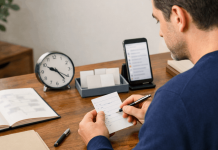
Flexible daily routines help you keep your home and life steady even when your schedule changes.
You build them by using a simple anchor, a few high-impact tasks, and a short version you can always finish.
Use this guide to set routines that adjust to your time and energy so you can stay consistent without stress.
What “Flexible” Really Means in a Daily Routine
Flexible daily routines maintain structure while letting you adjust the plan to your time and energy.
- Start with one stable trigger, like after breakfast, after work, or before bed.
- Keep a minimum version you can finish in 2–5 minutes on any day.
- Scale up only when you can by adding steps on higher-energy days.
- Prioritize high-impact basics such as surfaces, dishes, laundry flow, and entry clutter.
- Set a clear stop point so the routine stays short and realistic.
- Make restarts simple by returning to the minimum version after a missed day.
- Use simple reset zones like one tray, one basket, and one open bin to contain daily items.
Start With a Daily Anchor (One Fixed Trigger)
A daily anchor is one fixed moment that prompts you to start, so you don’t rely on motivation.
- Pick a trigger you already do daily, like making coffee, arriving home, or brushing your teeth.
- Choose one anchor only so the routine stays easy to remember.
- Keep the first step obvious, such as clearing one surface or putting items into zones.
- Limit the anchor to 5–10 minutes so you can finish even on busy days.
- Follow the same order every time to reduce decisions and speed up the start.
- Set a simple stop point like “surface clear + items returned” so it doesn’t expand.
- Place tools where the anchor happens, like a cloth, a small bin, or a tray, within reach.
Build Your Routine Around High-Impact Tasks
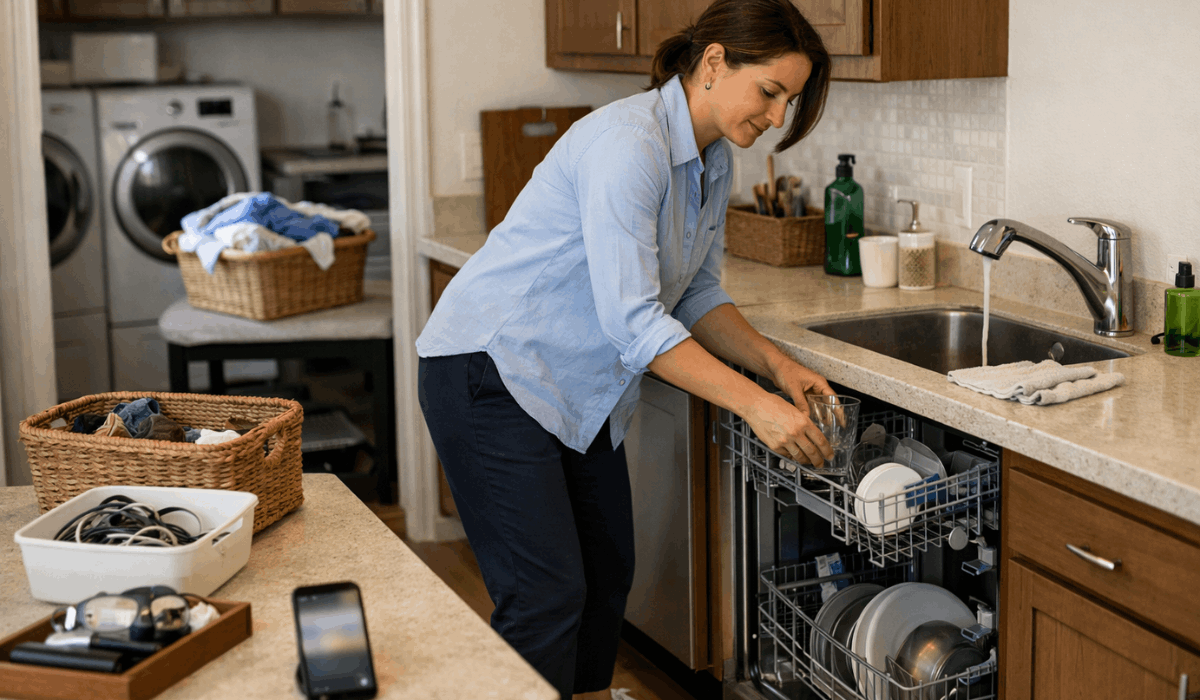
High-impact tasks are the small actions that prevent bigger messes, wasted time, and stress later in the day.
- Hit pile-up spots first: Counters, the entryway, and the main drop table.
- Keep one surface clear daily: Clear space keeps the home usable fast.
- Handle dishes early: Load, wash a small batch, or clear the sink.
- Move laundry forward: Start, switch, or fold a small set.
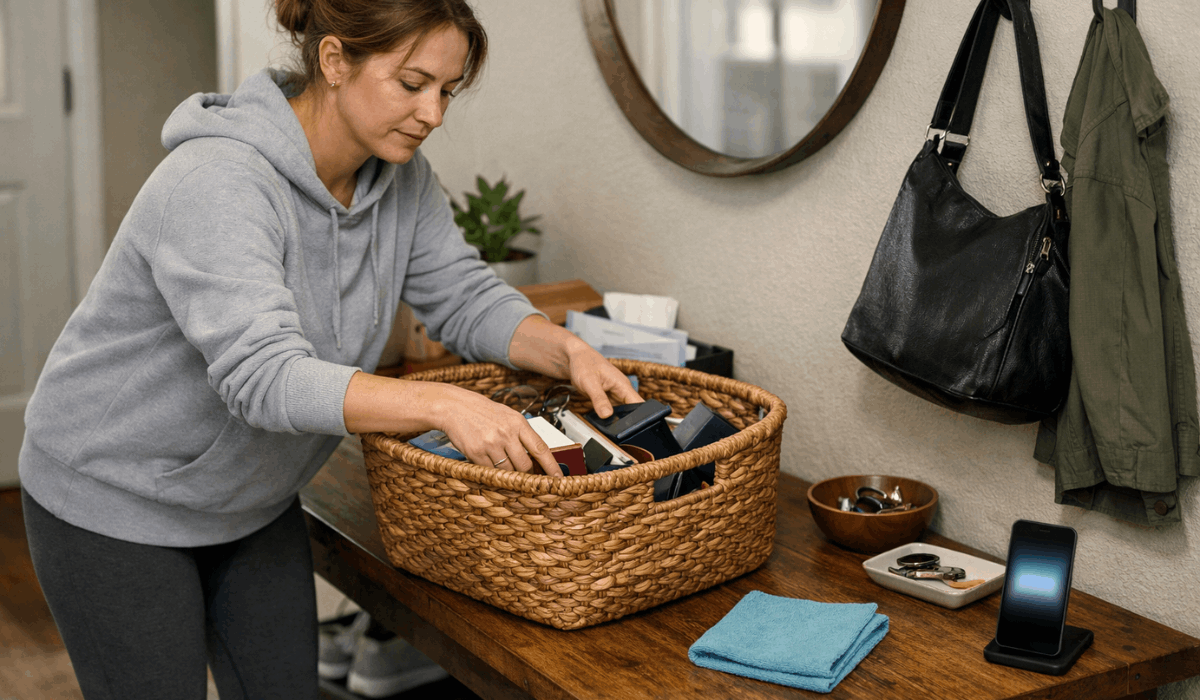
- Use reset zones: One tray for essentials, one basket for loose items, one bin for cables.
- Do a quick trash check: Empty or reset before overflow starts.
Make It Flexible With Three Routine Versions
Three routine versions let you stay consistent by letting you pick the level that fits your day, instead of skipping everything.
- Quick version (2–5 minutes): keep the home usable. Clear one surface, return items to zones, and reset the sink or trash if needed.
- Normal (10–20 min): Do the quick version, then handle dishes, one laundry step, and a fast floor or bathroom touch-up.
- Extra (20–30 min): Do the normal version, then improve one area, such as a fridge shelf, a drawer, or a deeper-clean zone.
- Use clear rules for choosing the version. Pick quickly when you’re tired, normally on regular days, and extra only when you have space and time.
- Keep the same order in all versions. You add steps at the end so the routine still feels familiar.
- Write a stop point for each version. You finish without expanding into a full cleaning session.
- Treat quickly as success, not failure. Completing the minimum keeps the habit alive and makes restarting easy.
Match Routines to Energy Levels and Time
Matching routines to your energy and time keeps you consistent, because you choose a level you can finish instead of quitting.
- Low-energy days: Do the quick version, clear one surface, and do one basket sweep.
- Busy days: Reset the entry zone, clear the sink, then stop after 5–10 minutes.
- Normal days: Follow the normal version in the same order to make it feel automatic.
- High-energy days: Add only one extra task, such as a drawer reset or a deeper-clean zone.
- Use a timer as the stop point: Set 10, 15, or 20 minutes, then stop when it ends.
- Use a restart rule: If you miss a day, return to the quick version first.
Keep Routines Simple With Smart Tools and Setup
A simple setup removes friction, so you start faster and finish without overthinking.
- Keep tools visible and within reach where the routine happens, not stored far away.
- Use a small “daily kit” like a microfiber cloth, all-purpose cleaner, and a trash bag refill.
- Choose fewer containers, like one tray, one basket, and one open bin, for daily items.
- Store items where you actually use them so you don’t have to carry them across the home.
- Make drop zones obvious with the same spots for keys, mail, and chargers every day.
- Limit categories on purpose because fewer choices mean faster resets.
- Add a clear stop point, such as “surface clear + zones reset,” to prevent unnecessary tasks.
Weekly and Monthly Add-Ons That Support Daily Flexibility
Weekly and monthly add-ons keep small problems from turning into big catch-up days, so your daily routine stays light.
- Weekly reset (20–40 minutes): clear the backlog. Do floors in high-traffic areas, wipe down key surfaces, and empty bins that are filling up.
- Weekly laundry catch-up: Wash, dry, and put away one full cycle to prevent piles from building.
- Weekly kitchen check: Toss expired food, wipe one fridge shelf, and reset the sink and counters.
- Weekly “zone refresh”: Pick one small zone (entry tray, coffee area, bathroom counter) and fully reset it.
- Monthly maintenance (30–60 minutes): protect items. Clean filters, check supplies, and handle small repairs before they get worse.
- Monthly declutter pass: Remove duplicates, expired items, and things you no longer use from one area.
- Monthly re-stock and re-set: Refill basics and adjust drop zones if your routine has been slipping.
Common Mistakes That Make Routines Too Rigid
Rigid routines fail because they demand the same effort every day, even when your time and energy change.
- Making it too long: You add steps until it feels heavy, then you avoid starting.
- Planning for perfect days only: You skip a quick version, so tired or busy days turn into zero progress.
- No clear stopping point: The routine expands into a full cleanup.
- Too many categories and containers: Over-sorting adds decisions and slows you down.
- No fixed trigger: Relying on motivation makes you skip days because nothing automatically starts the routine.
A Simple 7-Day Starter Plan
This 7-day plan helps you build a routine step by step, so you keep it simple and actually stick with it.
- Day 1: Pick your daily anchor. Choose one fixed trigger and one place you will reset.
- Day 2: Create the minimum routine (2–5 minutes). Write the exact steps and a clear stop point.
- Day 3: Set up reset zones. Add one tray, one basket, and one open bin where clutter lands.
- Day 4: Choose two high-impact tasks. Pick the tasks that prevent the biggest messes in your home.
- Day 5: Build the normal routine (10–20 minutes). Combine the minimum routine with your two tasks in the same order.
- Day 6: Create the extra routine (20–30 minutes). Add one focused upgrade task you can do only when time allows.
- Day 7: Test and adjust. Remove any step that feels annoying, and keep only what you can repeat.
Final Takeaway
Flexible daily routines work because you keep one anchor, protect the essentials, and adjust the routine to match your day.
When you use clear stop points and restart with the minimum after misses, Flexible daily routines stay realistic and easy to repeat.
Choose your daily anchor today and start the quick version to keep Flexible daily routines consistent without stress.