
Most routines fail because they are designed for an ideal day, not a real one. They depend on motivation, perfect timing, and more energy than most people have after work, school, family responsibilities, or daily stress.
A routine that lasts needs to be simple enough to repeat even when the day is messy. It should support your life instead of making you feel like you are constantly behind.
A good routine does not need to be impressive. It needs to be repeatable. When the first step is easy, you are more likely to begin, and beginning is usually the hardest part.
Over time, small actions become easier to repeat because they no longer require as much thought or effort.
Why Many Routines Fall Apart?
Many people start a routine with too much ambition. They decide to wake up earlier, exercise, journal, meal prep, study, clean, and sleep better all at once.
The problem is not the intention. The problem is that the routine demands too many changes before the person has built any consistency.
Another common issue is relying on motivation. Motivation can help you start, but it is not stable enough to carry a routine every day.
Some days you will feel focused, and other days you will feel tired, distracted, or busy. A routine needs structure so it can still happen when motivation is low.
Routines also fail when they do not match real energy levels. For example, planning a demanding workout late at night may look good on paper, but it may not work if you are usually drained by then.
The same applies to studying, cleaning, writing, or planning your day. The best routine is not always the most productive one. It is the one that fits the time, energy, and environment you actually have.
How to Build a Routine That Fits Real Life?
A routine should begin with your actual day, not the version of your day you wish you had. Look at your schedule, your energy, and the moments when you usually lose focus or feel rushed.
This makes the routine more useful because it is built around real problems, not random productivity ideas.
Start With One Clear Purpose
Before building a routine, decide what problem it should solve. A morning routine might help you feel less rushed.
An evening routine might help you sleep better. A work routine might help you stay focused without checking your phone every few minutes.
This matters because a routine without a clear purpose quickly becomes cluttered. You may start adding steps because they sound useful, not because they solve your actual problem. That is how a simple plan becomes too long and too hard to maintain.
A useful routine should answer one question: what should be easier after I do this regularly? If the answer is clearer mornings, better focus, cleaner surroundings, or more consistent exercise, keep the routine built around that goal. Remove anything that does not directly support it.
Make the First Step Almost Too Easy
The beginning of a routine should feel simple, not intimidating. If the first step requires too much effort, you will avoid it on busy days.
Instead of planning a 45-minute workout, start by putting on your workout clothes and doing five minutes. Instead of building a full cleaning routine, start by clearing one surface.
This does not mean the routine will stay small forever. It means you are giving yourself a realistic way to start.
Once the action becomes familiar, you can expand it naturally. A routine grows better when consistency comes first and intensity comes later.
The goal in the beginning is not to prove discipline. The goal is to remove resistance. When the first action is easy, you give yourself fewer reasons to delay, negotiate, or quit.
Attach the Routine to Something You Already Do
Routines become easier when they are connected to habits that already exist. You do not need to create a brand-new reminder system for everything. You can attach a new habit to something already fixed in your day.
For example, you might stretch after brushing your teeth, review your tasks after breakfast, or prepare your bag after dinner.
These daily actions act as natural cues. They tell your brain what comes next without forcing you to make another decision.
This is especially useful for people who forget routines easily. The more a routine depends on memory alone, the easier it is to miss. But when it is tied to a regular part of your day, it becomes easier to repeat without overthinking.

Design the Routine Around Imperfect Days
A routine should have room for days that do not go as planned. If it only works when everything goes smoothly, it will break often. Real life includes delays, tiredness, interruptions, unexpected tasks, and low-energy moments.
That is why every routine should have a smaller backup version. If your full routine takes 30 minutes, create a 5-minute version.
If your ideal plan includes cleaning the whole kitchen, your backup version might be washing the dishes or wiping the counter. This keeps the routine alive even when the full version is not possible.
This approach also prevents all-or-nothing thinking. Missing one part of a routine does not mean the whole day is ruined.
You can adjust, complete the smaller version, and continue the next day without restarting from zero.
Make Consistency Easier to Maintain
Consistency becomes easier when the routine has fewer barriers. You do not need to depend on willpower every time.
A better approach is to set up your environment, timing, and expectations so the routine feels easier to begin.
Match the Routine to Your Energy
Time matters, but energy matters too. A routine placed at the wrong time can feel harder than it needs to be. If you are more alert in the morning, that may be the best time for planning, studying, writing, or exercise.
If your energy drops at night, use that time for simpler tasks like preparing clothes, setting up your workspace, or doing a short reset.
This is not about forcing every task into the “perfect” hour. It is about noticing when certain actions feel more natural. A demanding task needs a better energy window. A low-effort task can fit into slower parts of the day.
Your routine should also change when your schedule changes. A routine that worked during a quiet month may need adjustment during a busier one. This is normal. Updating your routine is not failure. It is how you keep it useful.
Remove Friction Before It Stops You
Many routines fail because the setup is annoying. You plan to exercise, but your shoes are in another room. You plan to study, but your desk is messy.
You plan to cook, but the ingredients are not ready. These small obstacles may seem minor, but they create enough friction to make you delay the routine.
Make the routine easier before you need to do it. Place your workout clothes where you can see them. Keep your notebook on your desk. Prepare ingredients earlier in the day. Charge your devices before work or study time.
The fewer steps you need before starting, the more likely you are to follow through. A routine should not begin with searching, cleaning, deciding, or setting up. Those things should be handled in advance whenever possible.
Track Progress Without Turning It Into Pressure
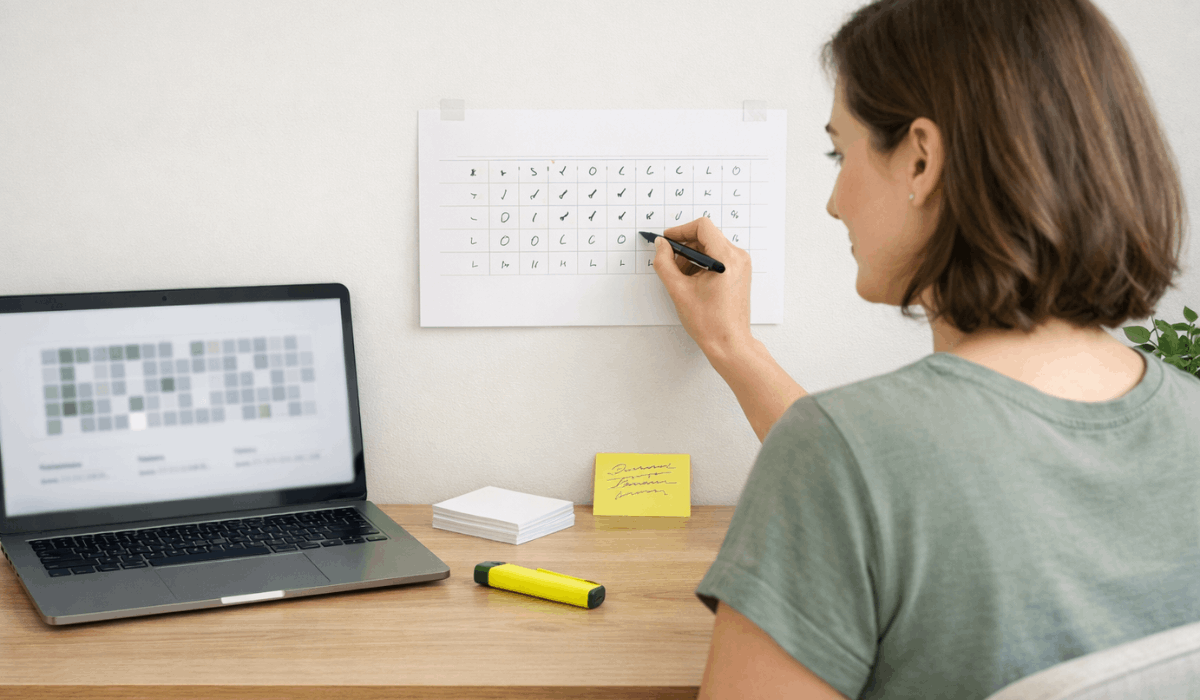
Tracking can help, but it should not become another source of stress. A simple checkmark on a calendar is often enough. You do not need to measure every detail, especially at the beginning.
Track whether you showed up, not whether you performed perfectly. This keeps the focus on consistency. A five-minute version still counts because it keeps the routine active. That matters more than waiting for the perfect day to do the full version.
Overtracking can make routines feel like a test. If the tracking system takes more effort than the routine itself, simplify it. The purpose of tracking is awareness, not pressure.
Avoid the Mistakes That Quietly Break Consistency
One of the biggest mistakes is making the routine too long. Long routines may feel productive at first, but they become harder to repeat when life gets busy.
A shorter routine that happens often is usually more valuable than a long routine that only happens when conditions are perfect.
Another mistake is changing too many habits at the same time. When every part of your day requires effort, your brain gets tired quickly. Focus on one routine first. Once it feels stable, you can add another.
It is also important to avoid restarting from zero every time you miss a day. Missing one day is not the problem. Quitting because you missed one day is the problem. A strong routine allows you to return without guilt, drama, or a full reset.
Let the Routine Become Automatic Over Time
A routine becomes easier when the steps stay predictable. Doing the same action after the same cue helps your brain recognize the pattern. Over time, the routine requires less effort because you no longer need to decide what comes next.
Keep the order simple. Avoid adding unnecessary choices. If your routine changes every day, it may stay mentally tiring. If it follows a familiar sequence, it becomes easier to repeat even when you are not highly motivated.
Automation does not happen because you do the routine perfectly. It happens because you repeat it often enough. Small, steady repetition is what turns effort into habit.
Build a Routine That Works on Normal Days
The best routine is not the one that looks most productive. It is the one you can still follow on a normal, busy, imperfect day.
Start with one clear purpose, choose a small first step, attach it to something you already do, and remove anything that makes starting harder.
A routine that lasts should make your day feel more manageable, not more crowded. Keep it simple, adjust it when needed, and give yourself a smaller version for difficult days. When your routine fits your real life, consistency becomes much easier to maintain.